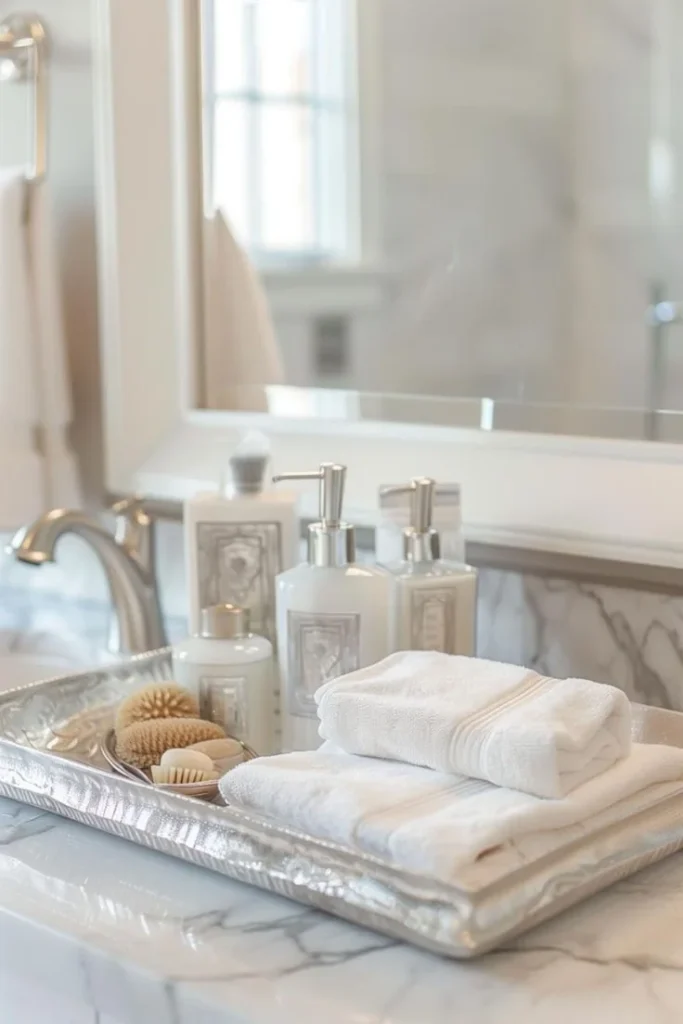
Bathroom tray decor ideas work best when the tray gathers the things you reach for beside the sink, with a little room left between them. Folded towels can make a generous tray feel welcoming; a slim bottle group suits a smaller vanity. Choose the arrangement around that daily job, then let color and shape supply the decoration.
1. Give a Towel Tray a Clear Front and Back
A towel tray needs a different arrangement from a bottle-only tray because the folded fabric takes up a broad patch of the base. In this example, white towels sit toward the front of a silver-toned tray, while matching pump bottles stand behind them. A small jar and brushes occupy the other side.
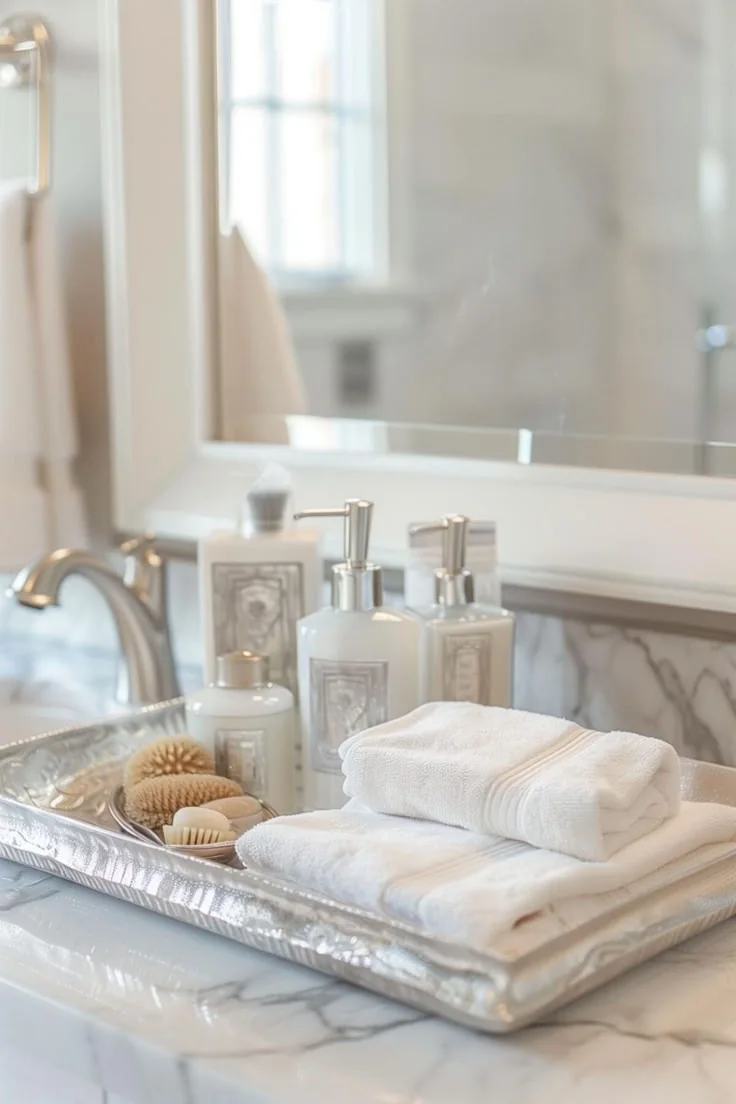
We’d borrow the separation between the low fabric and taller containers. Keep a towel accessible without making someone reach through a row of bottles. If the folded stack covers most of your own tray, let it be the main feature and reduce the smaller accessories around it.
The pale towels also connect the bottles to the counter. Beyond this small group, the bathroom decorating examples compare accessories with towels, curtains, and existing finishes.
2. Let an Oval Tray Follow the Side of the Sink
A narrower tray can hold a bottle group beside the basin when a towel stack would crowd the available surface. Here, an elongated oval tray gathers amber bottles and small plant containers to the left of a black faucet. The bottles and greenery share a low base instead of spreading separately across the vanity.
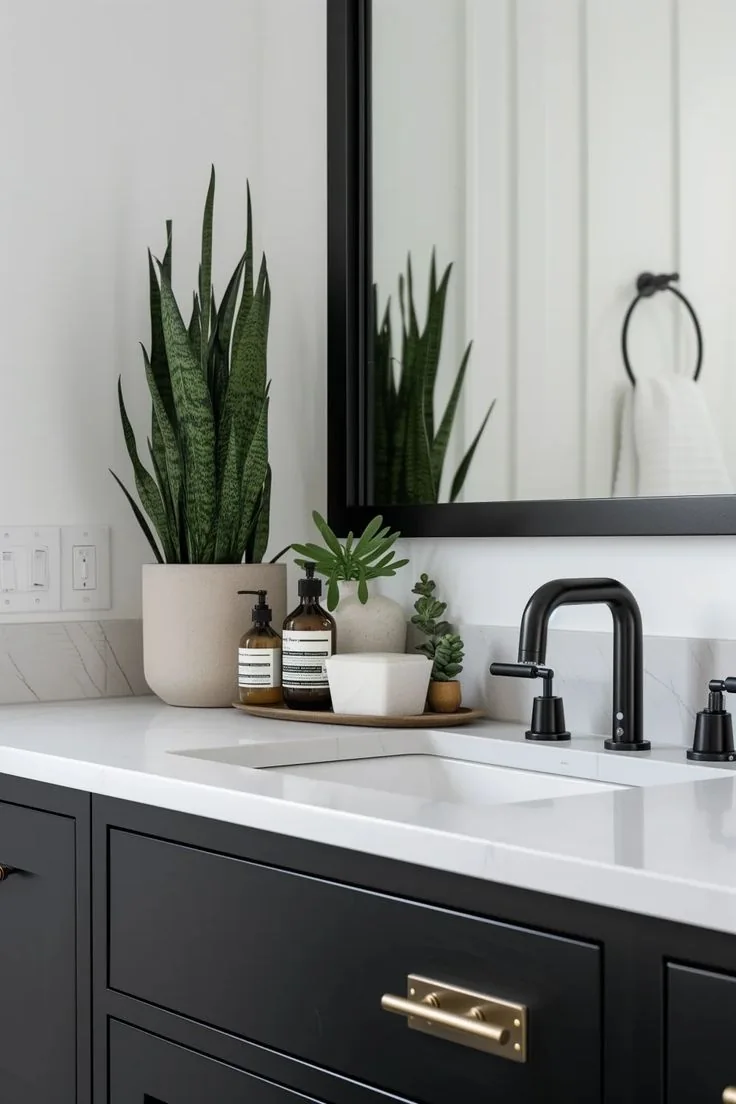
Consider the tray’s outline from the position where you use the sink. A slim shape may follow a narrow strip beside the basin, while the wider end of a round tray may project farther into that space. Compare the actual footprint on your counter before choosing which outline you prefer.
The neighboring plant in this example sits beyond the tray. You don’t need to copy the larger greenery to borrow the compact bottle group, especially when the narrower strip beside your own basin is already doing the work you need it to do.
3. Use a Small Geometric Tray for Daily Skincare
Where the oval tray stretches sideways, a compact geometric tray makes a more concentrated display. The white hexagonal tray here holds a jar, a tall bottle, and a smaller dropper bottle. Their varying heights leave each container visible, with the plant standing outside the tray.
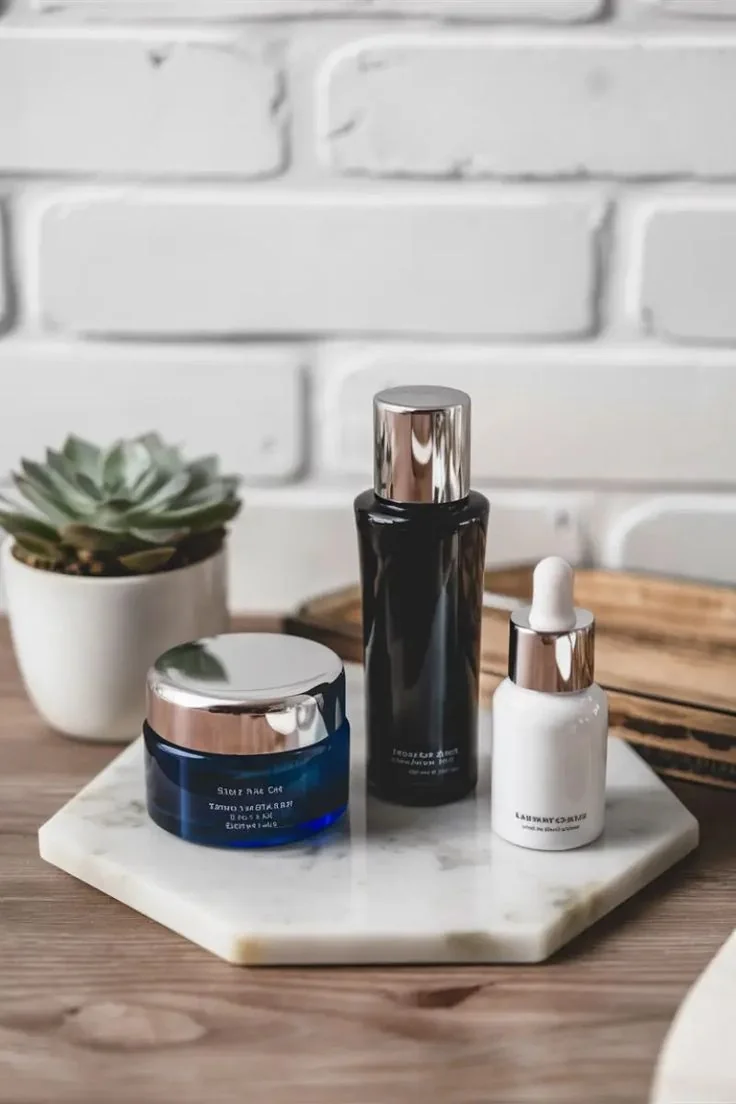
Choose the group from the products you already use at the vanity. Keeping a tall container behind a shorter jar can make the arrangement easier to read, but reach matters too. If your usual product is hidden at the back, switch its position before adding another decorative piece.
You don’t need matching packaging. The blue jar, dark bottle, and pale dropper container in this example have different colors; the shared tray supplies their boundary. A set that looks varied can still feel deliberate when the base is clearly visible around it.
4. Repeat White Across a Round Accent Tray
The geometric skincare group uses contrast, while this round tray gathers pale containers into a quieter arrangement. A white vase, pump dispenser, and candle sit on a wood-toned base. The vase rises behind the lower objects, and the tray’s edge remains visible around the group.
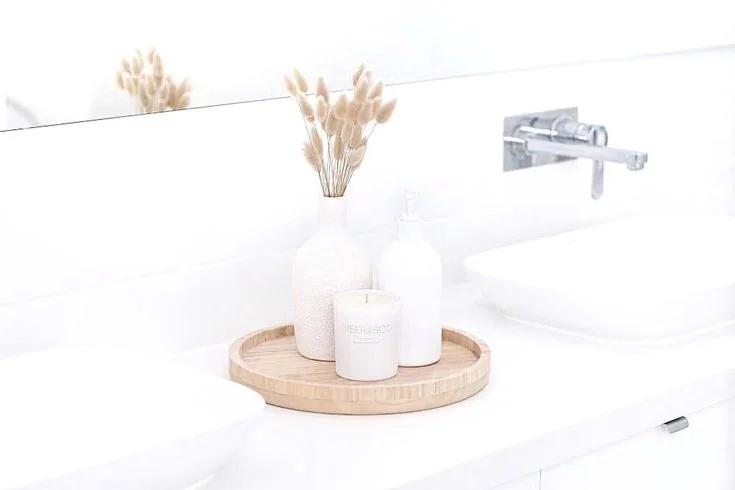
We’d use this as a color reference when the counter already has enough detail. Similar container colors let you vary the silhouettes without introducing a new accent at every position. You can leave the candle out. You’ll still have the pale palette with the dispenser and vase alone.
A tray’s appearance doesn’t tell you how its surface responds to water. Follow its stated care directions, and reserve delicate decorative pieces for a dry display spot. Keep the frequently wet sink-side supplies separate if they would make that arrangement awkward to maintain.
5. Leave Room to Lift a Bottle off the Tray
Once the shapes and colors appeal to you, look at the gaps around the objects you use. A bottle group can seem comfortably spaced from the doorway yet feel crowded when your hand reaches between the containers, so give the item you pick up most a place you can reach without shifting the whole display.
Try the ordinary action with the pieces in position: lift the bottle, use it, and return it. If a neighboring ornament keeps moving too, take that ornament out and compare the smaller group. The tray should hold the arrangement you want to live with, including the space your hand needs.
The same issue appears in these kitchen counter arrangements, where cups and useful containers share surfaces with decoration. Compare how the objects are grouped while leaving the surrounding counter available.
6. Give the Tray an Easy Place to Move During Cleaning
The gaps between bottles help with daily use, and an open patch beside the tray gives the group somewhere to go when you clean. Before settling the display, decide where its contents will rest while the counter and tray are wiped according to their care instructions.
A tray doesn’t need to carry everything in a single lift. Remove the contents separately when that’s easier for the tray you own, then return only the pieces that belong there. A spare bottle that arrived during the week may belong in a cabinet instead of becoming part of the display.
Consider the tray itself during that reset. If the base stays almost entirely hidden, you’ll probably prefer fewer containers or a simpler group directly on the counter. Keep the tray because you enjoy its outline and use; it doesn’t have to belong on every vanity.
7. Let the Open Counter Finish the Tray Display
After the tray is back in place, step away and look at the surrounding surface. The bare counter is part of the composition: it makes the tray’s edge visible and leaves the sink area easy to distinguish from the display. An empty corner beside a finished group can stay empty.
Choose which detail deserves attention. The towel tray already has folds, brushes, and reflective edges; the round pale arrangement has a tall vase. Adding a second collection beside either one may spread the same visual job across more of the counter.
For a broader room refresh, ZM Home offers ideas beyond the vanity. The home decor guide starts with the particular surface or daily frustration you want to improve. Here, stop when the tray looks considered and the sink still feels comfortable to use.
For ideas that bring the whole room together, explore Home Decor Ideas for Rooms You Use Every Day.