A boho living room needs more than a beige sofa and a soft blanket. Exposed woven frames, varied textile surfaces, patterned rugs and loose leafy shapes give the style something you can actually see. Choose a pale or colorful direction, then let a few of those details lead while the larger furniture stays easy to read.
The examples below offer different starting points for the pieces you’re keeping. A plain sofa leaves room for raised cushion patterns; an orange sofa already contributes a broad patch of color. Look for the combination closest to your room before adding another layer.
Let a Woven Frame Give Boho Seating Its Shape
An exposed woven frame gives the seating area a distinct outline even with plain white cushions. Here, curved supports remain visible beneath the seat, and the open back shows between the pillows. The circular wall piece repeats that woven detail higher up, while the blue patterned rug brings a separate surface underfoot.
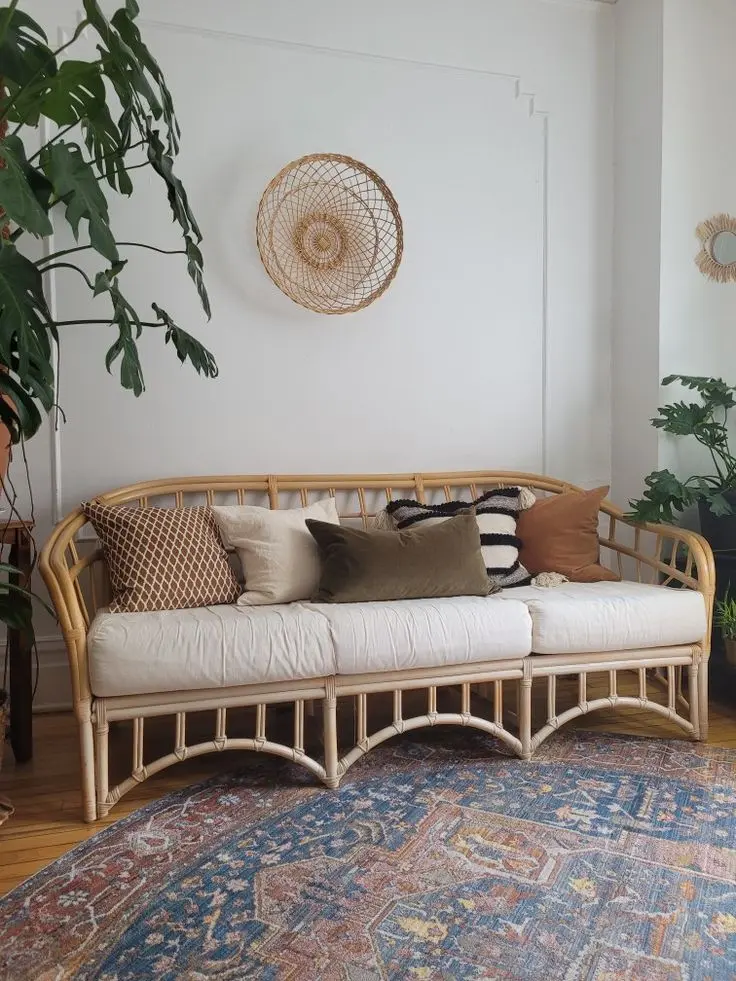
If you already have a chair with an open frame, give it enough space to show before looking for more accessories. A heavy throw across the whole back would cover the detail you’re trying to emphasize. Keep some of the frame exposed and use the cushion colors to connect it to the sofa nearby.
Natural rattan and wood are materials to consider when choosing furniture, though a photograph alone won’t confirm a piece’s composition. Look at the product description as well as the weave. For this arrangement, the useful visual detail is the space between the pale frame’s lines and the contrast with the fuller cushions.
Build a Minimalist Boho Living Room Through Texture
Woven detail can move above the seating when the sofa itself has a simple shape. The open pendant in this pale room has a loose, fringed-looking edge. Below it, the sofa and coffee table keep clear outlines, while black lines across the cream rug provide a stronger pattern near the floor.
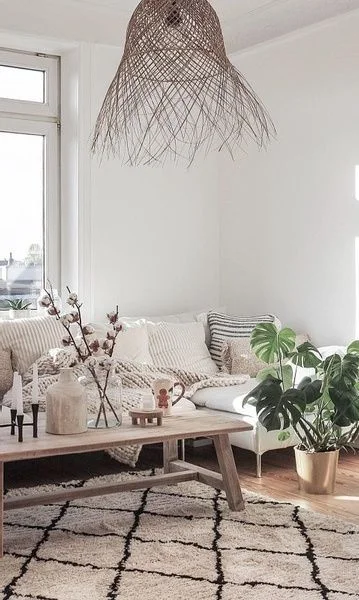
Borrow that balance rather than adding woven pieces to every surface. If a large shade is the detail you love, try it visually against the furniture and rug together. We’d leave the neighboring wall fairly bare so the shade’s irregular edge remains noticeable from the doorway.
Texture can also stay close to the seats. In the next room, knotted, tufted and fringed-looking cushion surfaces share a cream palette. The shelf’s woven trays echo those details without repeating the cushions’ shapes, and the broad wood tabletop offers a smoother surface in front.
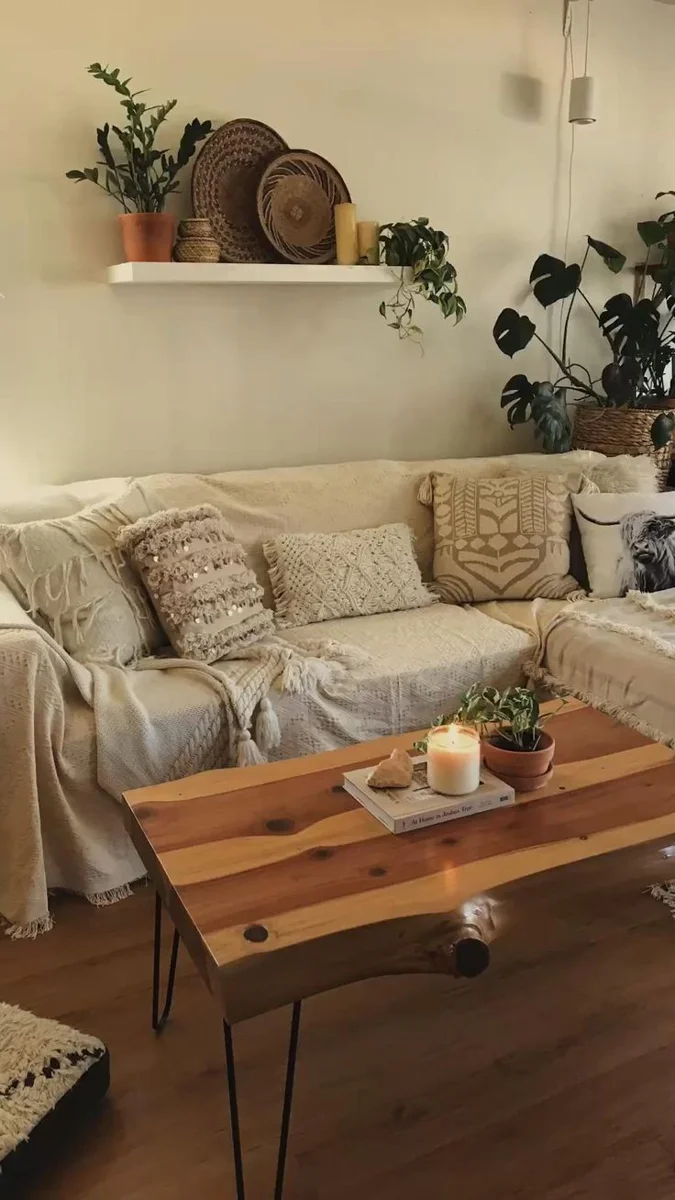
Compare a raised weave with a flatter cover against your own upholstery. Similar colors can work if you can still distinguish their surfaces from across the room. These cream and neutral living room combinations explore that color relationship further, including pale seating against deeper walls.
Keep a little shelf visible between the objects. The gaps make the shapes easier to follow and leave the plants room to spread without swallowing the whole display.
Give a Colorful Rug a Clear Role in the Room
A richer palette can use the same mix of surfaces, with the color carried by larger pieces. An orange sofa and pink patterned rug lead this room, while a glass tabletop leaves the rug visible beneath it. The irregular, rootlike table base adds another outline among the straight cabinet and sofa edges.
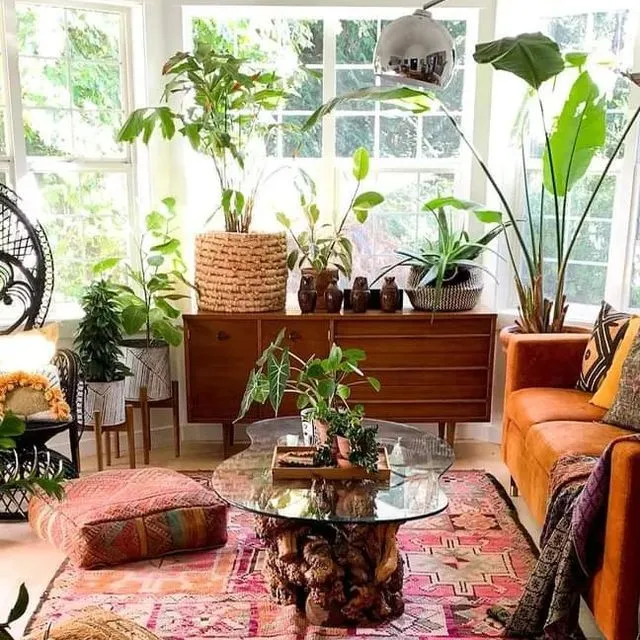
Work outward from the strongest piece you already own. With an orange sofa, compare the rug beside the upholstery before choosing more cushions. A small color repeated in both can connect them; the whole rug doesn’t need to match the sofa. Keep the table arrangement modest enough that the pattern remains part of the view.
Layering rugs gives a colorful pattern a different setting. Here, the patterned upper rug sits over a larger pale base, which stays visible along the sides and front. White seating and a light table leave that layered border easy to see, with blue chairs adding solid color beyond it.
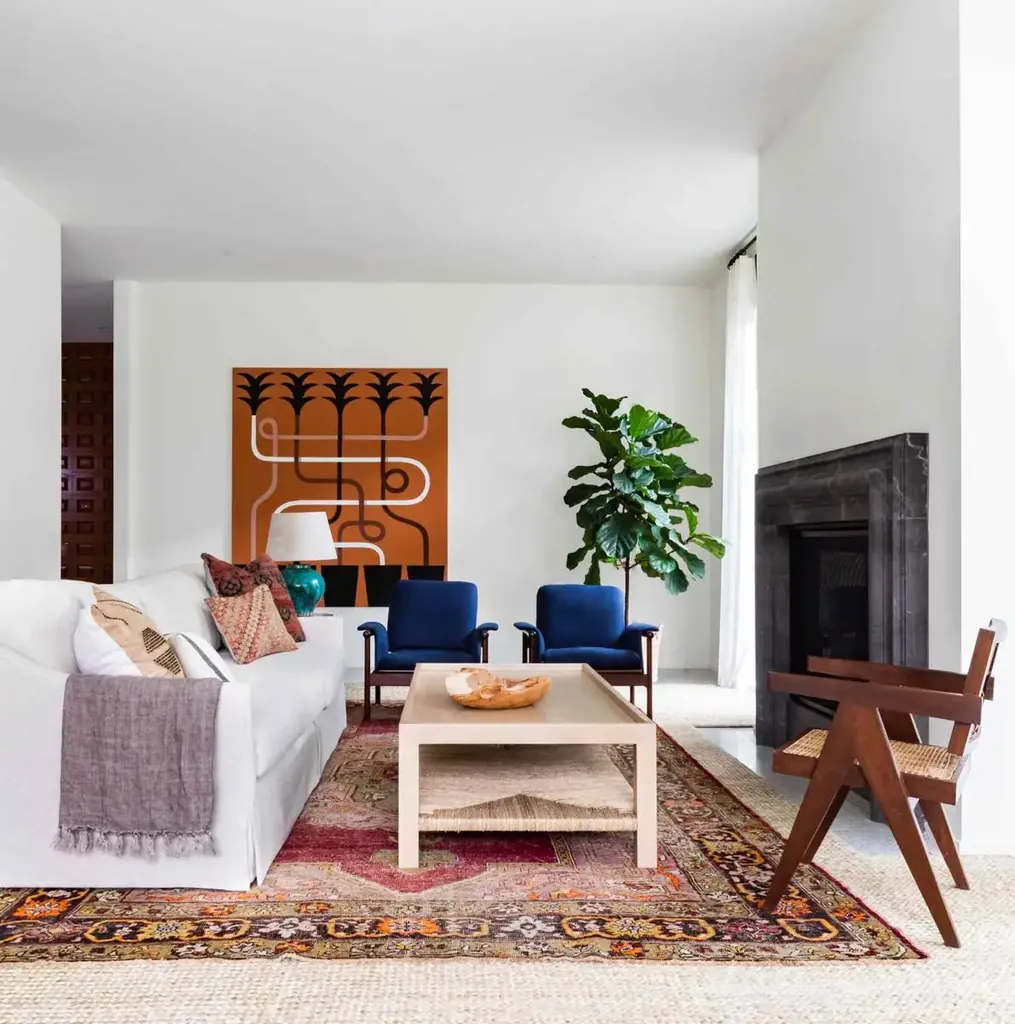
Try this direction when you want the patterned rug to occupy the seating area while a quieter surface extends farther out. Compare the rugs together on your floor before adding furniture, paying attention to how much of the base remains visible. Their edges and thickness also need to work where people walk; a room photograph can’t establish that practical fit.
Keep Modern Boho Living Room Furniture Straightforward
Color and rug layers can do plenty of work around a sofa with straight lines. The dark couch below has a broad plain surface between striped orange pillows. A pale chest forms the coffee table, bringing a worn-looking finish into a room that already has rough brick and a strongly textured rug.
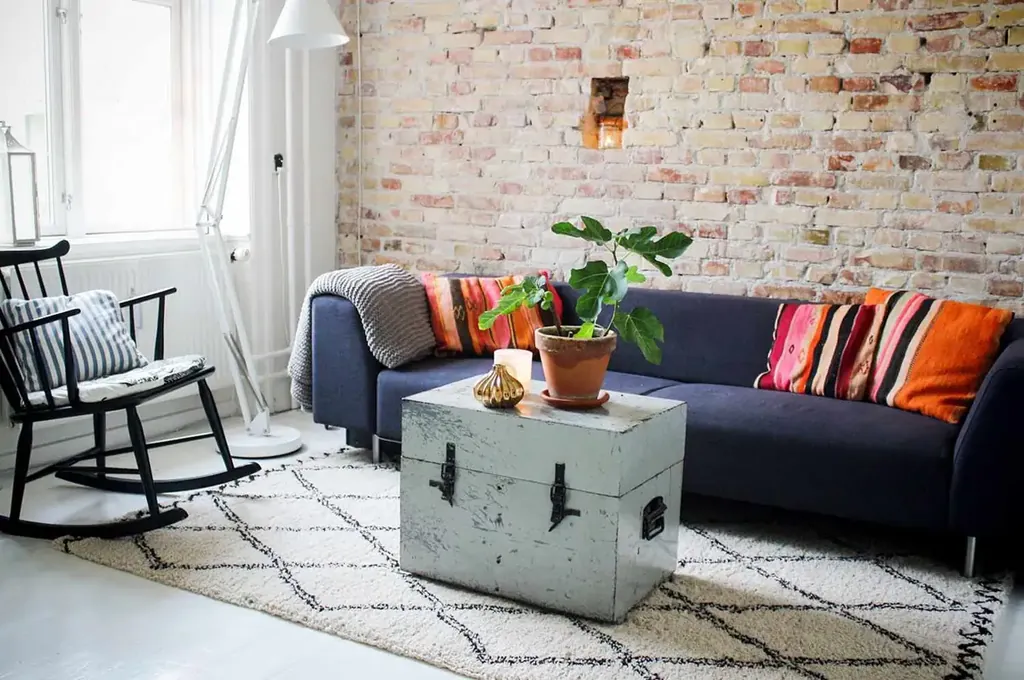
Keep an existing plain couch if its shape works for the way you sit. A striped cushion can change the color near its ends without covering the whole seat, and a textured rug can supply variation below. For other ways to soften seating and bring light closer, see these cozy living room adjustments.
Different seat colors can also belong to the same grouping. In this room, a brown sofa faces green armchairs across a multicolored rug. Small pillow and throw patterns add detail above it, while exposed floor and broad white walls keep the many colors from filling every surface.
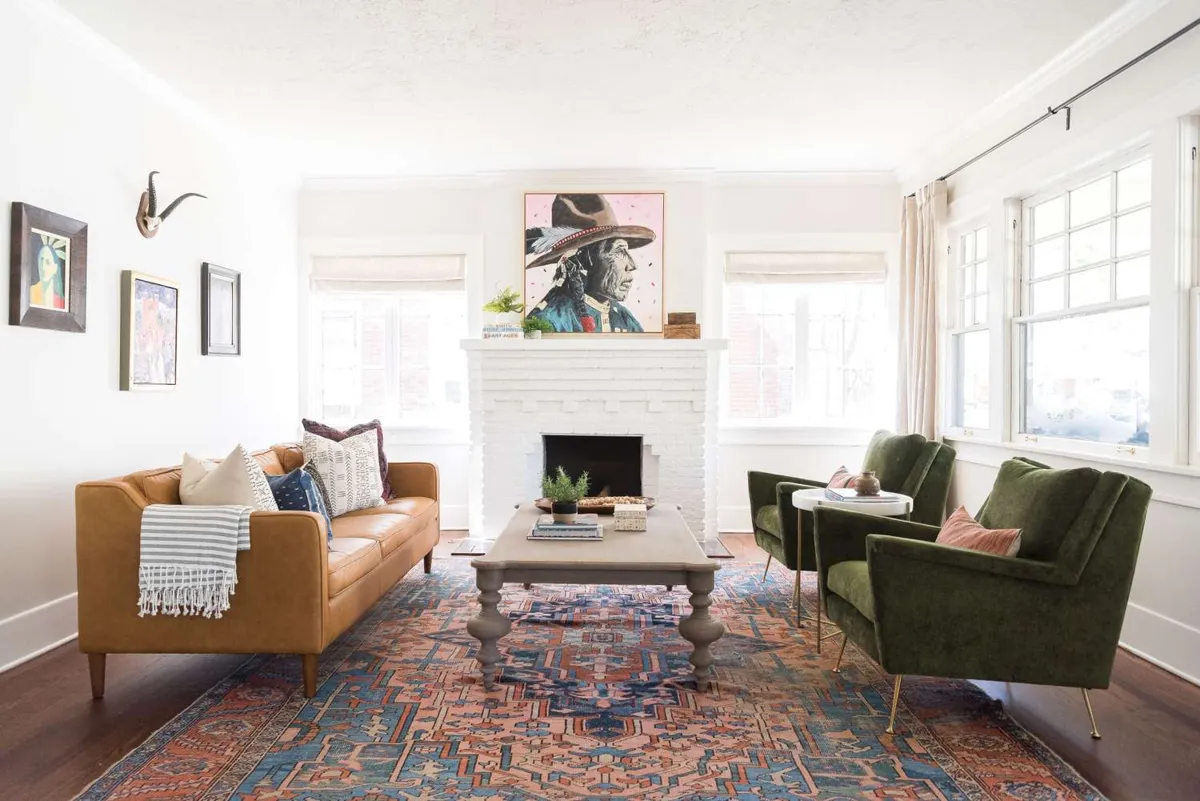
Use the rug as a shared reference when the chairs and sofa differ. Look for a color connection, then compare smaller textiles with the whole arrangement in view. A green sofa brings that color onto a larger surface; compare the wall colors and rug choices around green couches if that’s your starting point. Keep the outlines of the seats visible whichever palette you choose.
Give Trailing Plants a Defined Living Room Corner
Once the furniture and textiles have their places, plants can add a looser shape at the room’s edges. This close view brings trailing leaves down around a wood stand, with CDs alongside and a striped rug at the lower edge. The leaves connect the stand’s levels without requiring another large piece of furniture.
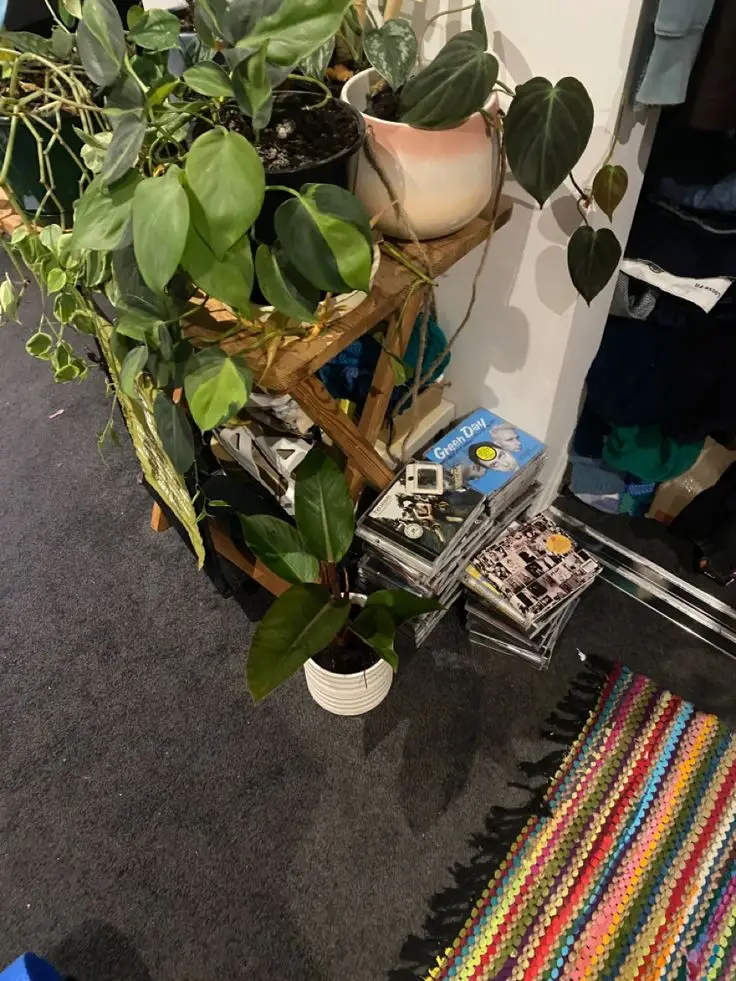
Choose plants for the conditions in your home, then consider how their outlines sit beside the objects you use. Keep CD cases and books reachable rather than threading them behind trailing stems. A stand is useful only if you can still reach the pots for care and enjoy what’s stored below.
For a related approach around a bed, the boho bedroom arrangements shift the focus to headboards, bedding and bedside surfaces. In the living room, keep the seats, table and walking space useful as the layers build up. Start with the frame, rug or textile you most want to see, and add the next detail where that grouping needs it. More room references are collected at ZM Home.