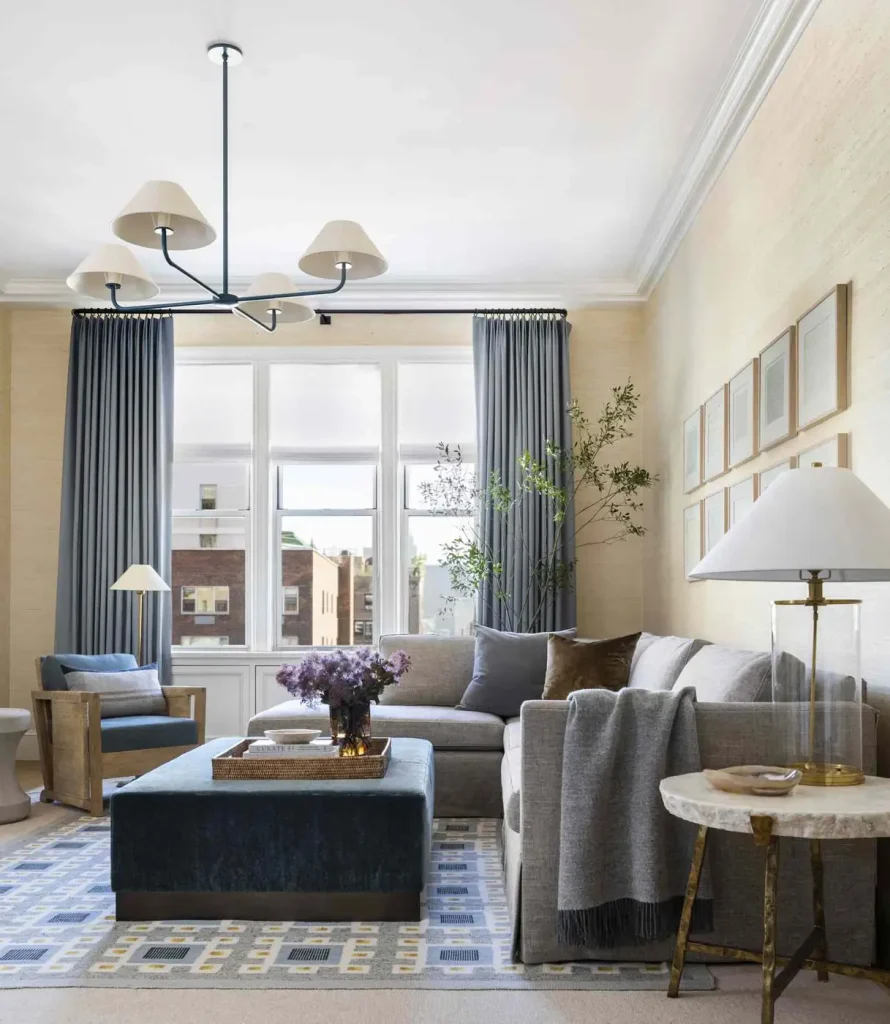
A living room can feel bright overhead while the seat where you want to read still sits in shadow. For a softer evening, start with a lamp beside the sofa, give the reading chair a light aimed toward the page, and keep a separate light farther into the room. Turn on the combination your evening needs, then check the view from the seats.
The rooms below show where those lights can go. Several are photographed in daylight, so use them to compare placement; the lit examples show different ways to give the background a glow. Begin with the lamps and surfaces you already have before deciding what’s missing.
Put Living Room Lamps Beside the Sofa
The sofa is a useful starting point because a light there serves the place you actually settle. In this room, a broad-shaded table lamp stands beside the near end of the gray sofa, while a smaller lamp accompanies the armchair across the room. Each light belongs to a seat instead of gathering on one decorative console.
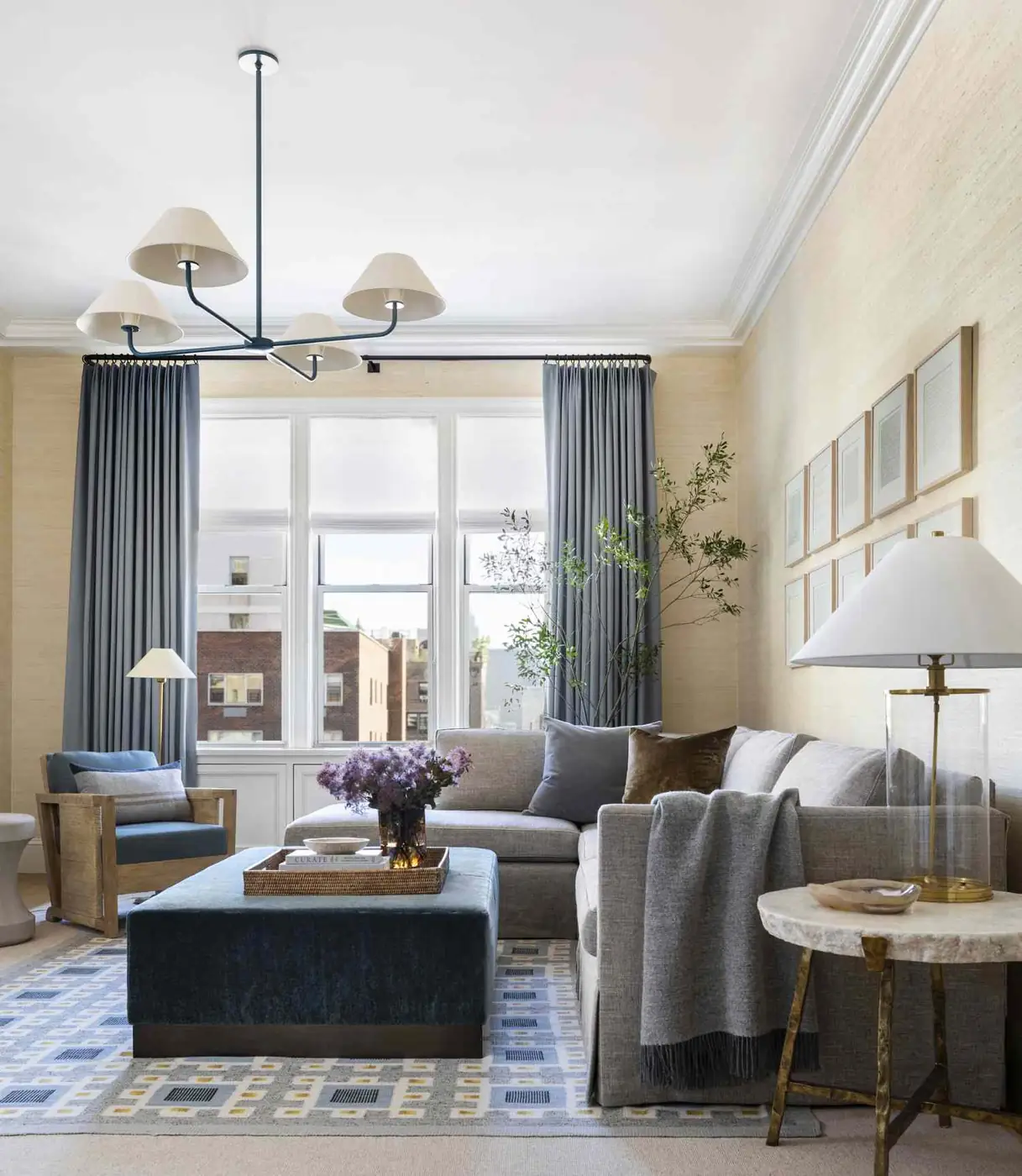
Try an existing lamp at the end where you usually sit. Leave enough table space for the things you reach for, and look at the shade while seated: a lamp that looks pleasing from the doorway may put its bright opening directly in your view. Try a different spot for the portable lamp before adding another light elsewhere.
Different heights can work around a compact seating group. Here, a low table lamp sits beside the pale chairs and footstools, with a taller floor lamp at the opposite side. The arrangement offers a placement idea even though daylight fills the photograph.
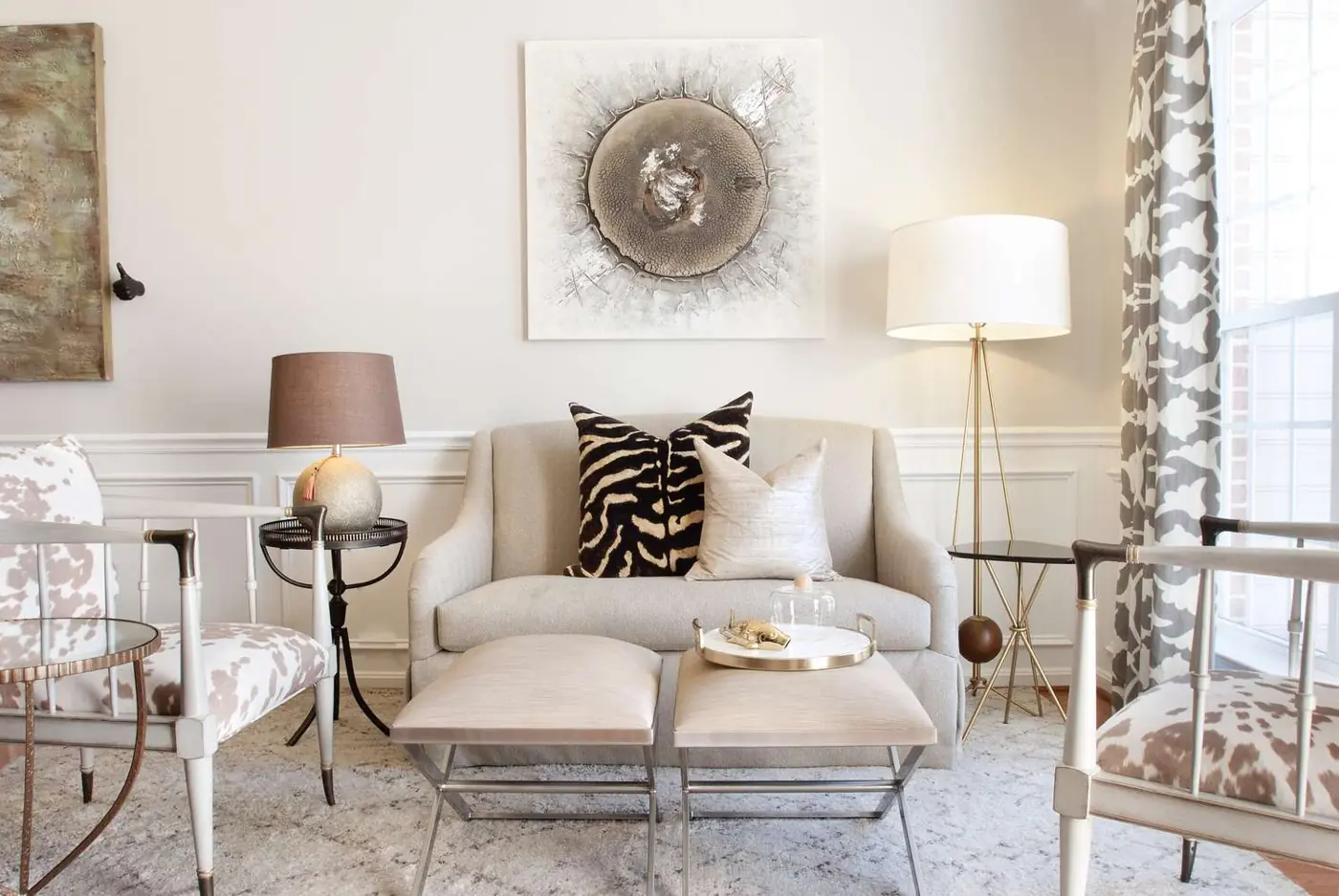
A floor lamp still needs room for its base and your route past the seat. When that space is tight, compare the side walkway and chair arrangements in our narrow living room layout guide before moving a lamp into it. Keep the seat easy to approach as well as pleasant to look at.
Give the Reading Chair a Light of Its Own
Once the sofa has a nearby lamp, consider the chair used for reading. Your sofa lamp won’t necessarily reach that separate seat. In the bookshelf corner below, the tall floor lamp stands directly beside the tan armchair, keeping the light source close to the reading spot.
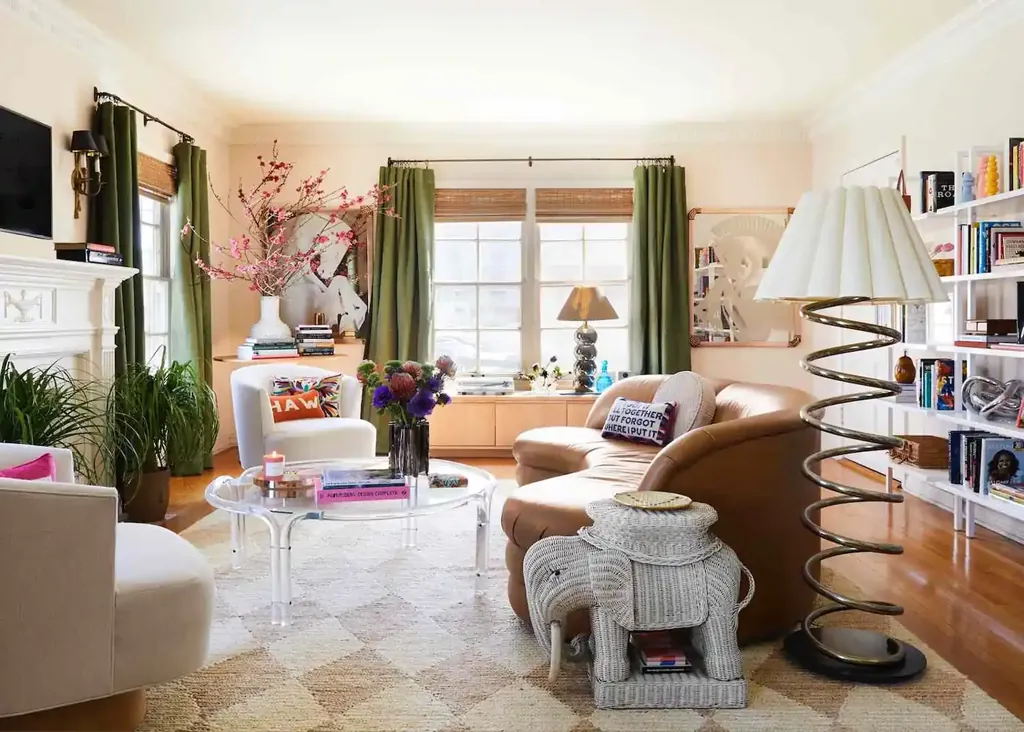
Sit with an open book in your usual reading pose before settling the lamp’s spot. Check whether the page is easy to see and whether your head or hand gets between the light and the book. Move a portable lamp or use its built-in controls to find a better angle; a photograph can’t establish the reading brightness in your room.
A directional shade gives another visual cue. Beside the black sofa, the angled black floor lamp turns toward the seating, while a brass-colored table lamp stands on the other side. The lamp shapes differ because the light near the reading end has a more focused direction.
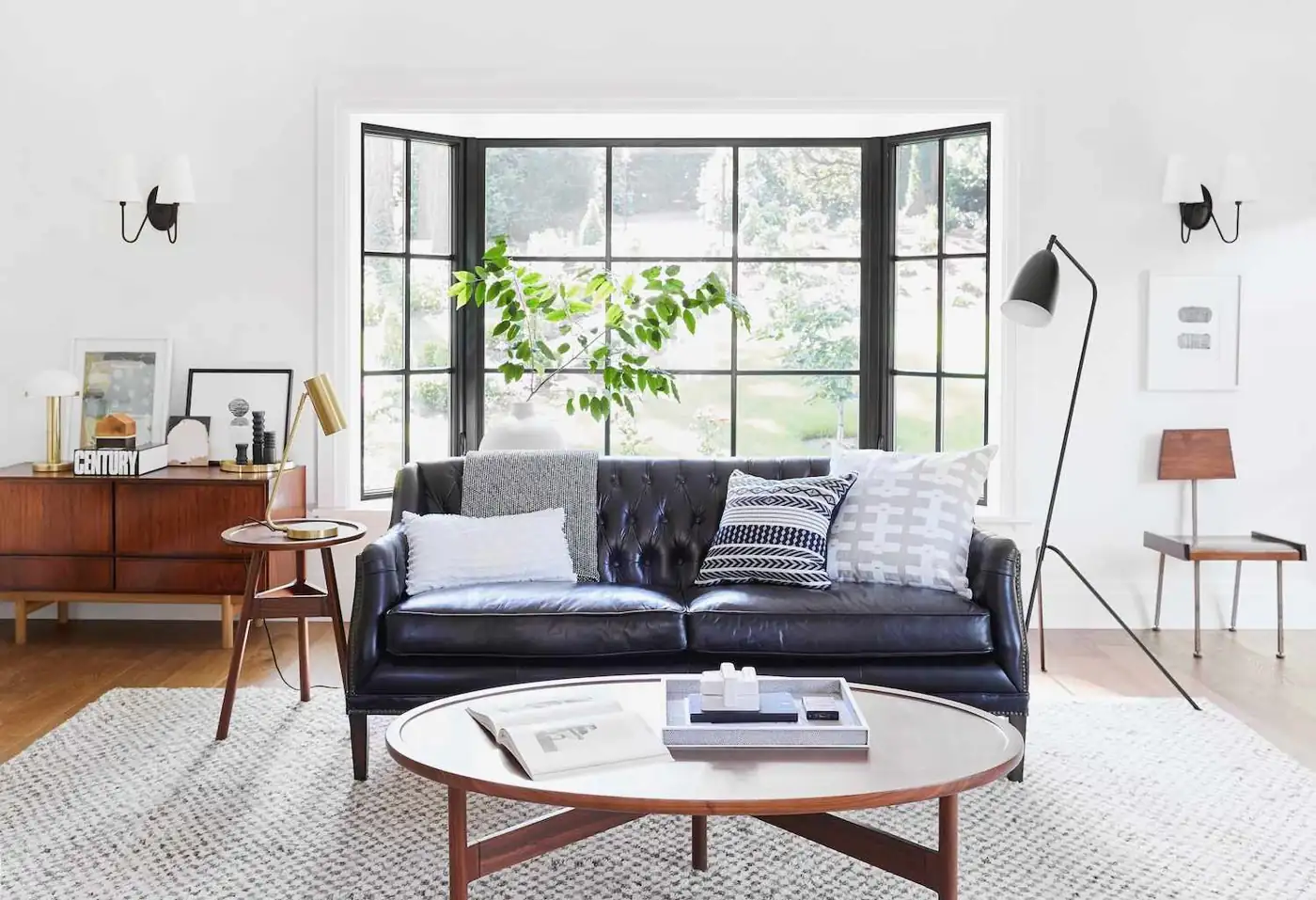
Give that reading light a separate role in the evening. Keep it on while someone reads, then see whether the sofa lamp alone suits conversation afterward. For the softer furnishings around that seat, these cozy living room ideas compare throws, patterned chairs and warm accents alongside lighting.
Let Living Room Wall Lights Fill the Background
A reading light handles the page, but it doesn’t do much for a wall left in shadow. Existing wall lights can bring that background into view. The pair above this gray sofa makes small glowing areas against the dark wall while leaving much of the wall color visible.
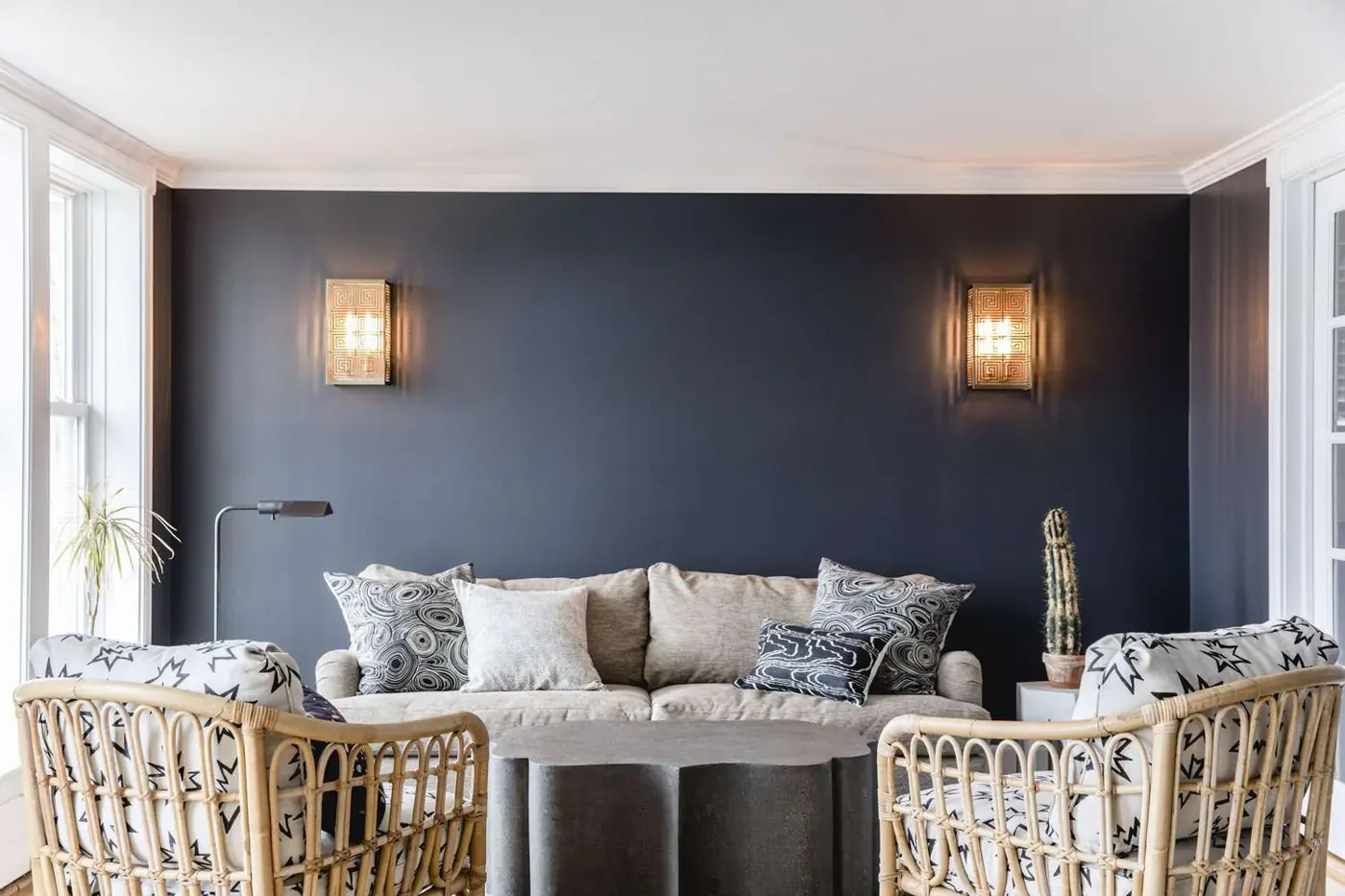
If your room already has wall lights, try them separately from the ceiling fixture and judge the result from the sofa. A background layer doesn’t have to illuminate a book or compete with the reading lamp. Where there aren’t wall lights, an existing table lamp farther from the main seat offers another arrangement to try.
The circular fixture below shows a more dramatic version of background light. Its glow spreads onto the wall behind the blue sofa, with the center remaining dark. You don’t need to copy the circle to borrow the idea of a visible wall behind the seat when thinking about lights you already have.
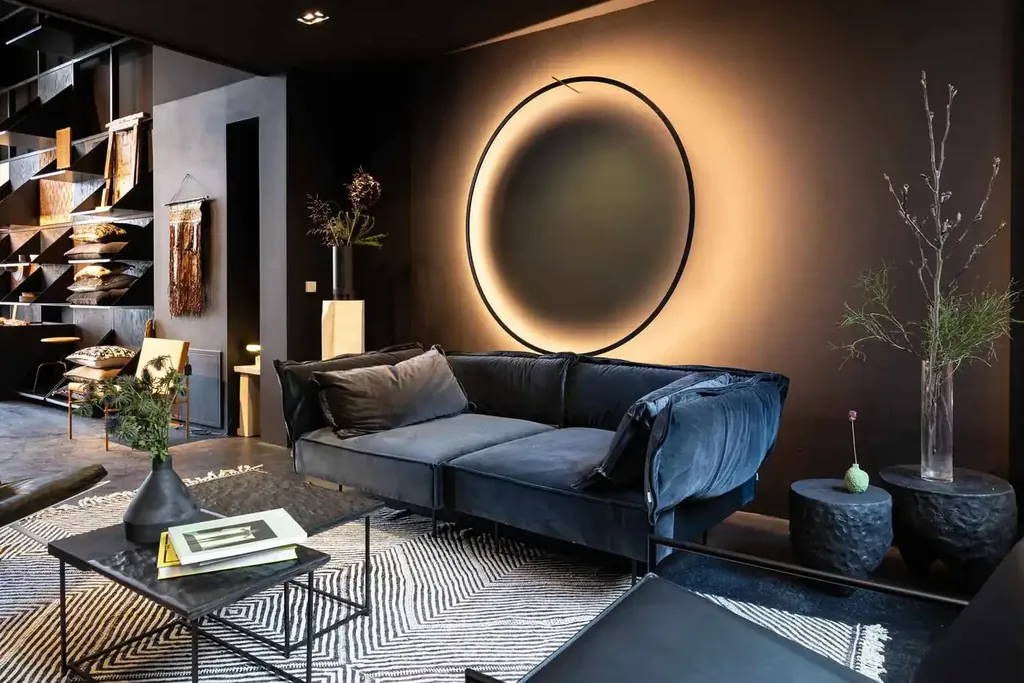
This display interior illustrates the visual effect; it doesn’t establish how to reproduce the fixture in a home. For an everyday arrangement, look first at which background surface disappears after dark and whether an existing lamp can make that part of the room visible again.
Spread Warm Living Room Lighting Beyond One Corner
With a background light in place, look at how the lit areas relate across the room. The example below has pendant lights nearer the foreground and table lamps farther back. Those separate positions give the eye places to travel beyond the nearest seat, while the visible glow brings warmth to the scene.
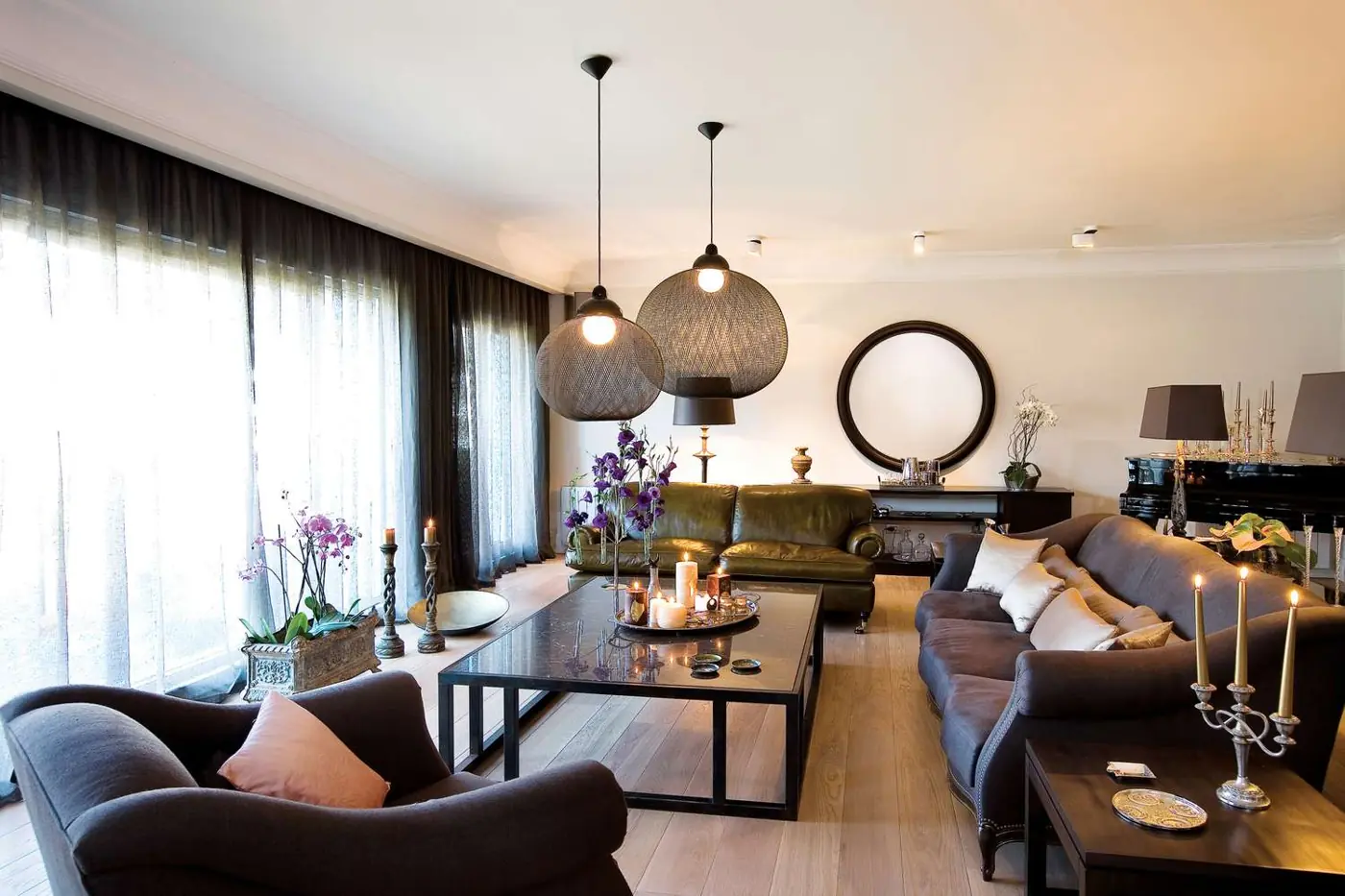
Use the electric-light positions as the reference here. Try a lamp farther along the room while keeping the sofa light on, then compare the view with that far lamp off. The useful question is whether the room feels connected from your seat, rather than whether every corner has the same brightness.
Warmth also depends on the colors beside the light. Hold a cushion or fabric sample where it’ll sit and look again under your usual evening lamps. Our cream and taupe living room palettes show those surface relationships; the green couch color combinations offer comparisons when the sofa is the stronger color. Judge your actual fabrics under your own lights before changing a large surface.
Choose the Lamps for the Evening You’re Having
Once the light reaches the seats and background, choose which sources need to stay on together. The fireplace room below separates decorative hanging bulbs from a directional lamp beside the right-hand chair. The glowing wall details and the chair light have different jobs, so their presence doesn’t mean every fixture must be used at once.
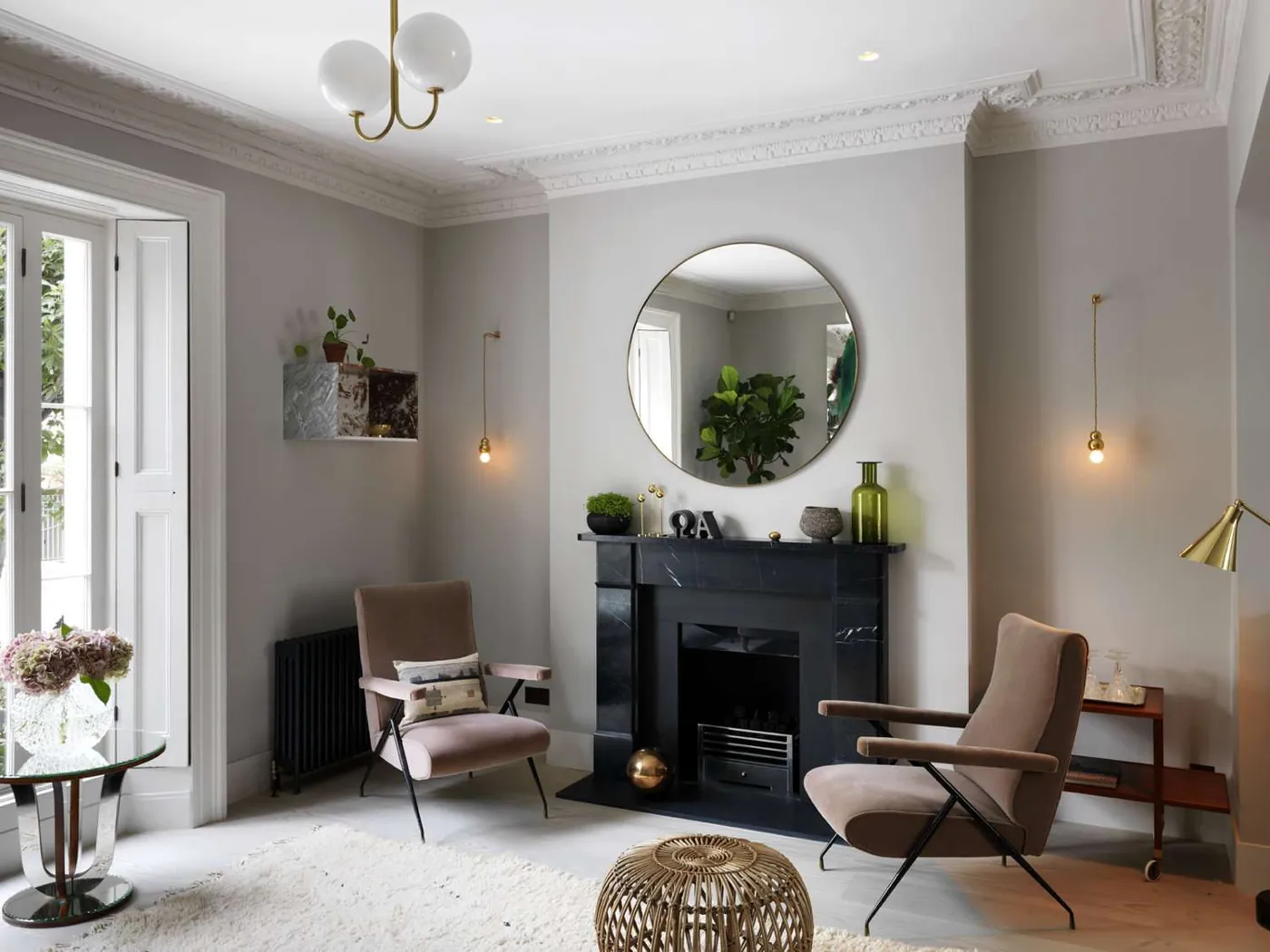
For conversation, begin with the sofa lamp and add the farther light if the background feels too dark. For reading, bring in the chair’s directional light. When watching television, check the screen from each seat for reflected lamp shapes and try a different portable-lamp position if a reflection distracts you.
Make the comparison after daylight has faded, using the room as you normally would. Keep the combination that lets you see what you’re doing and gives the surrounding seats a comfortable setting. More room-by-room decorating ideas are available at ZM Home.