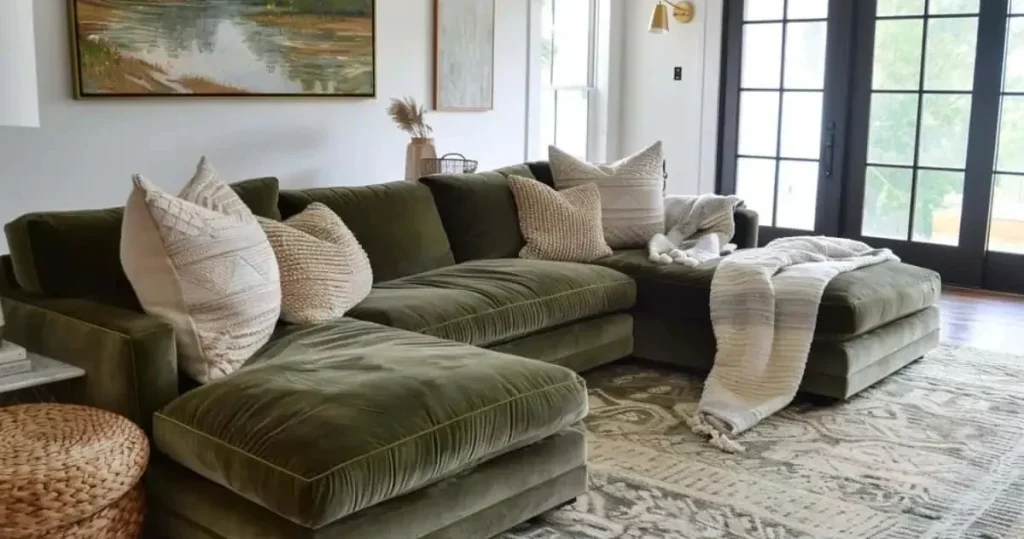
Cream walls and a pale rug give a green couch a clear place to stand out. For more color, try an ochre pillow, a pink wall or a patterned green rug. These green couch living room ideas compare those choices, from a light sage sofa to deep olive seating against green walls.
The useful starting point is the color you already have around the couch. Keep a favorite rug or the wall paint you’re happy with, then choose the example that shares it. We’ve grouped the rooms by that decision, so there’s no need to replace everything to borrow a palette.
What Colors Work With a Green Couch?
Cream, beige, warm wood tones, pink and ochre all offer starting points for a green sofa living room. The difference is where each color goes. A cream wall leaves the couch prominent; a green rug repeats it across a larger area; a pink pillow introduces warmth in a small, easy-to-change patch.
Use the combinations below as a first shortlist. Each one appears in the rooms that follow, where the rug and pillows show how the colors sit together.
| Starting point | Wall color | Rug direction | Pillow colors |
|---|---|---|---|
| Dark green couch as the main color | Cream or warm white | Pale beige | Cream, beige and a quiet stripe |
| Olive couch with stronger pattern | White | Black and beige pattern | Earthy print or plaid |
| Green repeated beyond the couch | Pale neutral | Green with pale lines | Cream and deeper green |
| Light sage couch with warmth | Cream | Muted cream and warm pattern | Ochre and cream |
| Olive couch with a pink backdrop | Muted pink | Pale pattern or woven beige | Pink and cream, or black and white |
| Deep green walls already in place | Deep green | Light green or muted pink | Beige, cream or dusty pink |
Cream Walls Give a Green Sofa Room to Stand Out
A dark green couch is easy to read against cream walls and a pale rug. In this room, the pillows and throw repeat the light background across the seat. The striped pillow supplies a little movement, while the broad brown coffee table brings a darker surface forward from the sofa.
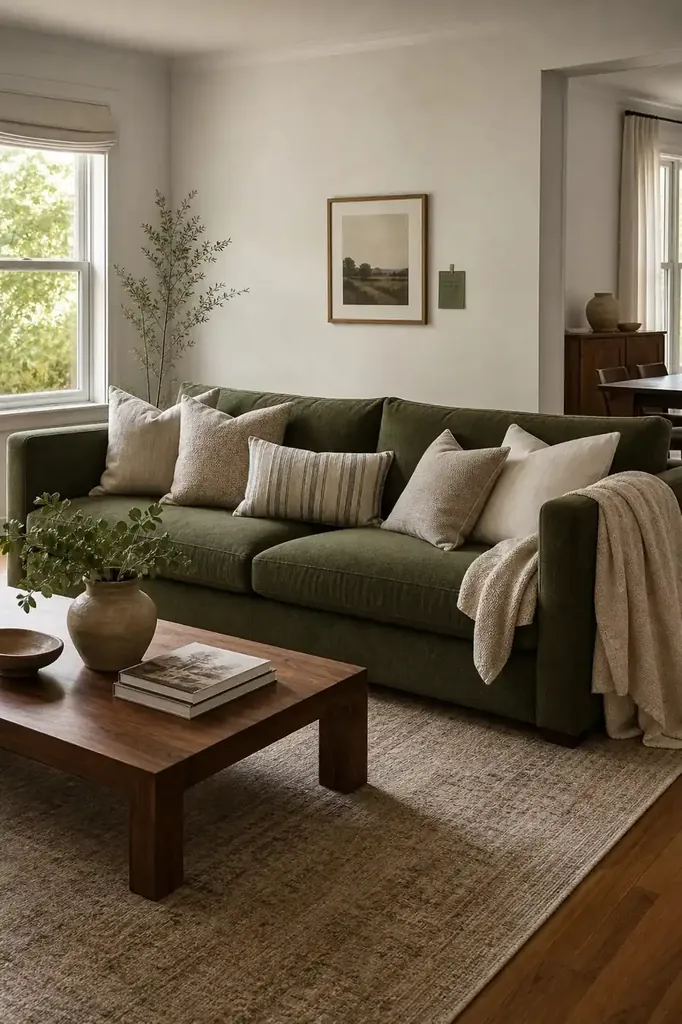
We’d borrow the pillow contrast first if the walls are already light. A cream cover makes a distinct patch against deep green; another dark pillow would sit much closer to the upholstery. Keep some of the green seat and back visible so the couch still contributes its color to the room.
Pale sage produces a gentler contrast with the same light background. Here, botanical pillows and framed tree pictures carry green upward, while the brown table and woven-looking rug add warmer tones below. The couch belongs to a wider group of soft colors, rather than standing alone as a dark shape.
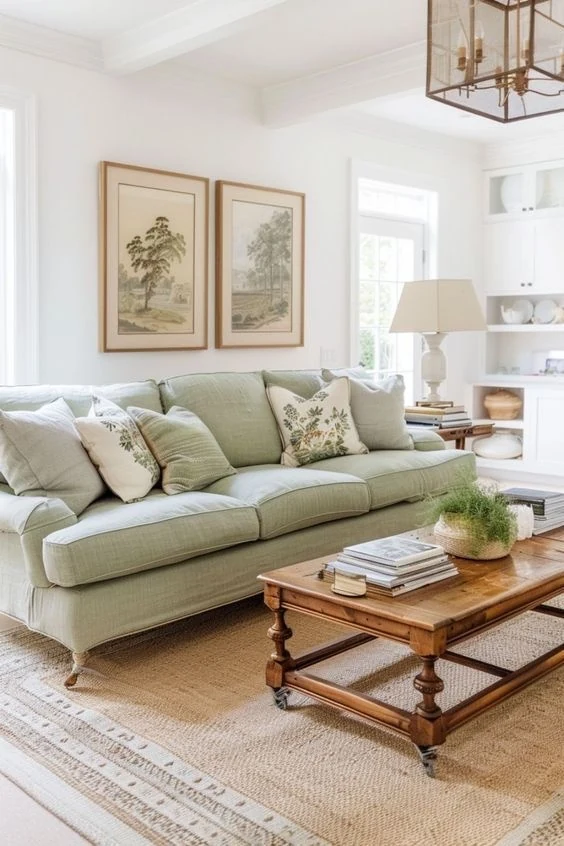
For a similar sage couch, start with the print you already like. A pillow with a cream background and small green details can connect the seat to pale walls. If the whole arrangement feels too faint, a brown table or picture frame gives the light colors a firmer edge.
Patterned Rugs Bring an Olive Couch Into the Room
Keeping the walls light leaves room for a stronger rug under an olive couch. The black and beige pattern here fills much of the floor, with both colors visible around the table. Plaid and floral pillows add detail at seat height, so the sofa connects to the pattern below without wearing an identical print.
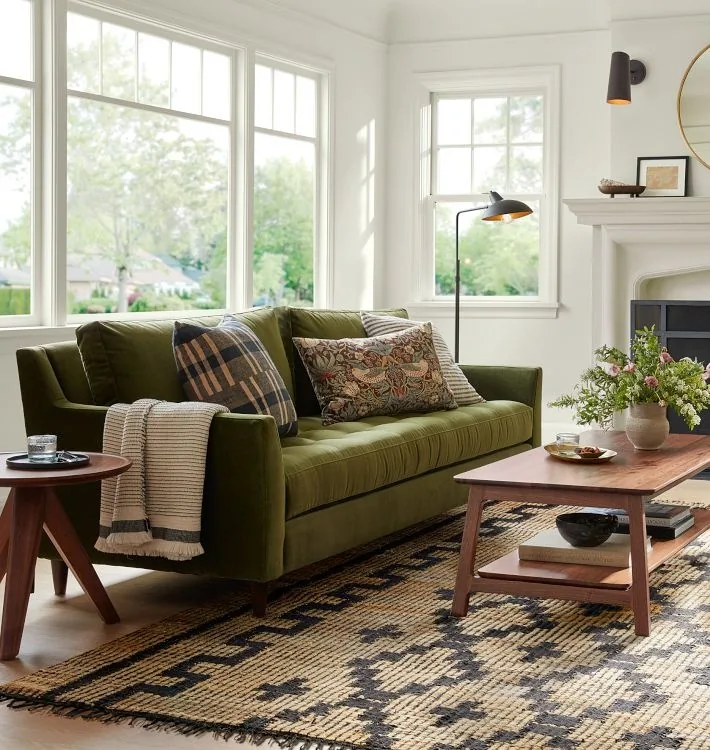
The dark lamps help the rug’s black marks feel at home elsewhere in the room. If you already own a graphic rug, look for a color it shares with an existing lamp or frame before adding accessories. That gives the pattern a connection beyond the floor.
For the pillows, we’d start with a print that includes a color from the rug. The rug already supplies a large, bold pattern, so a smaller plaid or floral can contribute detail at a different scale. Try the combination on the couch before committing to more patterned pieces.
A Green Rug Can Echo the Couch Without Matching It
A green rug takes the repetition farther than a patterned neutral one. In this room, pale lines break up the rug’s green surface beneath the olive sectional. Cream curtains and pillows surround both green areas with lighter colors, while a band of wood floor stays visible around the rug.
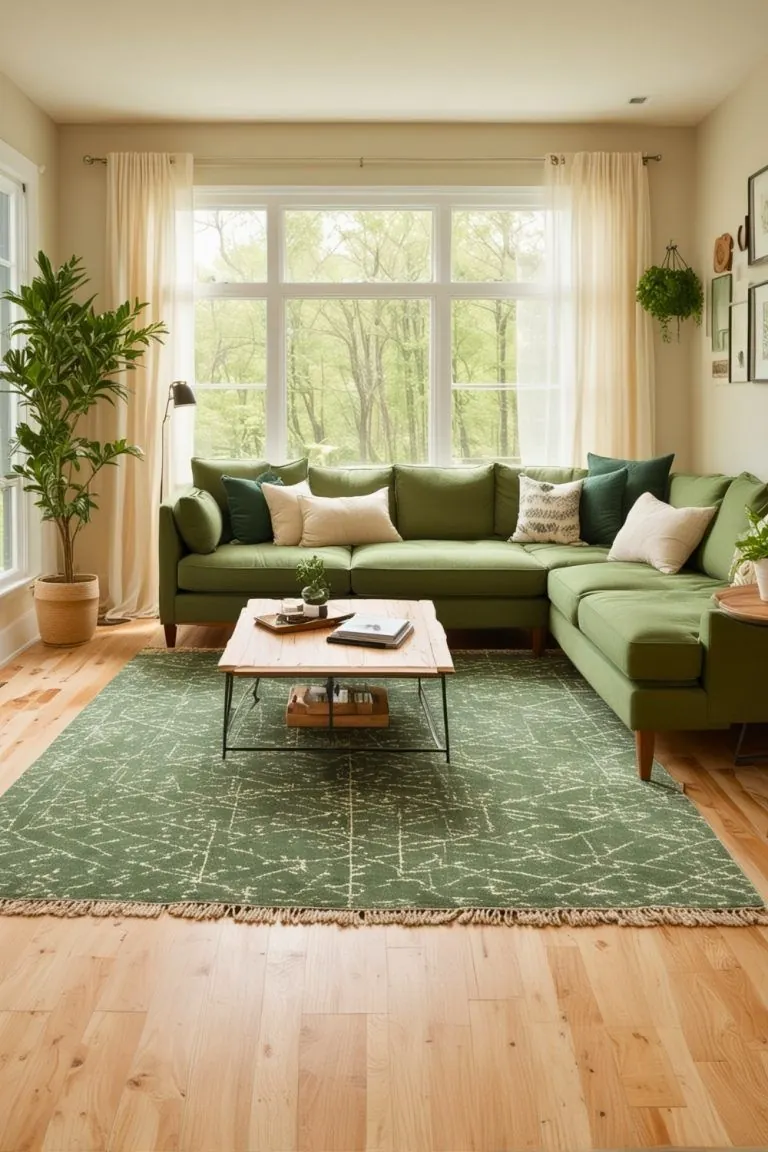
The couch and rug share a color family, but their surfaces differ because the couch reads as a broad solid while pale, irregular marks break up the rug and soften its large area of green. If you’re considering a green rug, compare its pattern as well as its shade with the couch.
Cream pillows are useful here because they interrupt the green at eye level. A darker green pillow can join them, as it does in this example, without becoming the whole arrangement. Keep a light patch somewhere on the seat if you want the couch’s outline to remain easy to see.
Give a Sage Sofa a Warm Accent With Ochre Pillows
An ochre pillow introduces a warmer color without changing the sage couch’s pale surroundings. The golden-brown pillow here sits between a small black-and-white pattern and a larger cream pattern. Its warmth also connects with the brown cabinet and coffee table, giving the accent a reason to belong.
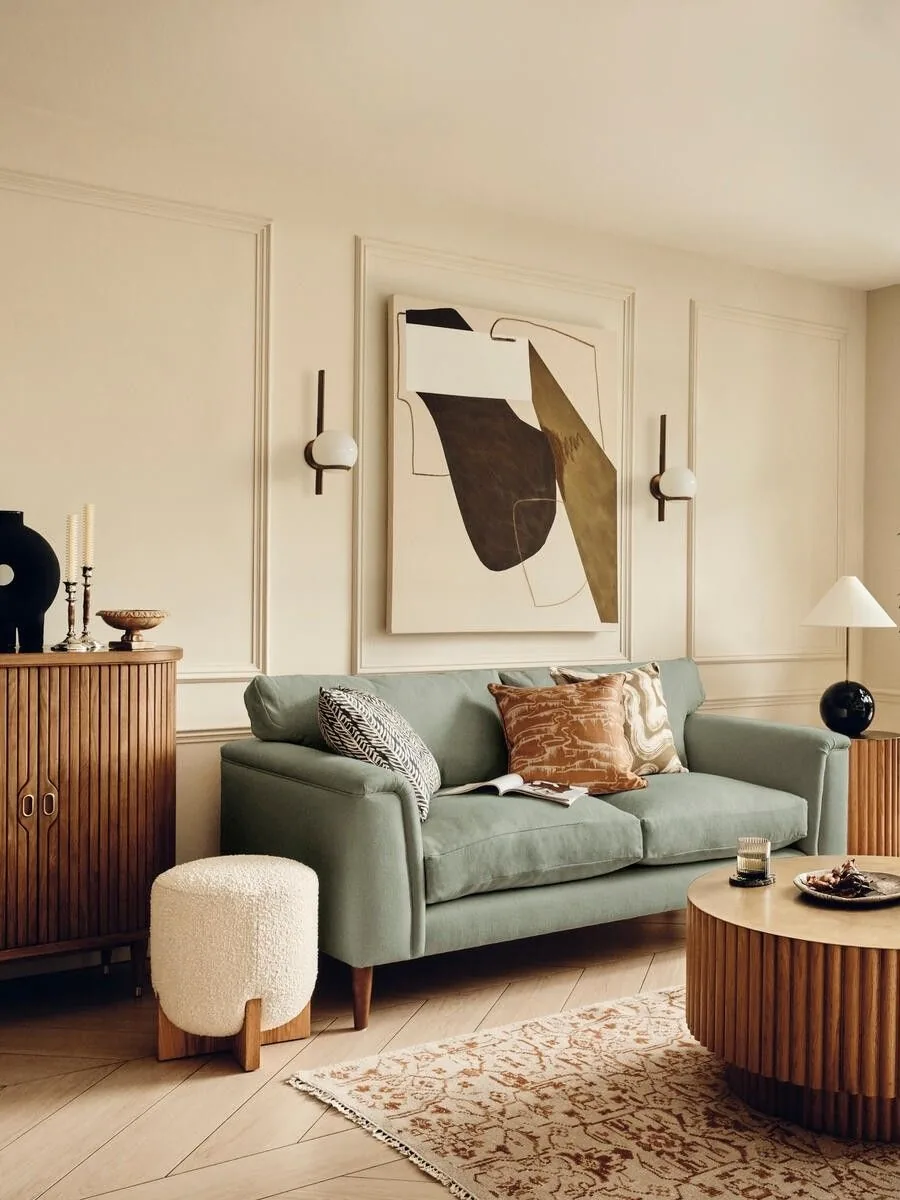
Try this direction if your room already has warm brown furniture but the couch feels a little separate from it. Start with one warm pillow cover beside a pale one and look at them with the table in view. The useful comparison is the whole grouping, rather than two fabric swatches held together.
The black details deserve a place in that comparison too. Small dark marks in the pillow, the lamps and the artwork give this pale room some definition. If those darker pieces are already in your room, keeping them may do more for the palette than adding another warm color.
Pink Walls Change How an Olive Couch Reads
Pink walls put the warm accent behind the whole couch. The first room pairs a muted pink wall with pink and cream pillows, then spreads softer traces of color across a pale patterned rug. The large olive sectional remains the darkest piece in the seating area, so its shape stays distinct.
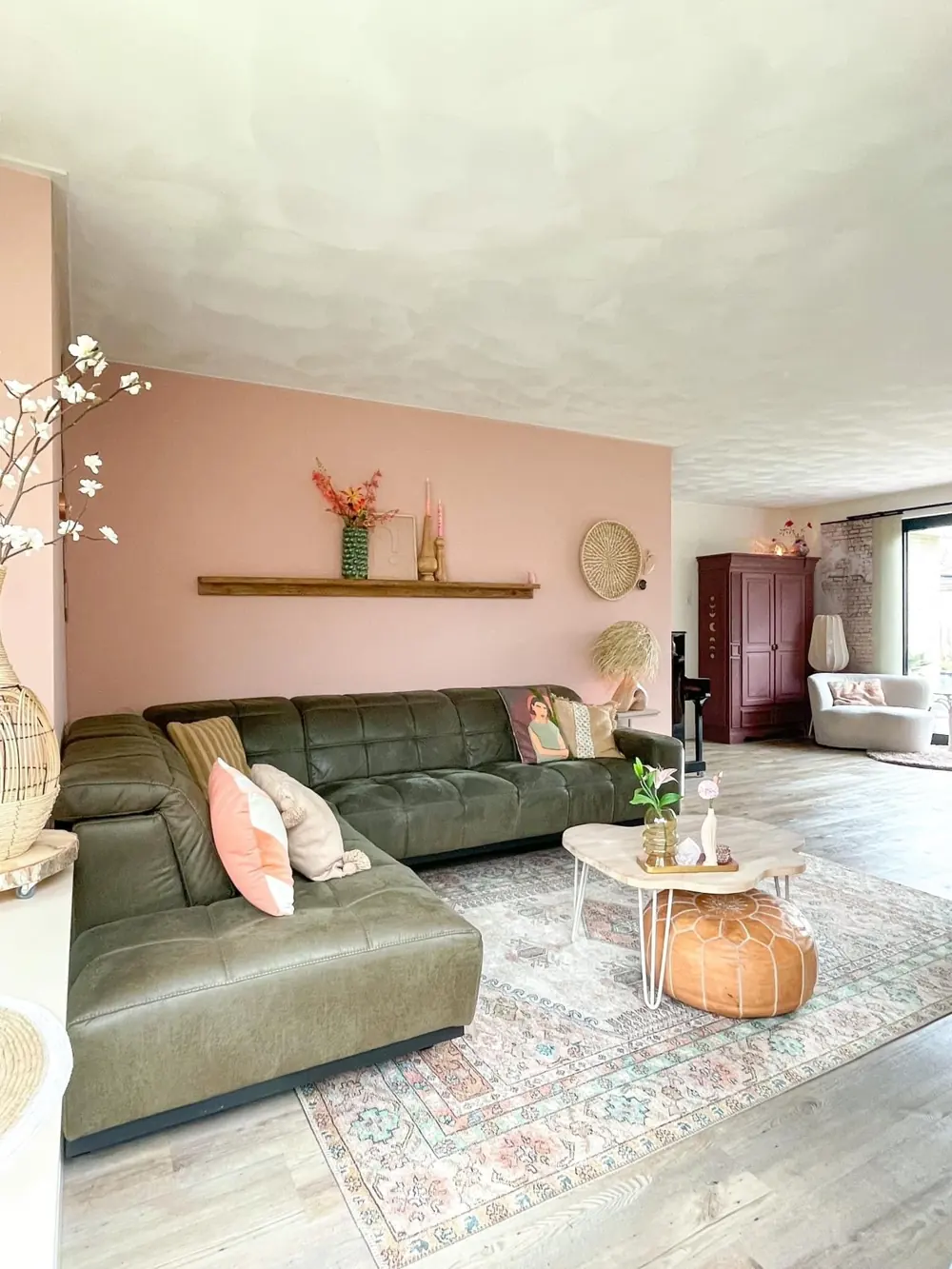
Borrow this combination if you like a colored wall but want a light-looking floor. Choose the wall and pillow colors together, with the couch beside them. They can be related without matching exactly; the example has a soft pink backdrop and a brighter pink patch on the seat.
Black and white give a pink-and-green room a sharper direction. In the second example, dark picture frames and shelving connect with graphic pillows and a striped throw. A beige woven-looking rug leaves those high-contrast details concentrated around the couch and wall.
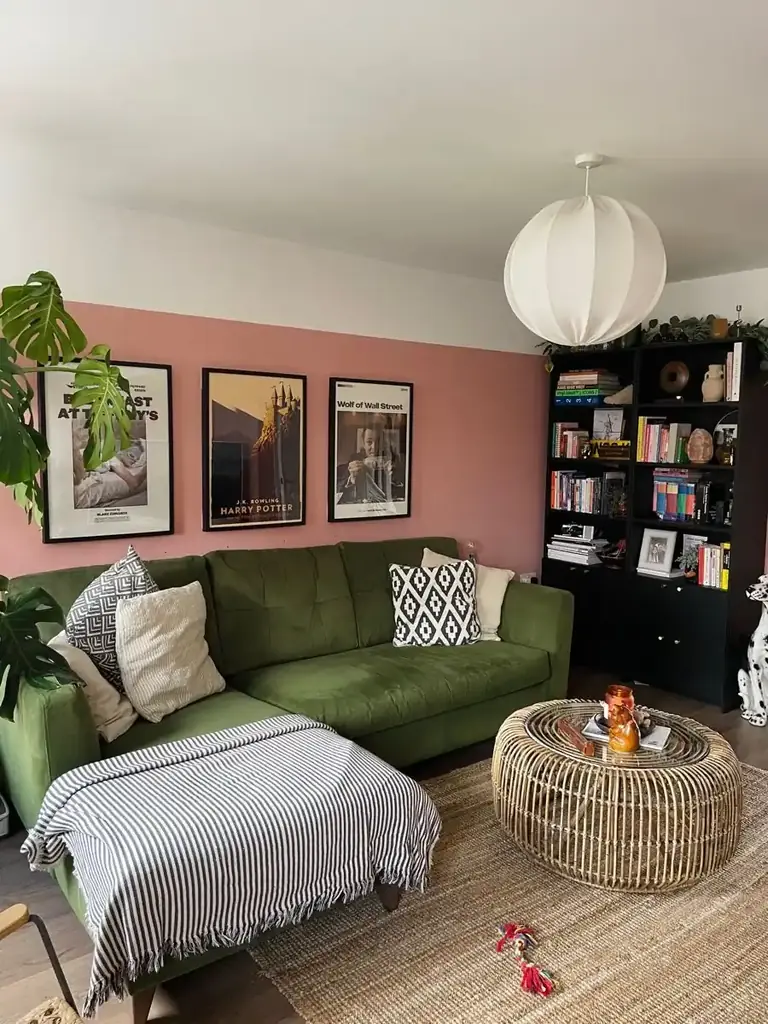
These two rooms suggest different jobs for the rug. A pale colored pattern can spread the pink gently across the floor; a plain-looking beige surface gives busy black-and-white accessories space around them. Choose according to the pieces you want to keep, especially artwork and pillows that already have strong patterns.
Deep Green Walls Need a Visible Break Around the Sofa
Deep green walls bring the couch closer to its background, so the lighter pieces become more noticeable. Here, pale textured pillows mark the seat, and a light green rug separates the couch from the brown floor. The wall, window trim and fireplace surround form a much darker area behind them.
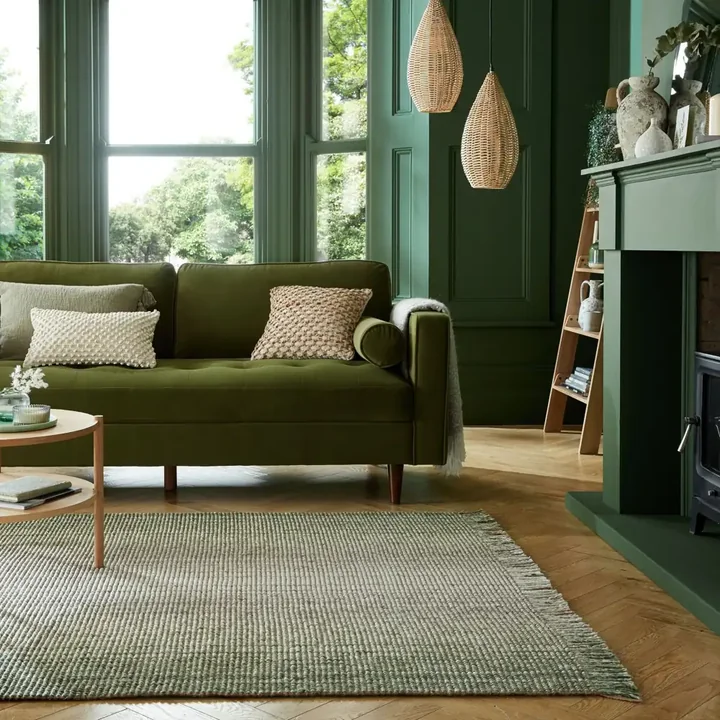
If your walls are already deep green, try placing a light pillow or throw on the couch before choosing another large piece. Look at the sofa from across the room. The aim is to see where the seat ends and the wall begins, while keeping the enveloping color you chose.
Dusty pink offers another way to make that separation. This room has a pink pillow and muted pink rug against green upholstery and walls. Cream curtains make a large light area at the window, and the pale throw carries some of that light color onto the couch.
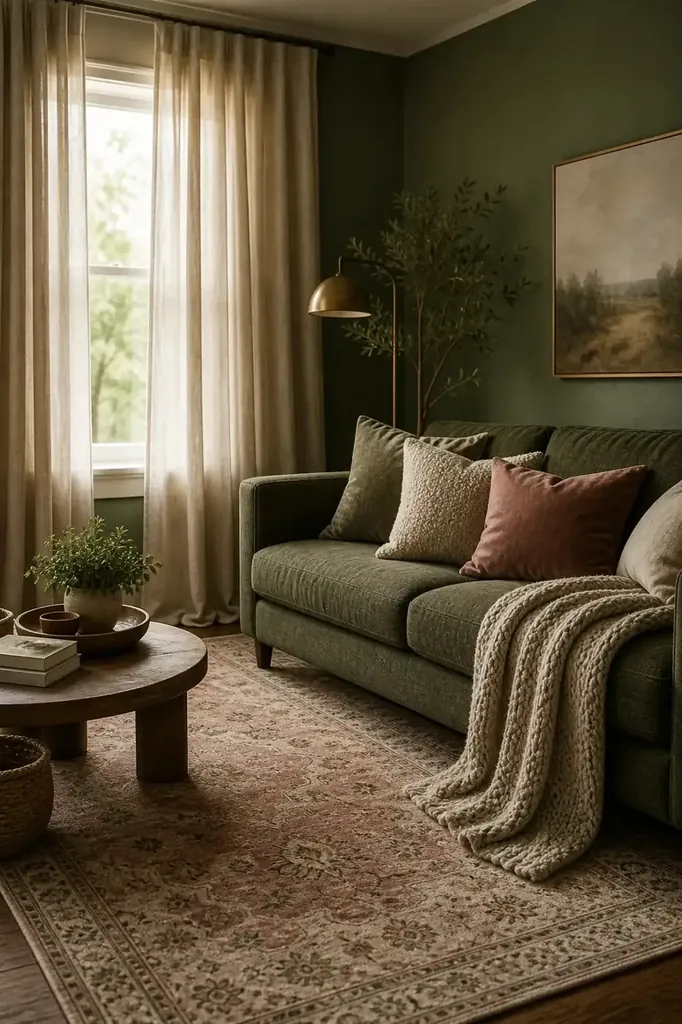
Keep the wall, couch and proposed rug in view together when making the final choice. Then look again under the lamps you use in the evening. Pick the combination whose color relationships you still enjoy there; that’s more useful than matching an isolated green swatch perfectly.
If the sofa already fits but the room feels crowded, our small living room ideas focus on lighter outlines and gathered displays.
For more pale wall and rug combinations, compare these neutral living room ideas, then explore cozy living room accents for throws, lighting and repeated color.