A small living room can feel crowded even when the furniture fits. Give the eye more space around the pieces you’re keeping: choose open chair frames, let the window remain visible, and bring the larger fabrics into a related palette. The rooms below show those choices in pale and dark schemes, with ideas for apartment storage and a useful little table beside a chair.
Small Living Room Decor Starts with Lighter Furniture
Start with the outline of the seating, especially where it overlaps a window. In this room, the pale sofa has a broad upholstered body, while the chairs beside it have slender dark frames and woven backs. Those openings let parts of the window corner remain visible through the chairs, so every seat doesn’t become another solid block.
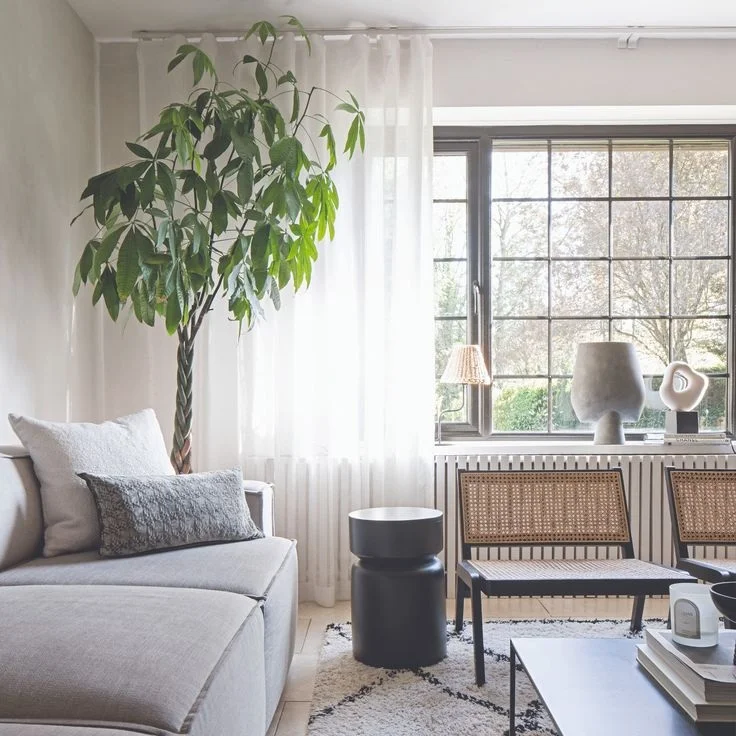
Keep a comfortable sofa if it already does its job. When an extra seat is needed, compare an open frame with another heavily upholstered chair. Look at the back as well as the legs: a chair may have fine feet but still present a broad, solid back to the room. The useful difference is what remains visible around and through it.
Height changes that outline too. The beige sofa below leaves a tall area of curtained window above its back, with a narrow floor lamp adding a vertical shape at the side and a broad, solid table filling much of the foreground. A low sofa doesn’t make every neighboring piece look light.
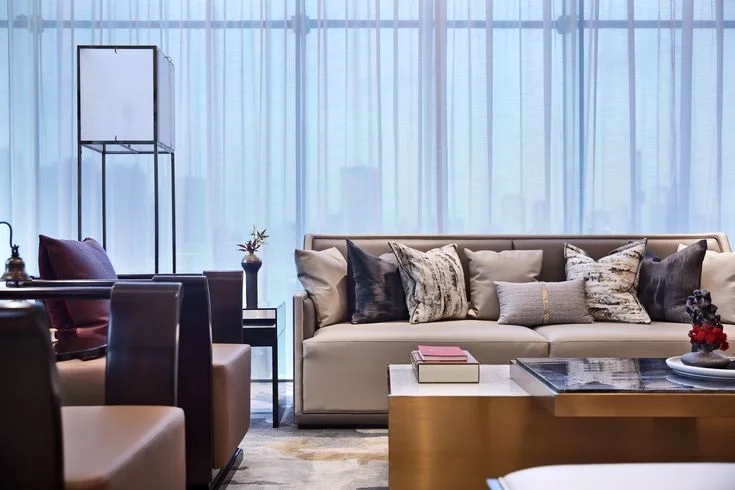
We’d borrow the contrast between a low seat and a taller, slim accent before copying the whole furniture group. If furniture placement is the problem, the narrow living room layout guide considers sofa orientation, facing seats, and the route through a long room.
Let Pale Fabrics Share the Small Living Room
Once the furniture outlines feel settled, look at the largest areas of fabric together and compare how much of the room each one covers, since a full window treatment can have as much visual presence as an upholstered seat.
Cream curtains and pale upholstery give this room a related background, while the green and floral cushions supply smaller changes. The woven table has a more pronounced surface, but it stays within the warm brown tones already visible on the floor.
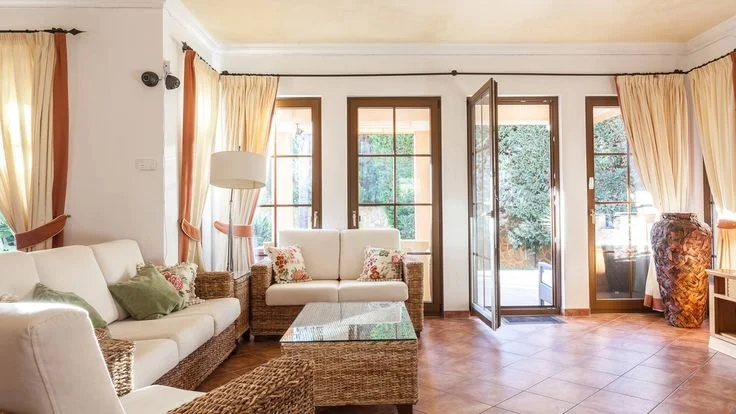
Pale doesn’t have to mean matching every item. A curtain can be warmer than a sofa, and a cushion can be darker than both. We’d compare the pieces in the same view and look for the fabric that draws attention away from everything else. Changing that smaller piece may be enough, especially when the wall and sofa already work together.
The gray room offers a cooler version of the idea. White sheers form a long, light background behind the seating, while gray cushions and small black-and-white patterns stay close to the upholstery. The window treatment has a broad presence without bringing another strong pattern into the group.
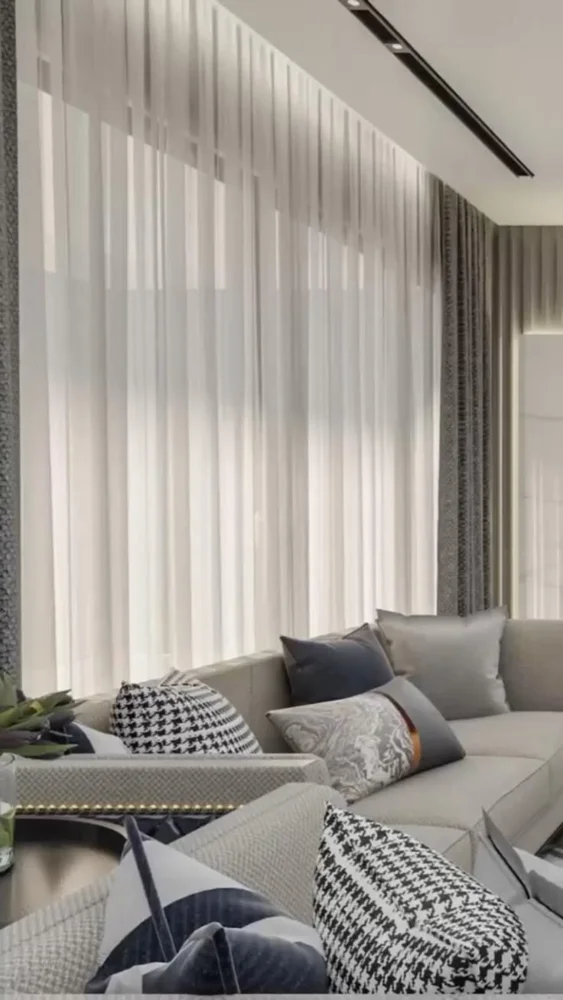
Sheers suit this light-looking effect, though the privacy and light control you need will decide the rest of the window treatment. The neutral living room palettes compare cream, gray-beige, and taupe across walls, floors, and upholstery.
Connect Small Living Room Textures with a Quiet Rug
A restrained fabric palette can still carry plenty of texture. In the room below, the rug, woven basket, rounded floor cushion, and low wooden table each have a distinct surface. Pale curtains and upholstery leave those differences visible without a bright pattern competing across the floor.
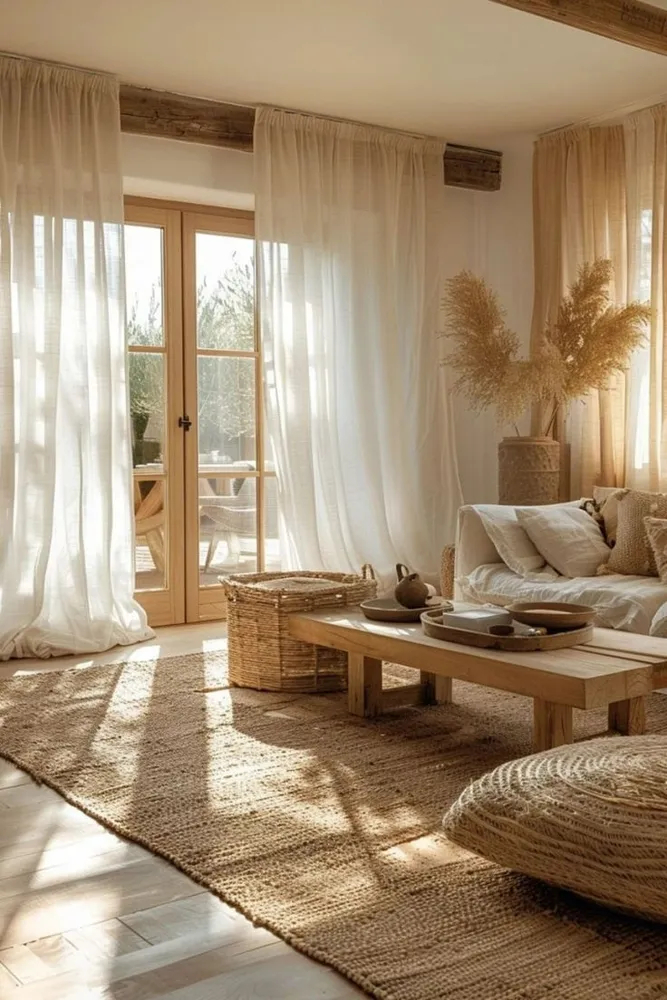
Choose which surface deserves the attention. A rug with a pronounced weave may already give a plain sofa enough company; a busy rug might call for simpler cushions. Put a cushion or throw beside the rug you’re keeping before buying another textured piece. Look at the grouping from the seat as well as from the doorway, because the details you notice will change.
Keep enough of each surface uncovered to enjoy it. A stack of trays and objects can hide the grain of a table, just as layers of throws can cover the upholstery you liked in the first place. We’d leave some plain tabletop and a usable stretch of sofa visible. Texture feels more deliberate when its edges are easy to distinguish.
If the pale room needs a warmer evening mood, the cozy living room ideas offer examples of lamps, throws, and repeated accent colors. A single change there can be easier to judge than adding several new accessories at once.
Small Living Room Ideas for Apartments: Gather the Display
Textiles aren’t the only source of detail; books, pictures, and everyday objects need somewhere to go too. Apartment readers can borrow the display arrangement below without assuming the photographed room is an apartment. Floating shelves gather framed pieces above a long white cabinet, and the dark wall gives that collection a distinct background.
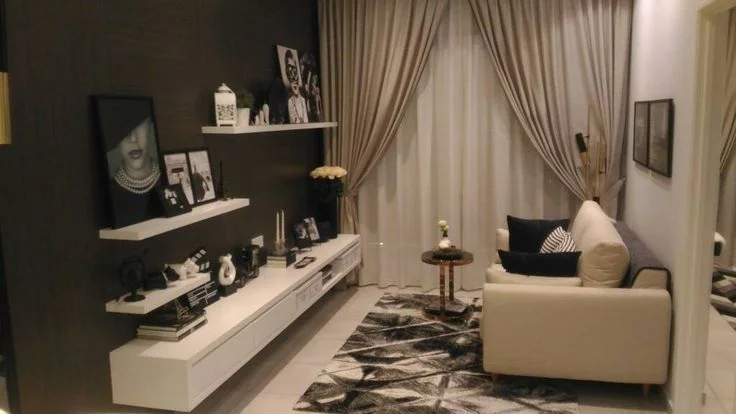
The cabinet top is fairly full, so we’d treat this as a reference for concentrating a collection rather than a target for how many objects to display. Give the things you use a reachable place first, then decide which pictures or ornaments belong above them. If you’re renting, work with existing shelves or a freestanding cabinet when drilling isn’t an option.
A deep wall color can work with this approach too. Blue shelving gathers books beside the fireplace in the next room, while a large mirror interrupts the darker wall. The tan loveseat remains easy to pick out against the blue. There’s plenty to look at, but the books have a clear home within the shelving.
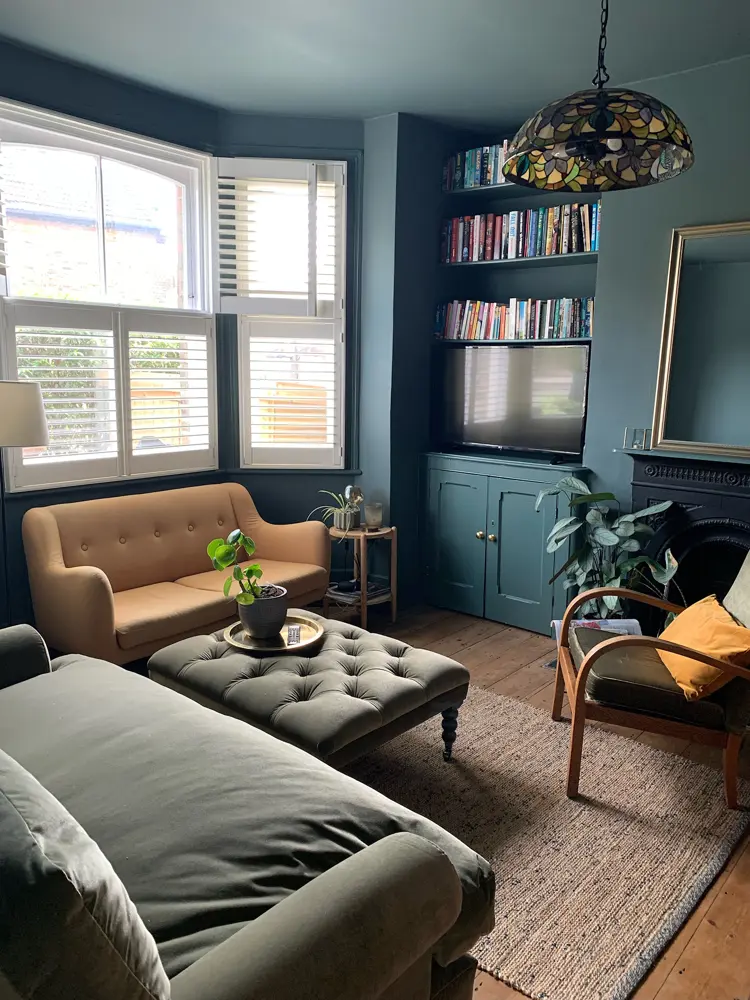
A mirror needs a view worth repeating. Check what appears in it from the seat before deciding it belongs over a fireplace or cabinet. For a colored sofa you want to keep, these green couch color combinations compare pale backgrounds with deeper walls and light accents.
Give a Small Living Room Chair a Useful Side Table
After gathering the display, leave room for the small objects that come with sitting down. The light armchair below has a little round table beside it, separate from the larger table in front. That modest surface gives the chair its own landing spot among the television cabinet, fireplace, and other furniture.
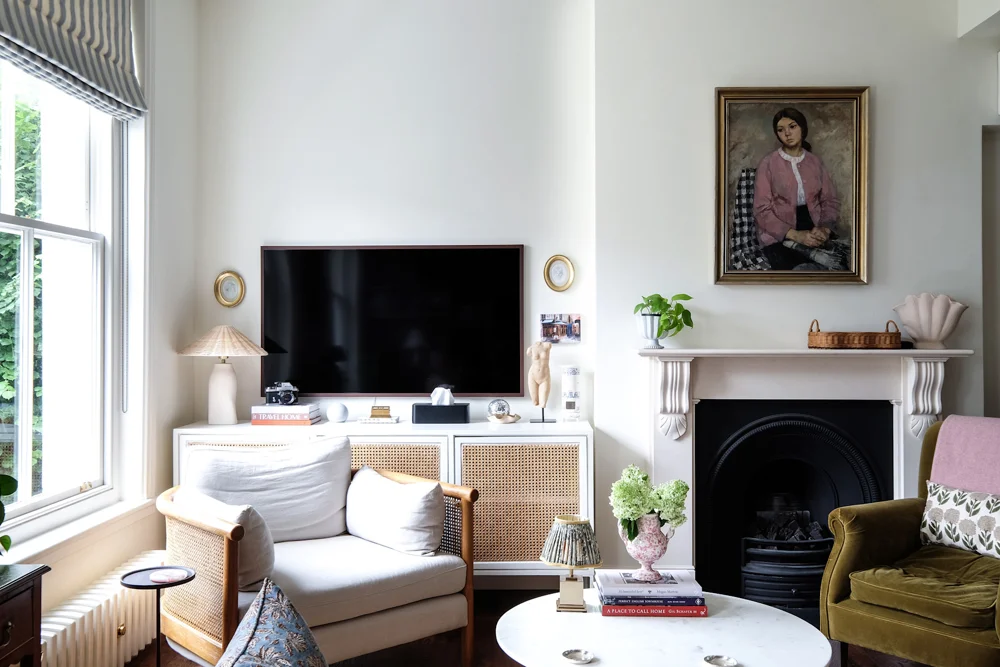
Let the table’s job determine what stays on it. If it’s where a cup or book goes, leave that part of the top available instead of filling it with decoration. An attractive little table loses much of its usefulness when everything has to be moved before you can sit comfortably.
Before adding another piece, sit in the room with the things you normally bring there. Notice where the cup lands, which cushion gets pushed aside, and whether a throw has somewhere to rest. Keep the small adjustments that make the seating easier to enjoy; a room can feel inviting with some empty surfaces still showing.