Boho bedroom ideas can start with a woven headboard, a patterned rug, or colorful bedding against a quieter background. Choose the detail you want to notice first, then use the surrounding fabric, art, and furniture to support it. The rooms below show both pale and richly colored versions, with different ways to connect the bed to the rest of the room.
Start a Boho Bedroom with a Quiet Base
A white bed and pale walls leave a colorful rug plenty of room to show. In this bedroom, the rug brings red, dark outlines, and smaller bright accents into an otherwise light scheme. The open weave of the pendant gives the ceiling some detail, while the pale bed and stools keep most of the furniture visually quiet.
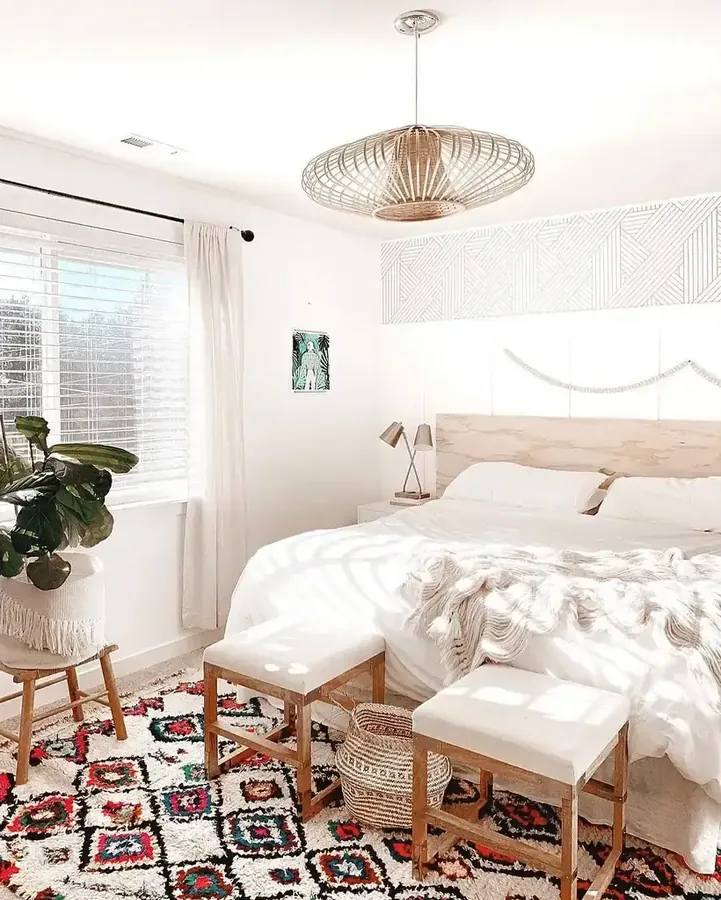
Borrow the color placement before copying the whole room. Keep white bedding you already have, and compare it with a rug whose pattern you enjoy seeing every day. If the floor already has a strong pattern, move that accent onto a pillow instead. For a softer palette throughout, these neutral bedroom combinations show how surface changes can do more of the work.
A sculptural headboard offers another starting point when you want the bedding to stay pale. The fan-shaped woven headboard in this next example spreads outward above white pillows, with a patterned cover and a loose gray throw below. The small dog is enjoying the soft layers; the useful decorating detail is how clearly the headboard’s curved outline stands out from them.

With a detailed headboard, we’d begin with plain pillowcases and let a throw supply a different surface. Keep enough of the headboard visible to enjoy its shape. The cushion’s lettering is decorative; a plain cushion can serve the same purpose if you’d rather keep the bed free of words.
Give the Bed Wall a Color Connection
A quiet bed can also support a lively wall. In this room, a gallery of colorful pictures spreads above and beside the headboard, while a multicolored rug continues the strong hues below. The broad white bedcover separates those patterned areas. The wood-toned chest gives the wall display a substantial neighbor without adding another large fabric print.

Choose art for the colors and subjects you want in the room, then look for a connection to the bedding or rug. A pink patch in a print might echo a small part of the rug; the whole palette doesn’t have to match. Lay the pictures out together before deciding on a wall arrangement, especially if the frames differ in size.
For a broader patch of pattern, try a wall textile as the main feature behind the bed. Here, a red patterned hanging fills much of the wall above pale bedding and a fringed throw. The red gives the sleeping area a distinct background; the lighter textiles let its shapes remain easy to see.

A gallery and a large textile offer different routes for the same wall. A gallery suits a collection you want to keep adding to, while a large textile makes a more continuous field of color. We’d choose between them before introducing more patterned pillows. With the red hanging, the cream bed already supplies a useful pause.
Concentrate Boho Pattern on the Bedding
The bed itself can carry the stronger color instead of the wall display. Multicolored stripes run across the pillows and bedcover in this teal-walled room, with large leaves rising beside the bed. Repeating the stripe makes the separate bedding pieces read together, even though several colors are involved.

Try the bedding against your existing wall color before considering paint. Pull a quieter color from the stripes for plain pillowcases, or keep the sheets white if the pattern is already doing enough. The teal brick is a strong part of this particular room, but copying its wall treatment isn’t necessary to try a striped bed.
Black-and-white pattern gives a bright bed another direction. The yellow cover below forms a broad solid background for graphic pillows and a patterned layer across the lower bed. Plants and framed pictures add smaller details around it, while the yellow stays easy to pick out beneath the black-and-white shapes.

Keep the difference in scale visible when adapting that pairing. A large area of solid yellow gives the small motifs a place to sit; spreading several equally busy prints across the whole bed would change the balance. The wall print includes decorative English lettering, but the bedding combination works independently of its message.
Soften a Boho Bedroom with a Pink Bedcover
Bright yellow and multicolored stripes aren’t the only ways to give the bed color. A pink cover creates a gentler center in this bedroom, beneath an arched woven headboard. Turquoise at the window, green plants, and a patterned rug keep the pink from becoming the room’s only note.
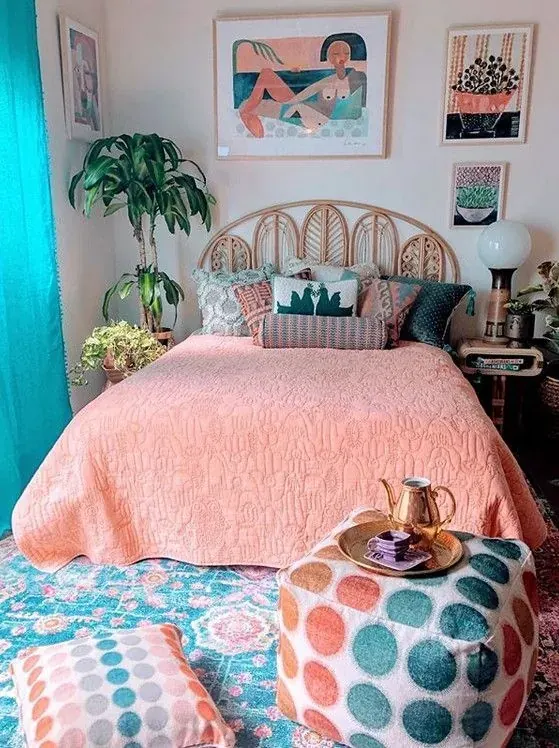
Notice how much of the bed remains one uninterrupted pink surface. The pillows introduce smaller patterns near the headboard, so the cover doesn’t need another print. If your rug is already colorful, a solid cover like this can connect to one of its quieter shades and leave the rug’s detail visible around the bed.
The turquoise curtain provides a separate block of color at the edge of the room. Test a curtain sample beside the bedcover as well as against the wall; these bedroom curtain pairings show pale, deeper, and patterned options. Choose privacy and light control from the product details when buying, since the color in a photograph can’t establish either.
Give Plants a Place Around the Bed
With the bedding colors settled, greenery can bring a looser outline to the surrounding furniture. This dark-walled bedroom carries plants along a high shelf and down toward the bedside, above orange bedding and a patterned headboard. The varying leaf shapes interrupt the straight shelf line, while the dark wall makes the greens distinct.
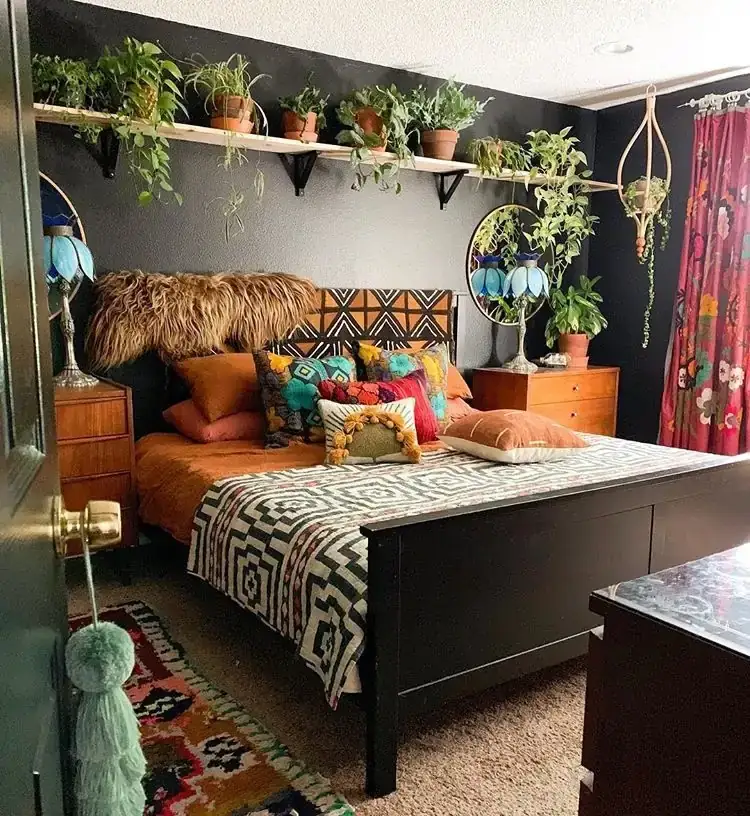
Use plants suited to the light and conditions in your room, in a position you can reach for care. If you already have a floor plant, try its outline beside the bed before adding a shelf. Our leafy living room corner shows greenery beside a seat, with the furniture’s outline still visible.
A boho bedroom still needs space for the things used at bedtime. Keep part of the bedside surface available for a lamp, water, or a book, especially when pillows, trailing leaves, and wall art are already adding detail. In a room used by visitors, the guest bedroom arrangements give luggage and bedside belongings the same attention as the bed.
Choose the reference that suits the pieces you’re keeping: a white bed ready for a colorful rug, a plain wall ready for art, or a bright cover that needs a quieter companion. Make that change first, then look from the doorway at how the bed, wall, and floor relate. Add the next layer where the room still feels unfinished.