By ZM Home Editorial Team
A welcoming guest bedroom gives visitors somewhere to put their suitcase, a light beside the bed, and bedding they can use without asking for help. Those small arrangements deserve attention before another decorative purchase.
The guest bedroom ideas below cover luggage, bedside essentials, shared twin rooms, spare bedding, and spaces that do another job between visits. Choose the arrangements that suit the room available, whether that’s a dedicated bedroom or a corner cleared for the weekend.
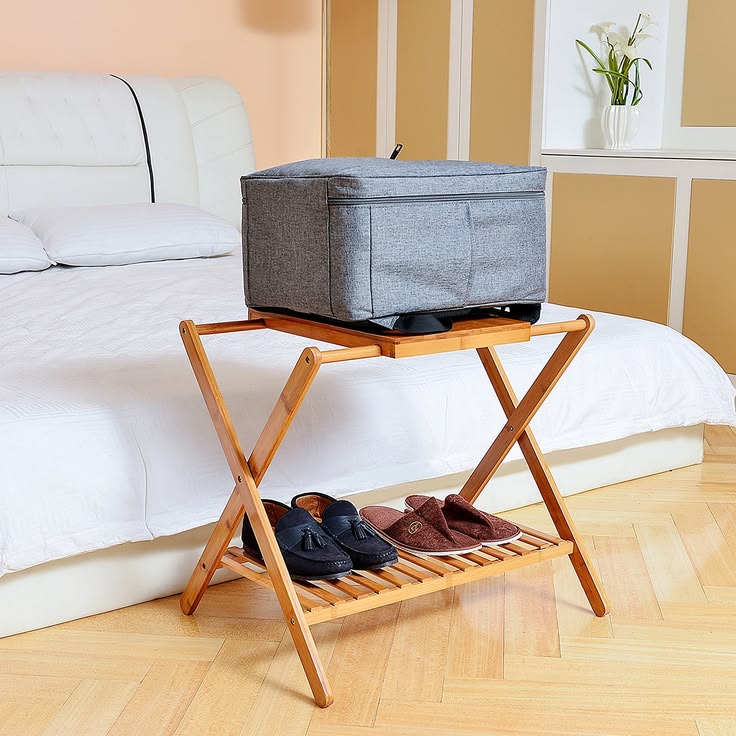
Give a Suitcase a Place Off the Bed
A suitcase needs a place to land while a guest settles in. The gray case on this folding rack shows a clear separation between luggage and bedding, with shoes gathered on a lower shelf. The useful idea is the location: a dedicated spot beside the sleeping area, with space around it for unpacking.
A spare chair can serve for a smaller bag if it supports the bag securely. Clear it before visitors arrive, and leave the area beside it free so an open case won’t block the way to the bed. For two guests, think about both bags; a single attractive luggage spot may only solve half the problem.
Put a Lamp and an Empty Surface Beside the Guest Bed
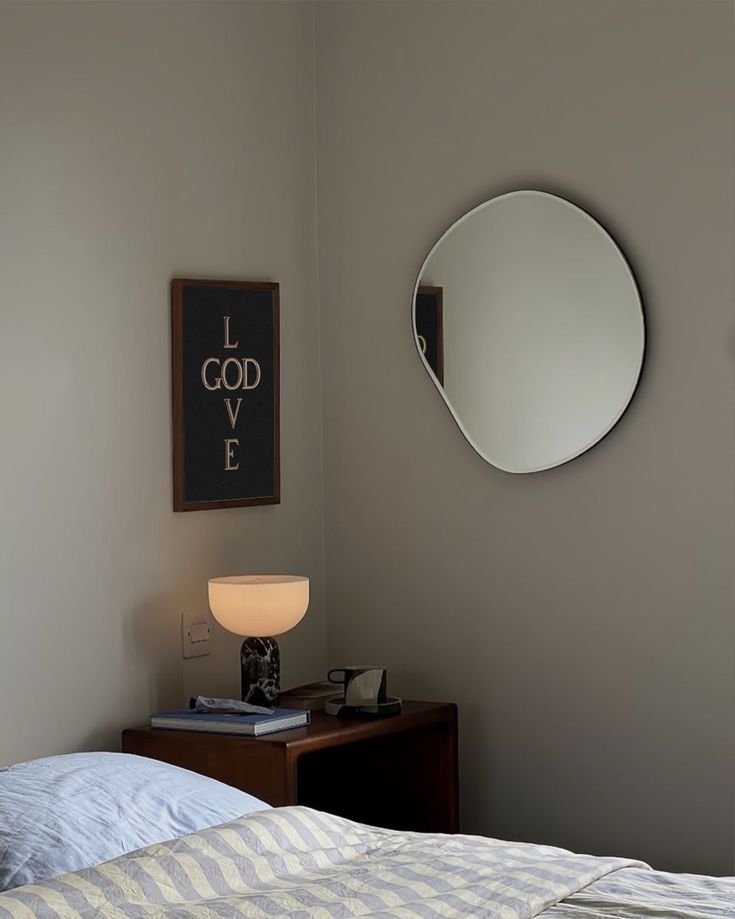
Once the larger bag has a home, make room for the things a guest takes to bed. In this bedside corner, a glowing lamp, books, and a cup sit below a round mirror. The striped bedding and quiet wall color give the small arrangement a settled look without a large display.
Keep the lamp, then edit the tabletop for a visitor’s phone, glasses, and water. Sit on the bed to see whether the switch is easy to find, and show guests where they can charge a device. A lamp loses some of its usefulness if the person borrowing the room has to search behind furniture to turn it off. Consider where a guest will reach for the lamp switch, too.
Make Room for Both Guests Between Twin Beds
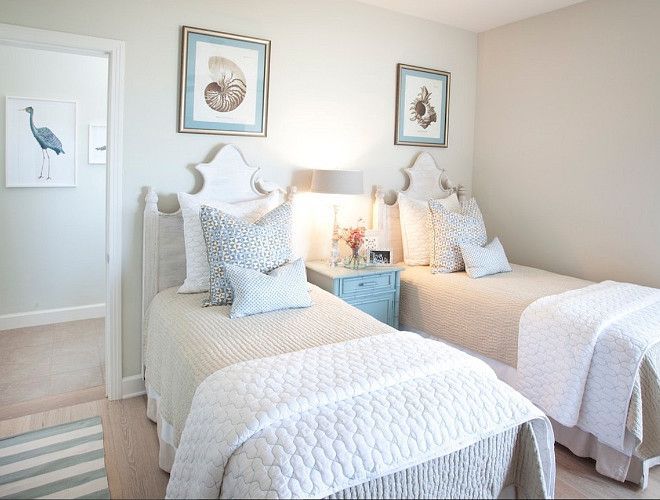
Two beds can share a bedside table, but the shared surface needs room for two people’s things. Here, a blue table sits between white beds with pale blue pillows. The central lamp ties the sleeping spots together, while the similar bed coverings give each visitor an equally finished place to sleep.
For a visit, move the flowers and small ornaments elsewhere if they crowd the table. Leave an obvious place on each side for a phone or glasses, and give each bed its own bedding. If one person reads after the other settles down, consider a separate reading light so the shared lamp isn’t their only option.
Coordinate Twin Guest Beds Without Matching Everything
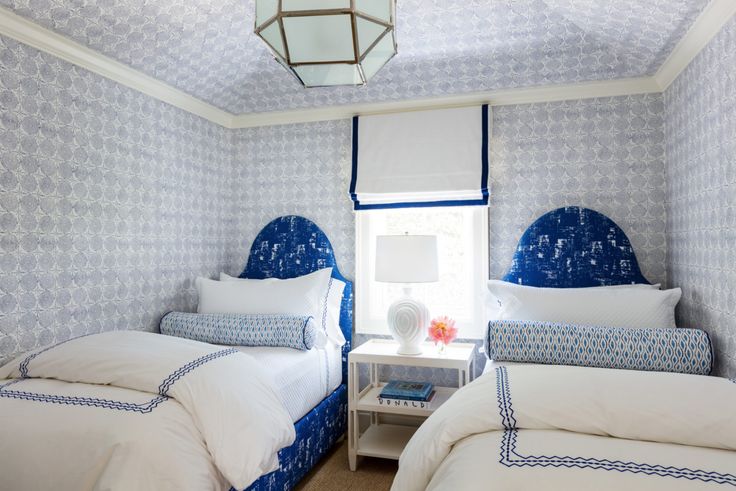
Shared guest rooms can look intentional even when the beds aren’t identical. This blue-and-white arrangement takes matching further: curved blue headboards, patterned walls, long patterned pillows, and blue edging on the white bedding. The color appears on both sides, so neither bed looks like an afterthought.
Use a smaller part of that idea with existing furnishings. Put pillowcases in the same color family on both beds, or fold a similar-colored cover across each foot. Different patterns can work together when they share a color. Keep the amount of bedding comparable, even if the furniture or prints differ; guests should both find a properly prepared sleeping spot.
Keep Spare Bedding Where Guests Can Find It
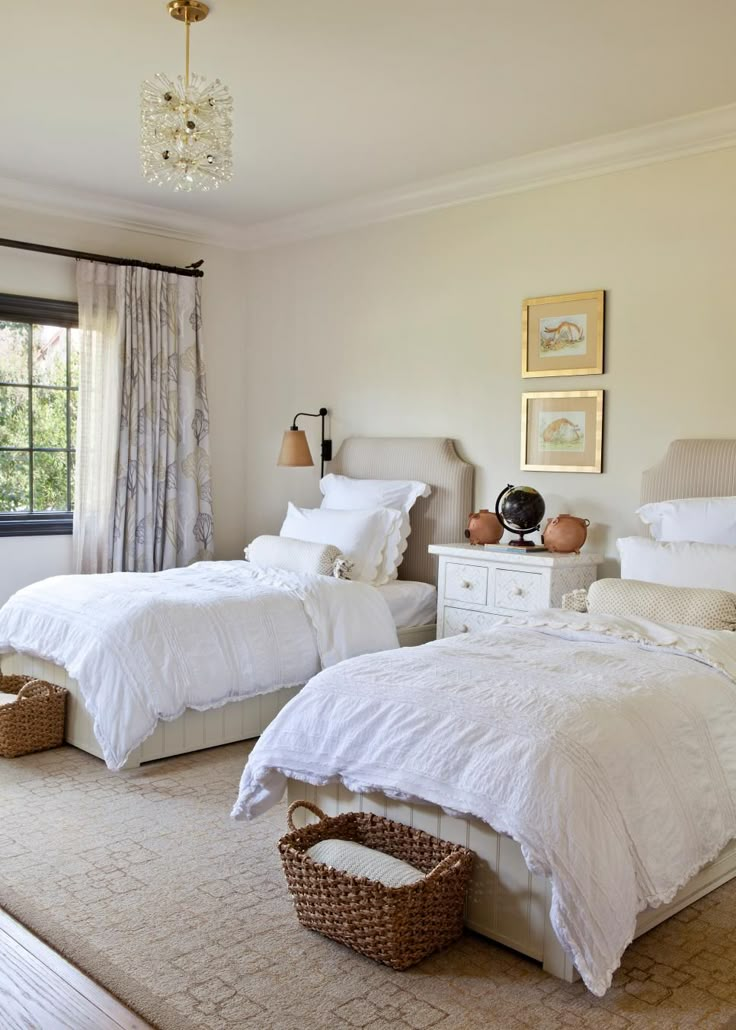
Coordinated beds can still offer different choices for the night. The white bedding and baskets at the foot of these beds suggest a useful way to separate the made bed from extra layers. A basket gives spare bedding a visible home, while the central chest provides another place to organize it.
Set aside a folded blanket and tell guests where it is. If it belongs in a drawer or under-bed container, a quick mention is enough; visitors shouldn’t have to guess which storage they’re welcome to open. Keep spare guest bedding separate from household laundry so the available extras are easy to recognize and take out. Consider basket location and access when choosing storage.
Clear a Desk Corner for a Visiting Guest
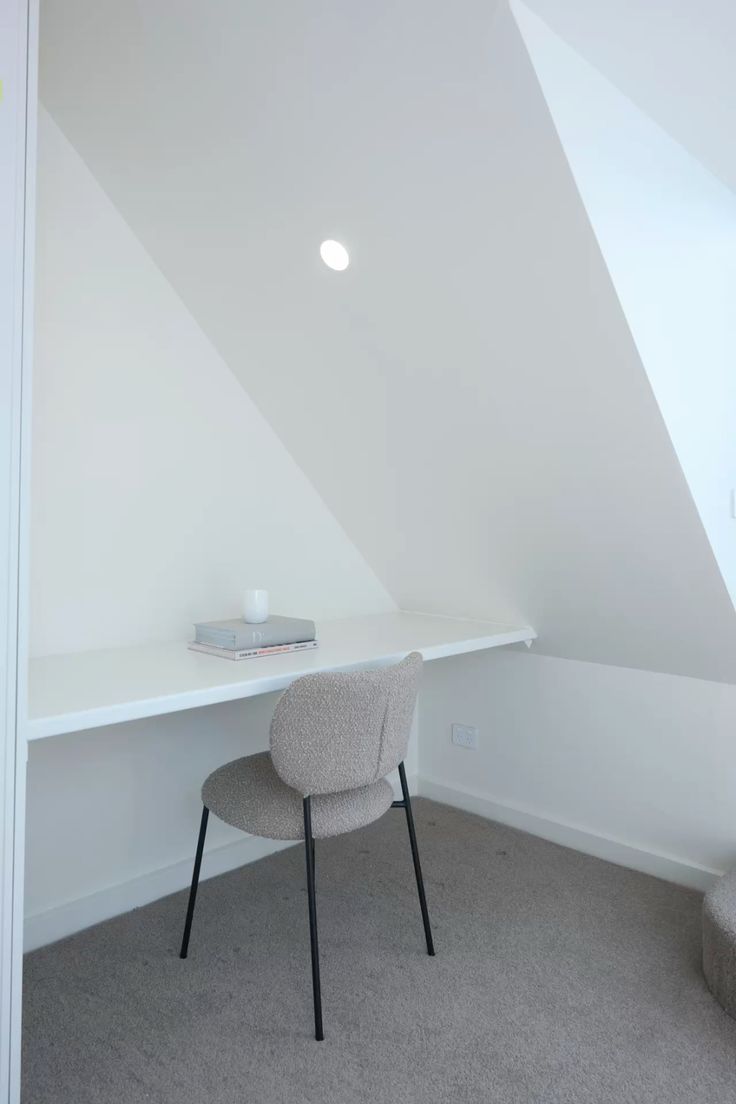
A room that usually serves as an office may already have a useful guest surface. This reference shows a desk corner beneath a sloping ceiling: a long white desktop, a gray chair, and only a few objects. The sleeping area isn’t shown, but the uncluttered desk offers an idea for a room doing both jobs.
Before a visit, put away personal paperwork and work supplies, then leave part of the desk for a laptop, toiletry bag, or travel pouch. Keep the chair available if guests will sit there. A desk that still holds the household’s unfinished work can feel like borrowed space; a cleared section makes its temporary purpose easier to understand.
Give a Small Guest Room Some Breathing Space
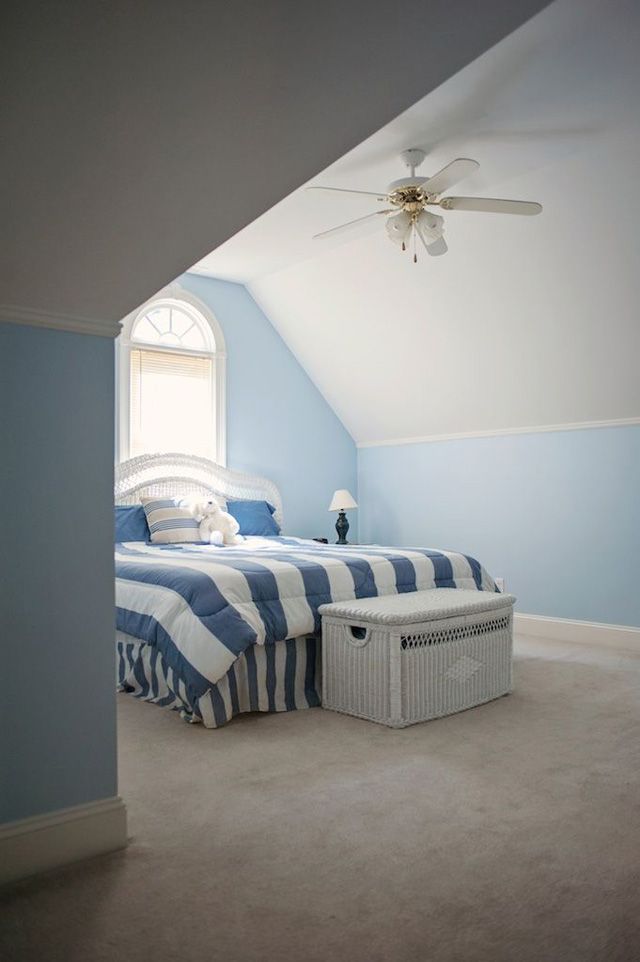
A small guest room benefits from a deliberate pause in the furniture and decoration. In this attic bedroom, broad blue-and-white bedding stripes stand out against pale blue walls, while the sloping ceiling stays white. A light-colored chest sits at the foot of the bed, and the surrounding floor looks largely open.
Take that open space seriously when preparing a compact room. An extra stool, plant, or decorative basket may compete with the place a visitor needs for a bag. If there’s already a chest, clear its top for folded clothes or a small pouch. Keep any opening lid usable, and leave the route to the bed free.
Leave the Guest Bed Ready to Use
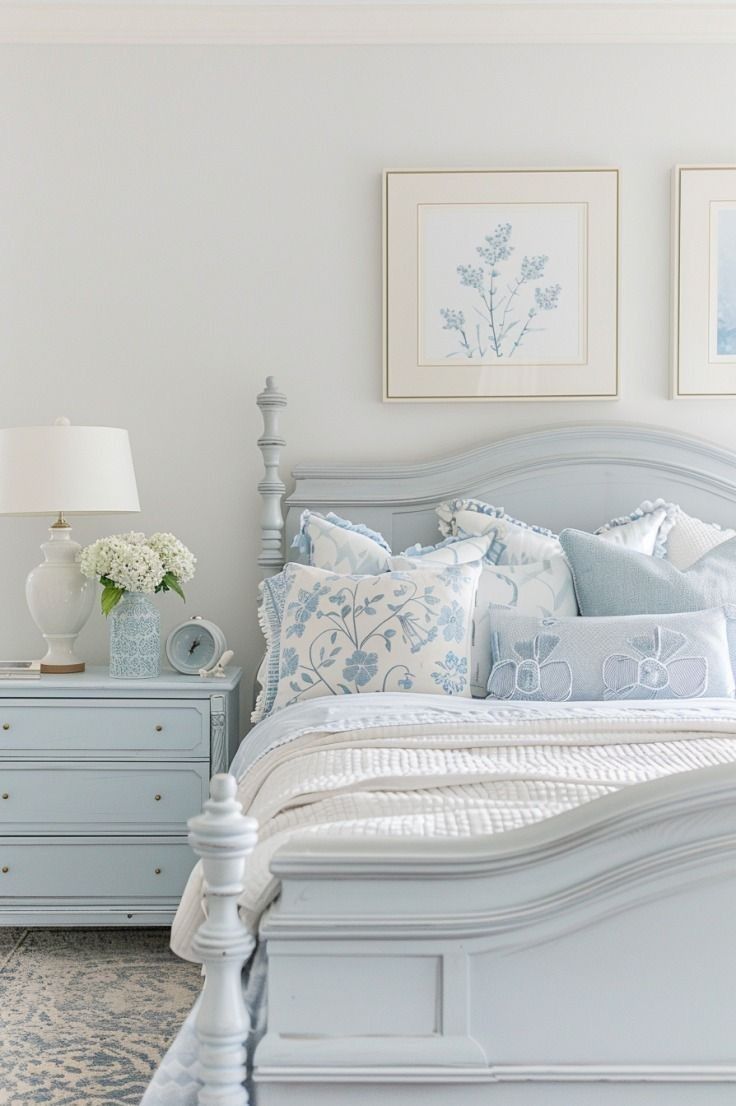
The bed itself can carry most of the room’s decoration. Here, pale blue pillows pick up the bed frame and bedside chest, while botanical artwork echoes the floral bedding details. The broad area of white bedcover keeps the arrangement from feeling as busy as the individual patterns might suggest.
For a more colorful guest bed, boho bedding combinations pair plain covers with stronger stripes or black-and-white prints.
For visitors, keep the colors that already work together and finish making the bed before they arrive. Use fewer display pillows if there’s nowhere to put them at night. A folded-back cover can make the sleeping layers clear, especially on a daybed that usually serves as seating.
Then leave fresh towels where guests can see them, point out a place to hang clothes, and share the Wi-Fi details. The welcome is in being able to settle in, unpack, and turn out the light without another round of questions.
For quieter bedding, these neutral bedroom ideas compare pale layers and dark accents, while the bedroom curtain ideas offer color and pattern choices for the window.