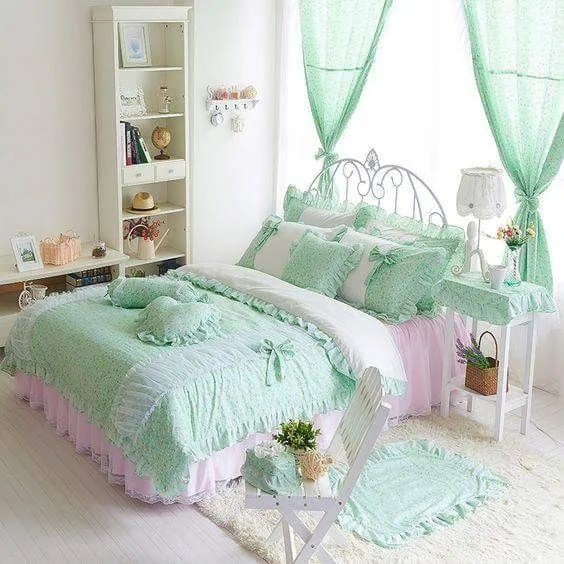
Curtains take up enough of a bedroom wall to change how the bed looks. Pale panels can continue white bedding, deeper curtains can outline a light headboard, and a small check can sit beside a floral print. These bedroom curtain ideas move from quiet layers toward richer color and pattern. Choose the window treatment that supports the bedding or wallpaper you want to keep.
1. Let Pale Curtains Continue the Bedding
Cream curtains and white sheers follow the curved window wall in this pale bedroom scheme. The bed carries the same light colors across the lower half of the room, while the vertical folds give the broad window area some rhythm. The woven-looking throw and muted green blanket keep the bed from disappearing into all that white.

For a similar effect, compare the curtain color with the largest area of bedding. Ivory beside ivory creates a gentler transition than a sharply contrasting curtain would. Let a blanket or cushion provide the smaller color change, especially when the window already occupies much of the wall. The curtains don’t need more pattern when the bed already supplies the detail.
2. Give Sheer Curtains a Fuller Outer Layer
A white sheer and a beige outer curtain can look quite different even within a narrow palette. Here, the sheer leaves the window visible through it, while the fuller outer panels gather into stronger folds. The white pillows and beige bedcover repeat that light-to-solid relationship across the bed.
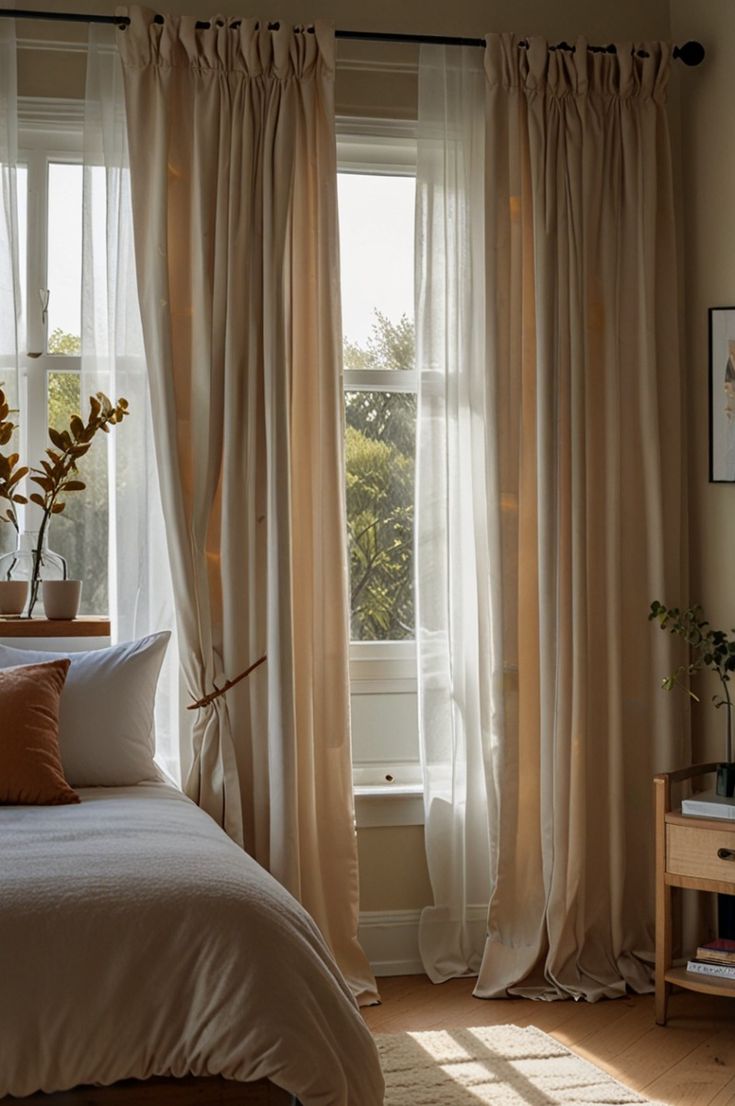
Choose this pairing when a single pale panel feels visually flat. Keep the inner layer close to the lightest bedding color, then give the outer layer a little more depth. Decide on privacy and light control separately: check the outer curtain’s product description for the coverage you need after dark. A layered look isn’t the whole choice.
3. Frame a Pale Headboard with Taupe Curtains
The taupe curtains behind this bed make the pale, curved headboard stand out. Their broad vertical folds also contrast with the smaller botanical shapes on the duvet and pillows. Although the bedding has plenty of detail, the larger curtain area reads as a relatively quiet background.

A patterned duvet gives a useful starting point for this kind of pairing. Look for a curtain in the same general color family as a quieter part of the print, then compare how dark it looks beside the headboard. A little separation helps reveal the bed’s shape; repeating every small pattern at the window would compete with that outline.
4. Carry Navy Bedding into the Curtains
Navy curtains, walls, and bedding make a much more enveloping combination. In this room, the curtain pattern appears in closely related blues, so it adds detail without introducing a bright new color. White sheets and pillow edges provide crisp breaks, and the warm brown footboard gives the blue something to sit against.
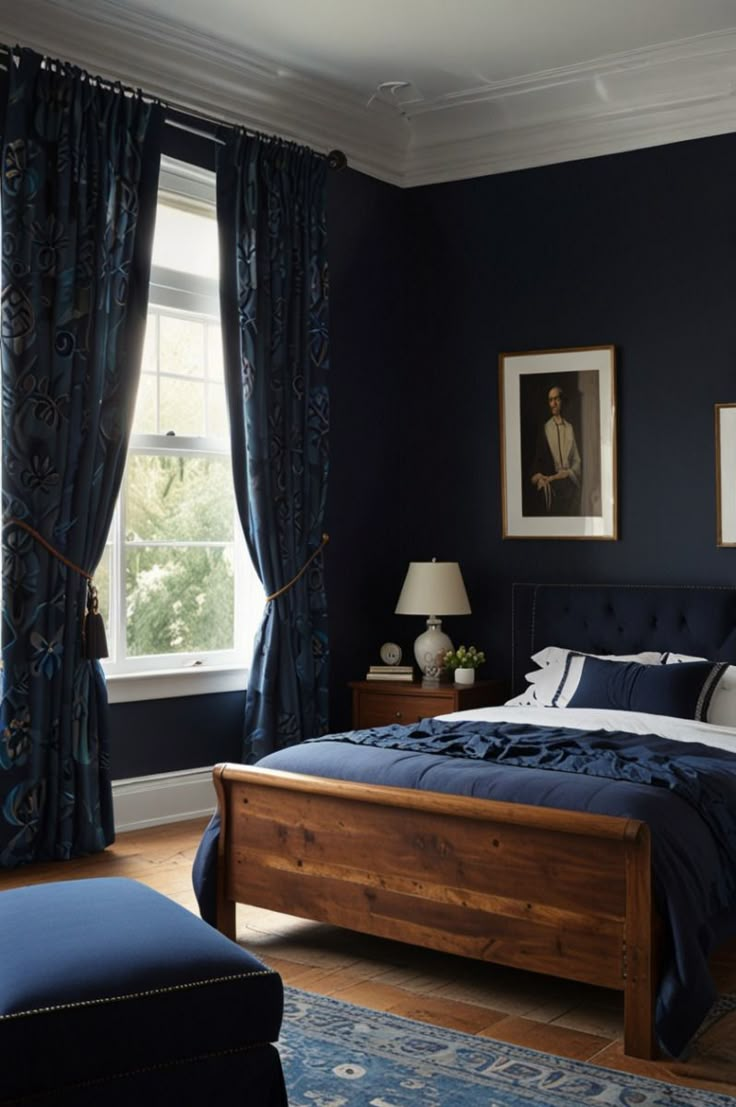
Try a tonal pattern when plain dark curtains seem too severe but a multicolored print feels busy. Bring a sample beside the duvet and check whether the blues sit comfortably together. That’s the visual idea here: keep the curtains close to the bedding color. For blackout performance, use the product’s stated specification when shopping; curtain color alone doesn’t establish how much light it blocks.
5. Warm Up White Bedding with Blush Curtains
Pale pink curtains make a softer color step from white bedding to a taupe wall. Their repeated pleats bring detail to the window, while the broad white duvet keeps the bedside area open and simple. The pink is noticeable, but it shares the quiet mood of the surrounding colors.
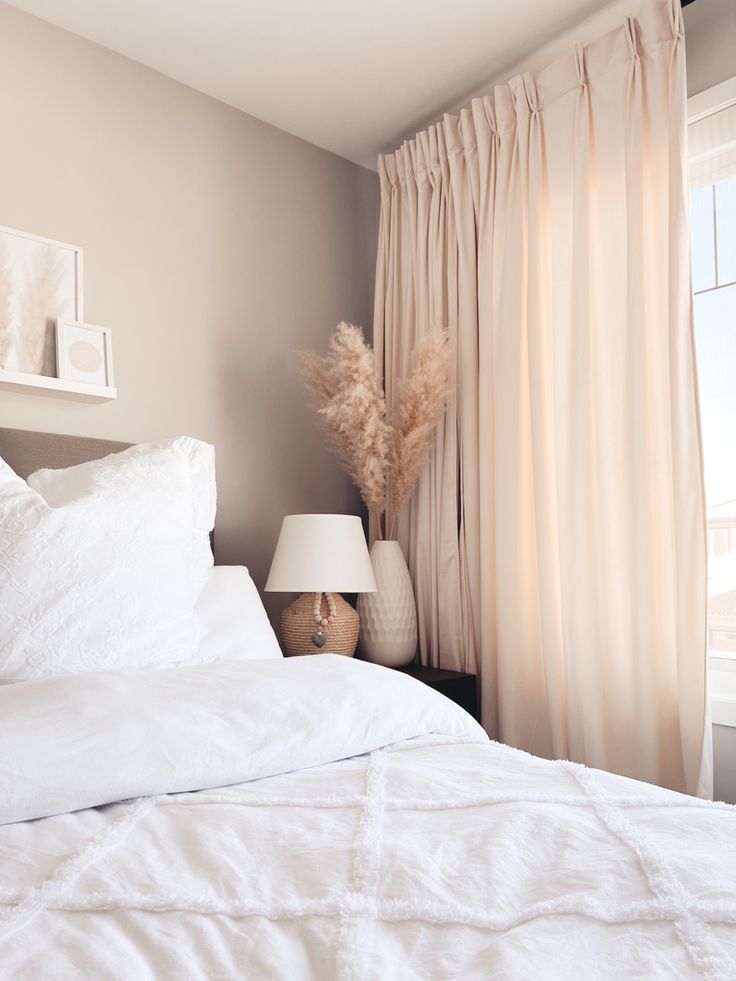
With a white bed, choose the pink for how it looks against the wall as well as the sheets. A dusty, subdued shade offers a different result from a clear, candy-colored pink. Hold the sample upright near the window so the wall is behind it, then bring a pillowcase alongside it. Those two comparisons are more useful than judging the curtain color by itself.
6. Keep Short Curtains within a Small Window Corner
Short gray curtains frame this small window beside a pink striped chair. The view is a window-side vignette, with no bed shown, but it offers a useful bedroom corner idea. The panels finish around sill level, leaving a stretch of plain wall visible underneath; their small pattern doesn’t compete with the chair’s stripes.
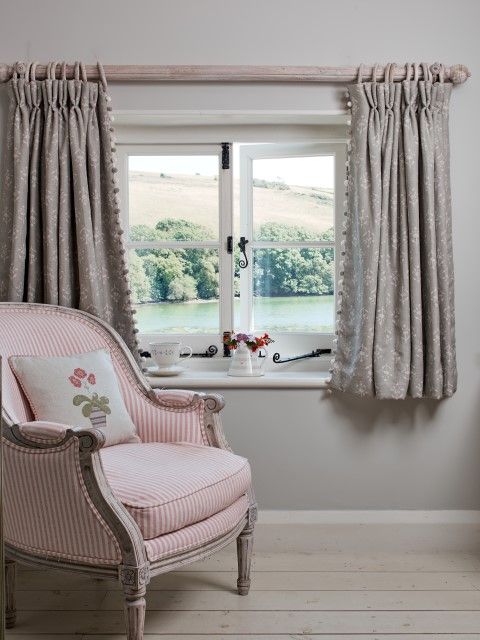
A similar treatment can suit a bedroom sitting corner where the window should remain a contained feature. Keep the curtain pattern modest if a nearby chair already has stripes or a decorative cushion. Use the view as a guide to the relationship between the window and seating, then judge the curtain length against your own window and surrounding furniture.
7. Pull a Quiet Curtain Color from Floral Wallpaper
Small pink and red flowers cover the wall behind this bed, while plain pink outer curtains give the eye a larger, simpler patch of color. White sheers and white bedding provide another pause between the floral wall and the metal bed frame. The window belongs to the scheme, but it doesn’t repeat the wallpaper’s entire print.
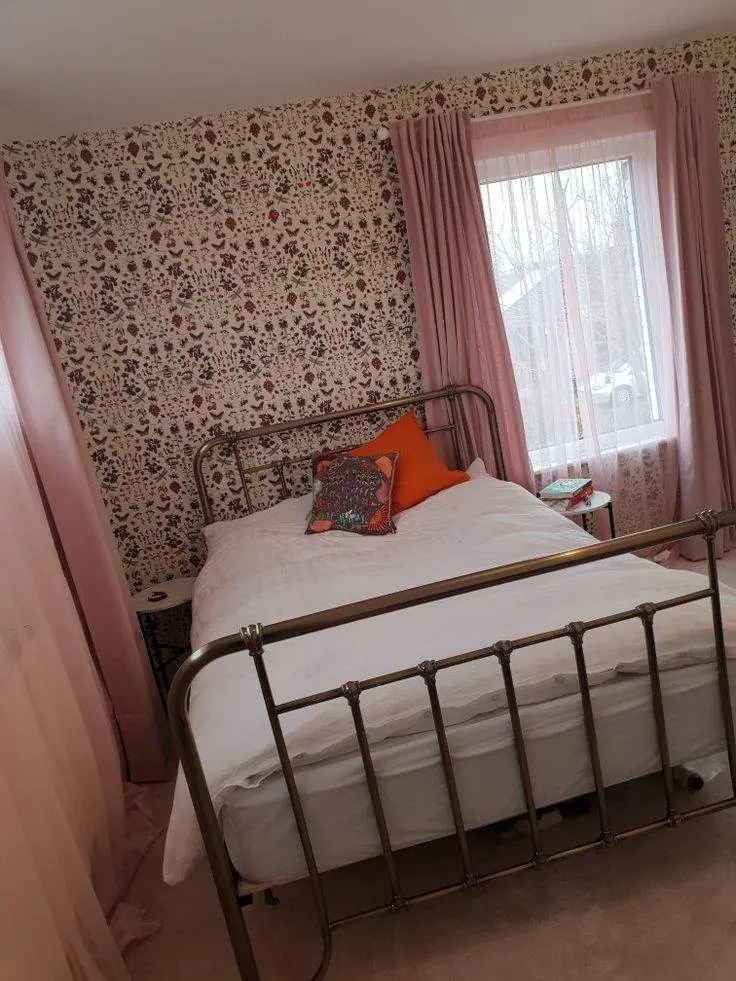
Pick one subdued color from the wallpaper for the curtain sample. Pulling out the brightest flower color would give the window more emphasis; a softer version keeps the wallpaper as the main pattern. If the bedding also has a strong print, try a plain cover first and see whether that gives the wall and curtains enough space to read clearly.
8. Mix Checked Curtains with a Larger Floral Pattern
Pink checked curtains sit beneath a dark floral ceiling in this richly patterned bedroom. The fine check looks orderly against the much larger flowers overhead, while pink reappears across the bed and other textiles. Plain white walls separate those patterned areas, so the room still has places for the eye to rest.
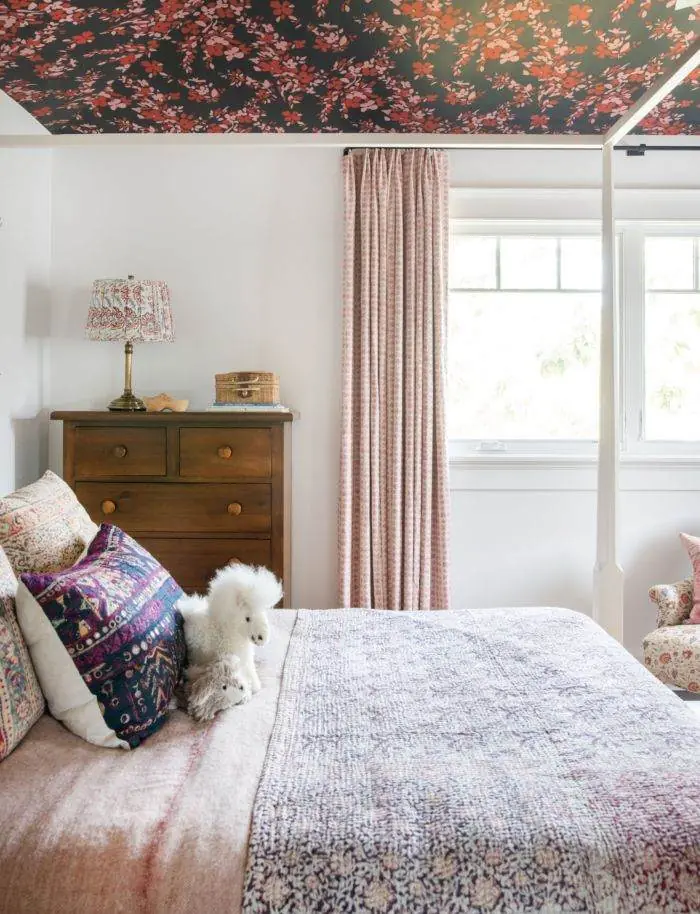
For a smaller version of this idea, pair checked curtains with one floral pillow or duvet. Compare pattern size as well as color: a small, regular check gives a different rhythm from loose flower shapes. Keep a plain area between the patterns if the combination feels crowded. You don’t need matching prints; one shared color gives the two patterns a connection.
The bed is a useful place to make the final curtain choice. Set samples beside the pillowcases, duvet, and wall, then decide which relationship feels right: a continuous pale palette, a darker background, or a repeated color within different patterns.
Also consider the window with the curtains open and closed, because that changes how much color enters the room. Confirm the product’s light-control and privacy details before buying.
For stronger bedding patterns beside the curtains, compare these boho bedroom combinations, or see how guest bedrooms balance decoration with bedside space.
For a sitting area, compare the living room curtain examples against the sofa and cushions instead of bedding.