A dining table centerpiece needs to fit between the people and dishes that make the table useful. Start with a flower arrangement or a vase you enjoy, then set out your usual plates and sit down across from someone. Keep the display where conversation and serving still feel comfortable, or give it a nearby resting place during meals. The examples below offer different ways to make that choice.
Give the Centerpiece the Space Left Between Place Settings
An empty dining table can make a generous arrangement look easy to accommodate. Dinner adds plates, glasses, elbows, and a place for the serving dish. Set those out before deciding how much of the middle belongs to decoration.
Consider what happens at your own meals. If food comes to the table already plated, the central space may have fewer demands, but when everyone serves from shared dishes, leave a place for those dishes before adding flowers. Breakfast and dinner don’t need identical displays.
Treat the flower spread as part of the footprint, too. A small pot can hold stems that lean over a neighboring glass. Look at the whole outline from a chair rather than judging only the container from above.
The home decorating guide considers smaller accents alongside the furniture and objects already in the room. At the dining table, begin that comparison with the dishes you use and the chairs people sit in.
Keep a Tall Flower Arrangement for the Table Between Meals
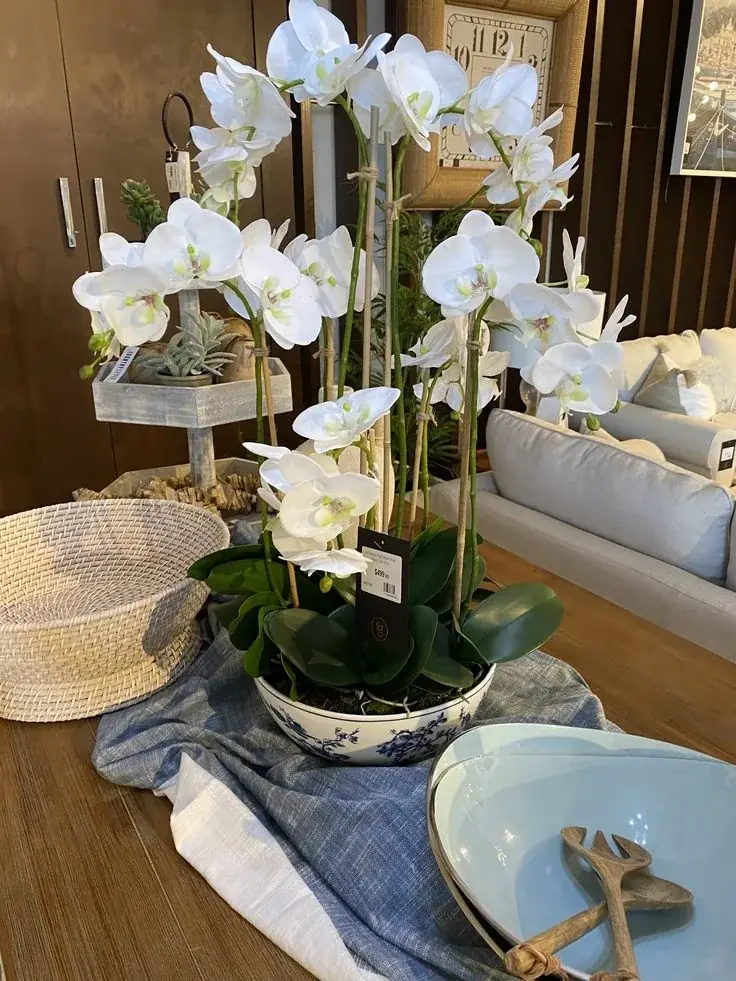
A tall arrangement can give an unused table a clear focal point. In this display, white flowers rise from a blue-and-white round pot above a loosely gathered blue runner. Pale plates sit alongside the arrangement, repeating the light colors lower down.
The height is the feature to borrow selectively. This is a styled display with visible merchandise tags; it doesn’t show a family eating around the flowers. Before copying the arrangement for a meal, sit in the chairs facing each other and check where the flowers fall in your view, including the stems that spread out beyond the pot. Check every seat.
For an everyday table, choose the landing place along with the centerpiece. A sideboard with a clear spot lets the display remain part of the dining area after it leaves the table. If there’s nowhere convenient to put it, try a lower arrangement instead.
Repeat a Dish Color in the Centerpiece
Moving a tall display for dinner still leaves color available as a link between the table and its decoration. The blue runner, pale plates, and patterned pot in the previous example give you a palette to borrow without copying the arrangement’s full height.
Let an everyday plate suggest the color for your vase or runner. The shades don’t have to match. A pale blue plate beside a deeper blue detail can make the connection without turning every object into a matching set.
Keep the surrounding room in view. If the chairs already carry a strong color, compare that with the vase before adding a different runner. You don’t need every accent on the table to repeat the same hue.
Borrow a Tray Group Without Bringing Every Object to Dinner
Color can also connect a vase with a smaller object beside it. Here, a pale blue vase of pink, yellow, orange, and white flowers stands on a tray with a green-toned cup and a decorated tea tin. A paper page rises behind the group.
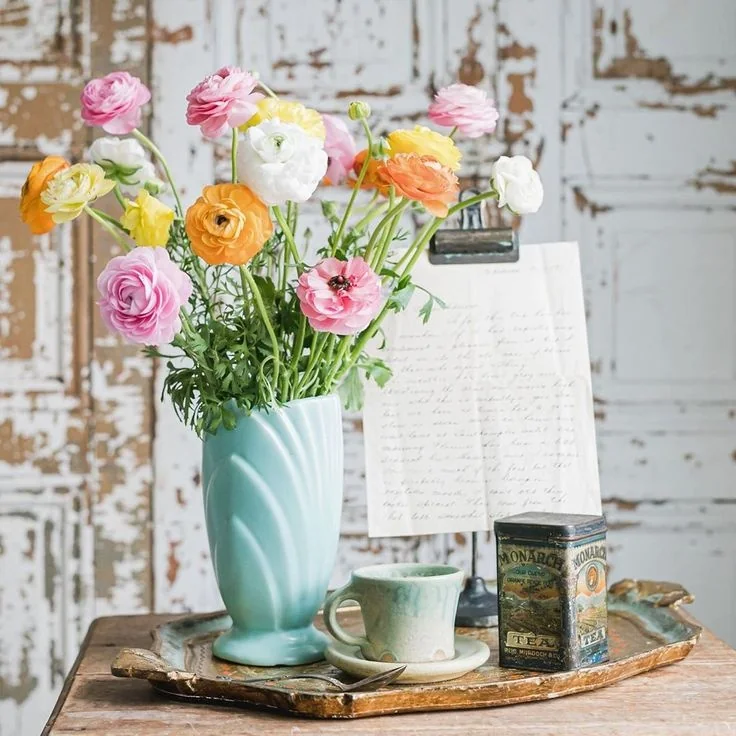
For the dining table, borrow the relationship between the vase and cup before copying the whole display. The paper and tin add detail to this vignette, but you may prefer the vase alone once place settings surround it. Leave the extras out. A tray is optional if it takes up space you’d rather give to food.
When a tray does suit your table, check that you can lift it comfortably with the intended contents. Decide whether it will stay during meals or move as a group. That choice matters more than filling every part of its surface.
Use a Low, Long Flower Arrangement Along a Rectangular Table
A low container offers a different shape from the upright vase. In this example, orange, pale yellow, pink, and white flowers spread across a long clear container. The arrangement follows the tabletop horizontally, leaving the dark chair backs visible above it.
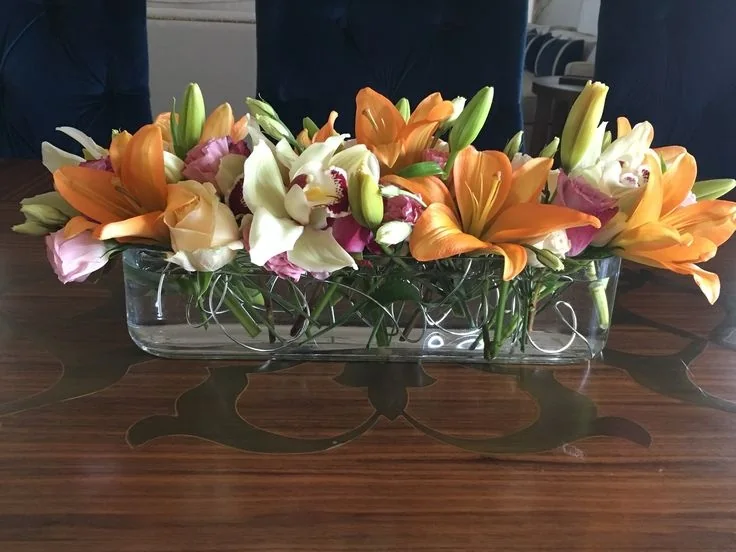
Borrow the horizontal shape when you want color along the middle of a rectangular table. Judge its length against your place settings and serving dishes. The example shows the arrangement on its own; the photograph doesn’t establish how much room remains for a meal.
The low outline is a starting point for checking seated views, rather than a promise that every low arrangement will fit. Sit at the table’s ends as well as its sides. If the flowers reach into a setting, shorten the display’s spread or give the meal that space.
Let a Round Dining Table Have Open Space Around Its Center
A long flower display suits a different footprint from a compact central pot. On a round table, we’d begin with a contained arrangement and leave a visible ring of tabletop around it. That gives you a simple shape to judge against the place settings.
Bring each chair into use before settling the position. A centerpiece can look centered from the doorway while sitting too close to the glass at a particular seat. Adjust the arrangement with the table set, then decide whether a runner adds anything you want to keep.
For a small table, a vase by itself may be enough. Skip the surrounding ornaments if they leave nowhere to put a shared dish. You can stop there. The empty surface can remain part of the table’s appearance.
Give the Centerpiece a Place to Go When the Table Changes Jobs
Meals aren’t the only reason a centerpiece may need to move. A dining table can become a desk, a puzzle surface, or a place to sort papers. Choose an arrangement you can put aside without rebuilding the room each time.
Keep the return just as simple: clear the work, bring back the centerpiece, and stop there. If small ornaments keep accumulating around the vase, decide which ones you still want on the table before putting them back.
For decoration on the adjoining work surface, the kitchen counter ideas cover cooking and drink-making areas separately. The dining table has its own test: can the people, plates, and shared dishes take their places comfortably? Keep the arrangement that makes that answer easy, and browse ZM Home when another part of the room is ready for attention.
For ideas that bring the whole room together, explore Home Decor Ideas for Rooms You Use Every Day.