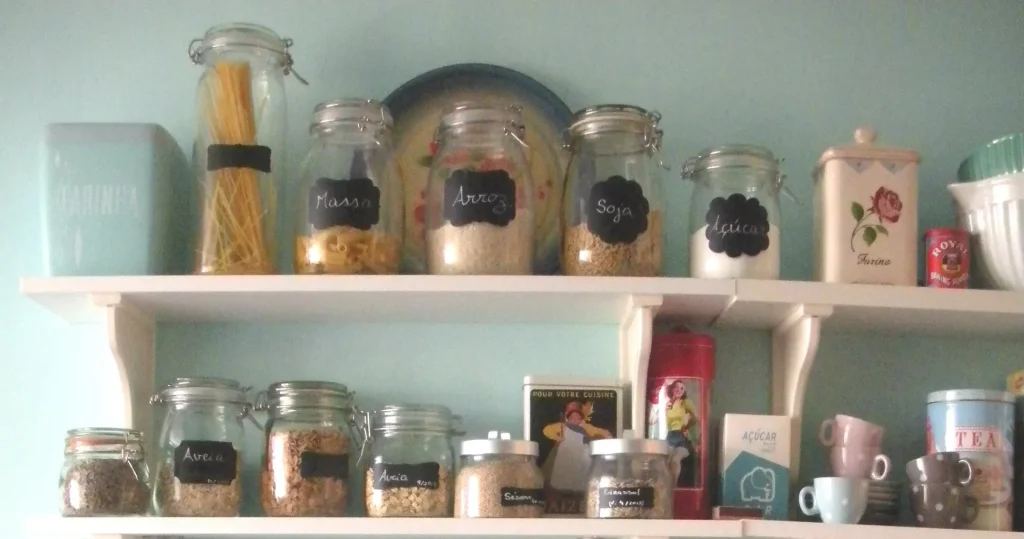
Kitchen shelf decor can start with the dishes you already enjoy seeing: a row of white pitchers, stacks of colorful bowls, or glass jars with different outlines. Give related pieces a shared place, then leave a break before the next group. The useful choice is what deserves to stay visible on your existing shelves, and what can return to a cupboard.
Let White Pitchers and Glassware Form Separate Shelf Groups
White serving pieces can give open shelves a clear pattern without requiring every object to match. In the kitchen below, pale pitchers and smaller vessels occupy the upper shelves beside the window, while glassware forms rows farther down. The different shapes remain visible against the darker shelf interiors.
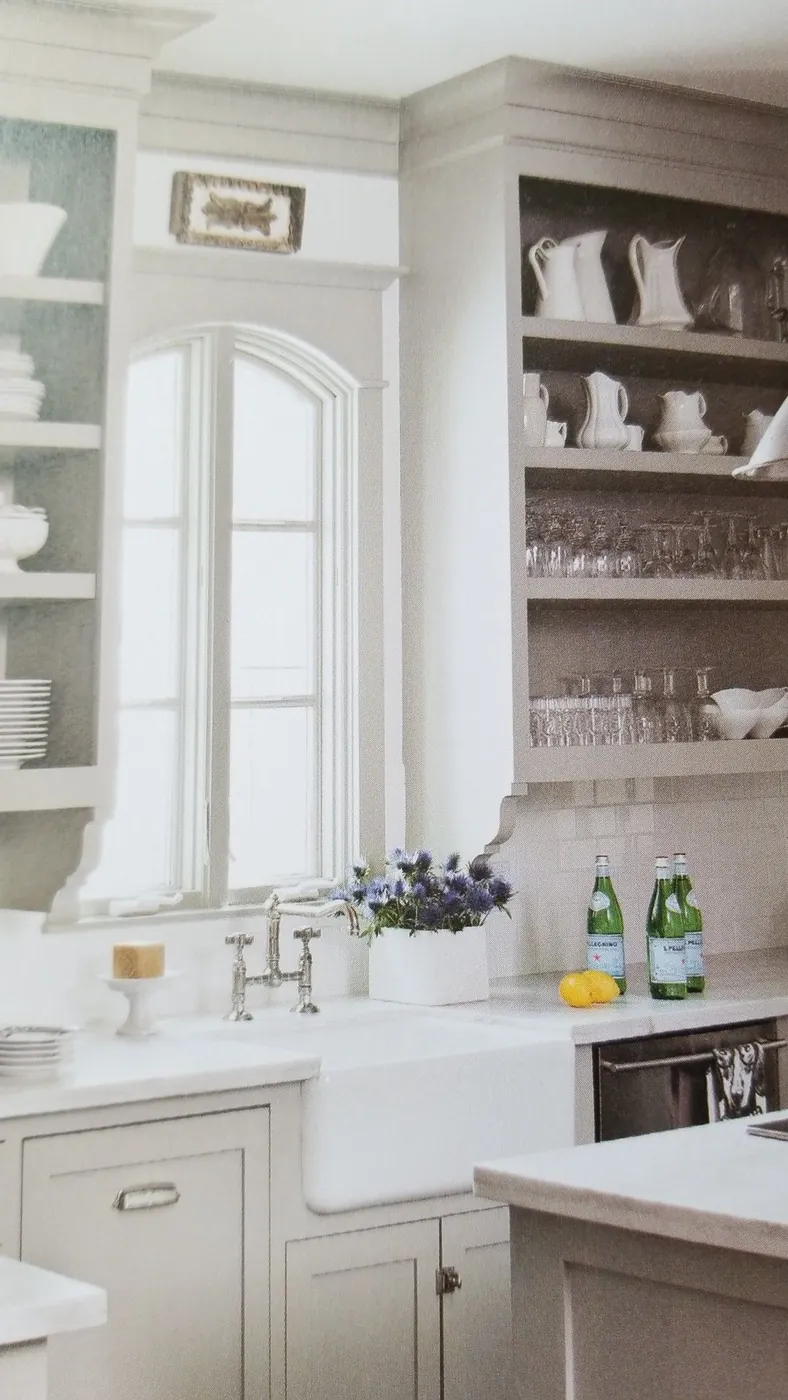
Borrow the separation between object types. Group the pitchers you like looking at, and give drinking glasses their own stretch of shelf. You don’t need to alternate a glass, a cup, and an ornament all the way across. Similar objects can create enough detail through their handles, rims, and changes in height.
Choose the group around your actual collection. A cupboard full of patterned mugs doesn’t need replacing with white ceramics to achieve an orderly display. Your shelf can take its colors from those mugs, just as the home decorating guide uses an existing sofa or rug as the beginning of a room palette.
Group Colorful Kitchen Dishes by Shape
If your dishes carry several colors, their shapes can provide the repetition that pale pitchers offered above. These open wood shelves pair colorful bowls and plates in separate stacks. Larger blue and green pots occupy the shelf above, so color returns at a different scale.
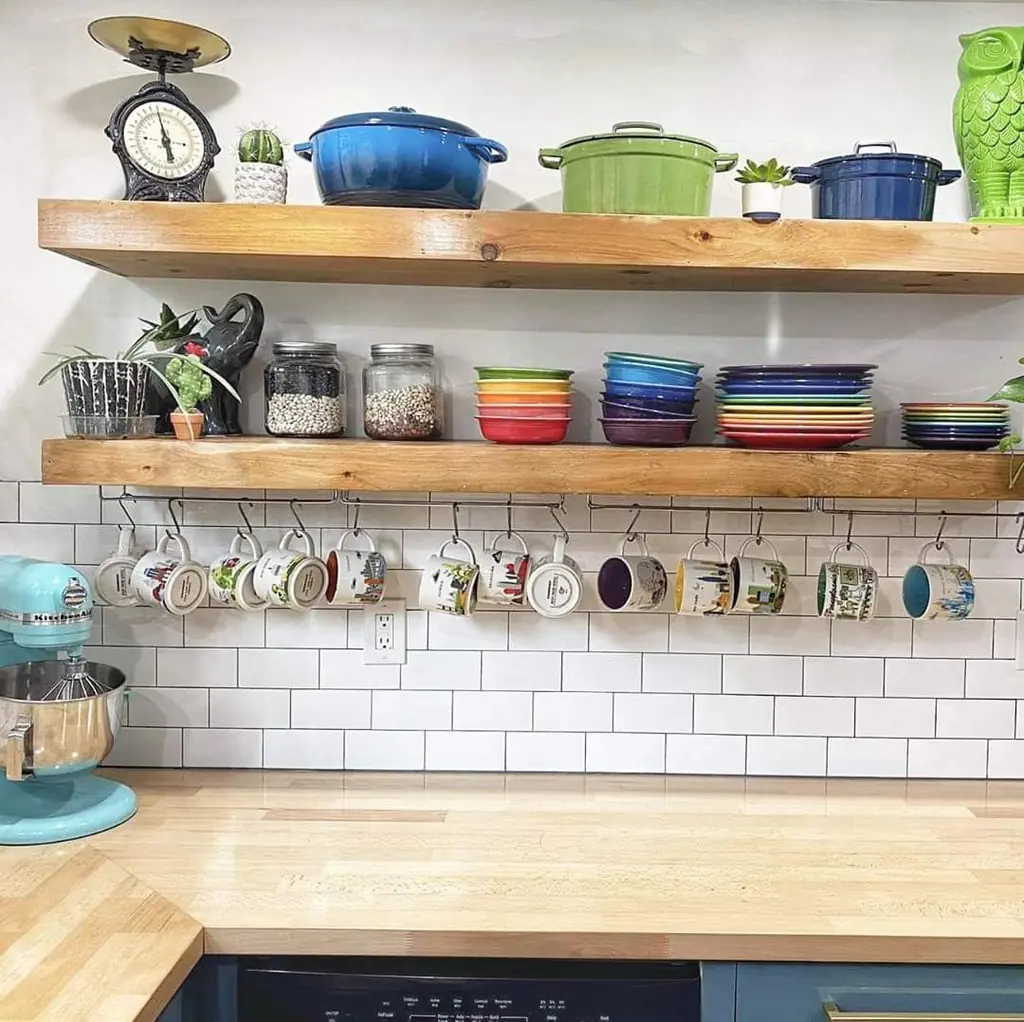
Start with the dishes rather than a new collection of decorations. Keep the bowls together and let their colored rims create bands within the stack. A plate group beside them gives the shelf another repeated shape. You can enjoy a mixed set without arranging every piece into a strict rainbow.
The picture is a visual example, not a guide to how much your shelves can hold. Work with the storage arrangement your existing shelves already support, and choose an amount of tableware that’s comfortable to take down. If reaching a favorite bowl requires shifting a decorative object, give that object another position.
Use Glass Jar Shapes Before Adding Matching Containers
The same grouping idea works with glass, even when the jars aren’t a set. Here, short broad jars sit near taller jars with metal lids, while narrow bottles provide another outline. The irregular wood edges and varied jar heights make the collection feel different from a row of identical canisters.
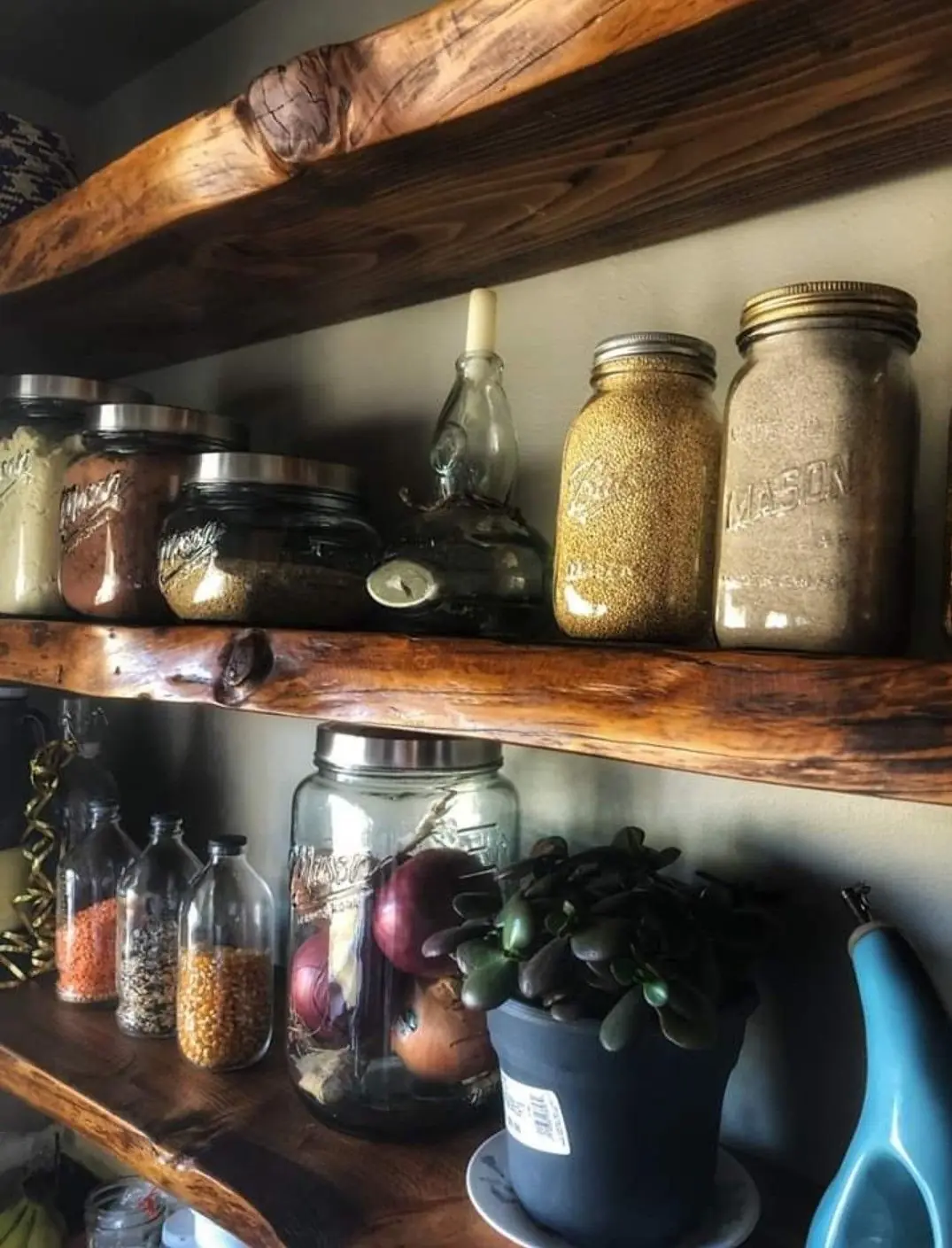
We’d borrow that mix of silhouettes before buying matching containers. Compare the jars you already use together: a broad jar makes a different shape beside a tall narrow one, even when both are clear. Keep the identifying information you need; decoration doesn’t require replacing every label or transferring every ingredient.
Leave each jar’s lid and sides accessible. A decorative bottle tucked in front can interrupt an otherwise useful group if it must move whenever you take a jar down. The shelf can look collected while the jars remain straightforward to retrieve and return.
Give a Shelf Basket a Clear Role Among Bowls
Glass makes the contents part of the display; a basket offers a broad, opaque shape instead. In this corner, a woven basket occupies the left side of the lower shelf, with small vessels and bowls to its right. The basket’s continuous woven surface breaks up the smaller ceramic outlines.
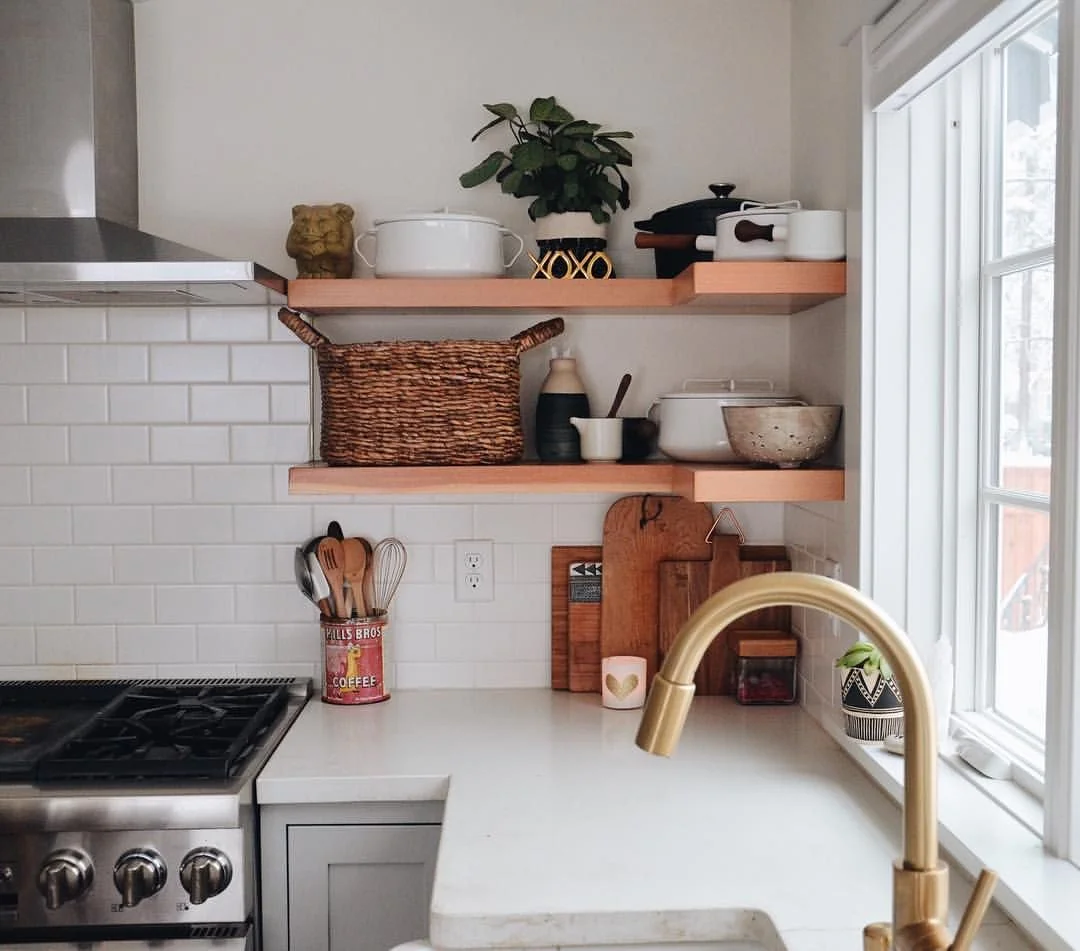
Choose a basket for something you can name before giving it shelf space. Folded table linens might suit your routine; miscellaneous items that never get used may simply become a hidden pile. Check what it feels like to reach the basket and return it with its intended contents.
You don’t have to fill the remaining shelf with more baskets. Let the bowls stay visible if you enjoy their shapes. Keep the distinction between shelf storage and the preparation area below: the kitchen counter decorating ideas show how a utensil crock or tray can gather loose working pieces on that lower surface.
Leave Breaks Between Kitchen Shelf Displays
Once the main groups have places, look at the shelf edge still visible between them. An empty stretch can mark the end of the dish collection before the jars begin. It also lets an unusual handle or a patterned bowl stand out without adding another accent beside it.
There’s no fixed fraction of a kitchen shelf that needs to stay empty. A shelf used for daily dishes has a different job from a mostly decorative shelf. We’d judge the gaps by whether you can distinguish the groups and reach the piece you want without rearranging its neighbors.
If the display feels busy, put an occasional serving piece back in the cupboard before buying a different ornament. Keep the dishes you use or enjoy most, then look again from the kitchen doorway. The visible gaps might be the detail your own collection needed.
Keep the Shelf Arrangement Recognizable After Washing Up
The display also needs to make sense when clean dishes return. Give bowls, glasses, and jars recognizable places so putting them away doesn’t require rebuilding a carefully balanced scene, especially when only part of the dish collection has come back from washing up. A pitcher collection can remain decorative while the everyday glasses beside it come and go.
Notice which piece you keep moving to reach something else. Shift that piece, reduce the group around it, or store it elsewhere. Keep the shelf arrangement that still looks appealing after the dishes have been used and put back.
For ideas that bring the whole room together, explore Home Decor Ideas for Rooms You Use Every Day.