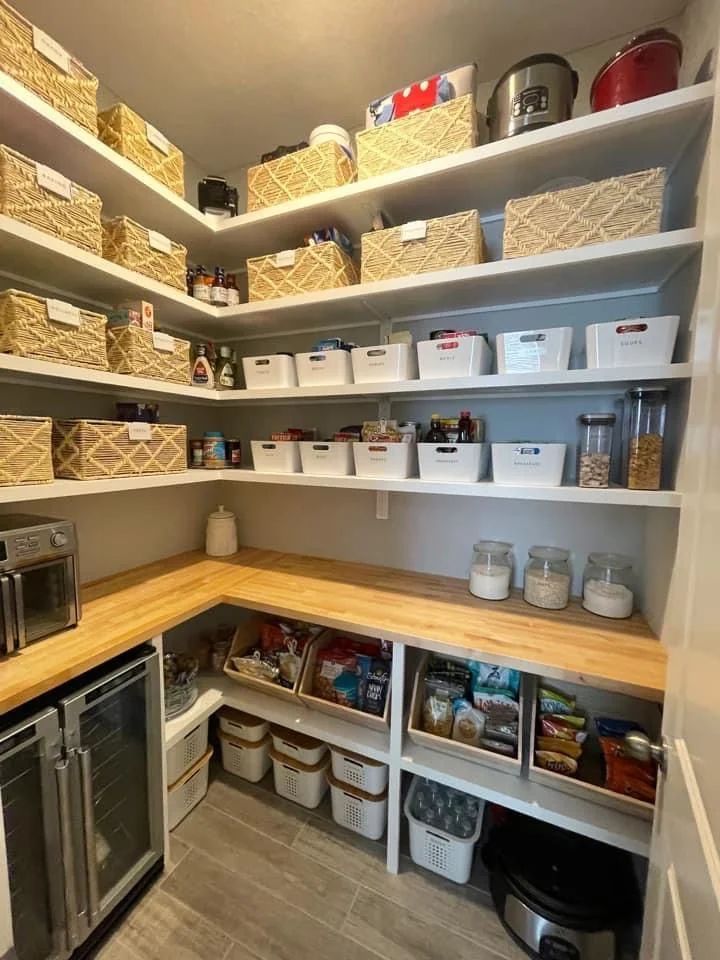
Pantry organization ideas need to solve the half-hidden bag problem: you know the food is somewhere, but finding it means moving everything in front. Group related packages in baskets, name those groups where you can read them, and give spare supplies a separate place. The useful result is a shelf you can shop from and put groceries back into.
Matching containers can look lovely, but the packages you actually buy should shape the arrangement. A pantry full of snack bags needs different divisions from one holding tall cereal boxes. The examples here help you decide what belongs together before choosing more storage.
Give Each Pantry Basket a Job
Start with the foods that repeatedly get separated across your shelves. Breakfast supplies, baking ingredients, and dinner packets are possible groups; use the names that match your household’s habits. A basket doesn’t need an elaborate name; it should answer a familiar search, such as where to find the things used for breakfast.
We’d keep the first divisions fairly broad. An elaborate set of tiny categories creates more decisions when you’re putting groceries away. If a basket mixes packages you never look for together, divide that particular group after you’ve used it for a while.
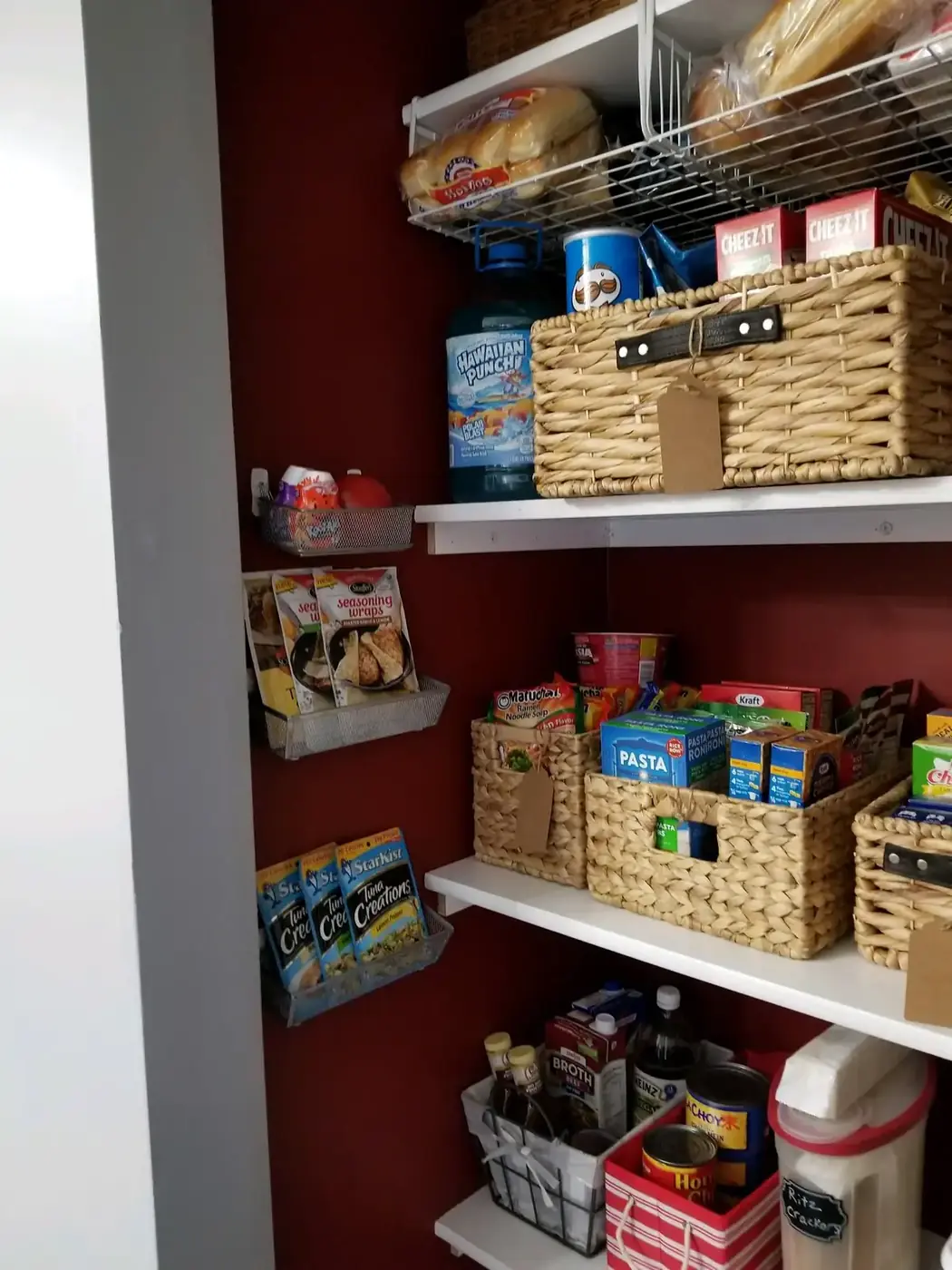
The pantry below keeps boxed foods and packets in open woven baskets. The package tops remain visible above the rims, while shallow baskets on the left hold smaller packets apart from the larger groups.
Try a basket with your own groceries before buying a whole set. Can you see the packages, lift the basket comfortably, and return it without shuffling the neighboring group? A tall rim may hide short packets even when the basket itself fits the shelf.
Our home decorating guide starts with a daily frustration before choosing new pieces. Here, that frustration can be as small as searching behind a row of unrelated bags.
Put Pantry Labels Where the Search Happens
Once the groups make sense, labels can tell you where to look and where to return a package. Put the category on the basket front or the shelf edge facing you. Choose wording that someone putting away groceries would recognize without asking what belongs there.
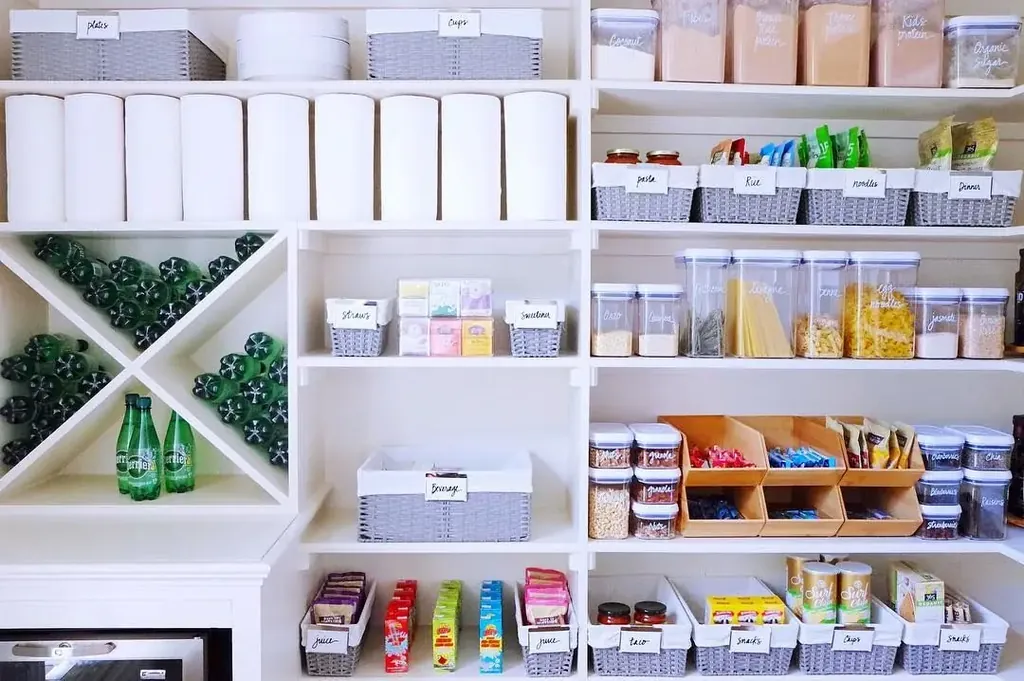
In this white pantry, handwritten labels sit on the fronts of the small baskets, while clear containers have writing on their faces. The basket label identifies a group; the container label identifies its contents.
Use that distinction without copying every container. A basket marked “baking” can hold the original bags and boxes. Keep original packaging, including its dates, ingredient lists, allergen information, and storage directions; a decorative category label doesn’t replace those details. If you transfer a product, retain its packaging with that product rather than relying on the new name alone.
Separate Open Packages from Pantry Backstock
Labels explain the categories, but duplicates need a clear place within them. Backstock means the spare packages waiting behind the ones currently in use. We’d give those spares a named basket or a defined section of shelf, so a new purchase doesn’t disappear among the open packages.
Keep the arrangement easy to understand at a glance: the package you’re using has an everyday spot, and its replacement waits in the spare group. Choose a location you can check comfortably before shopping. Putting backstock somewhere you rarely look makes the separation less useful.
Leave enough room to return the spare packages you normally buy. If a category routinely overflows, reconsider how much shelf space it gets before adding another basket somewhere else. Otherwise, the same food ends up spread across several hiding places again.
Leave Room to Take Pantry Baskets Out
Those groups still need room to move. A shelf that looks full and orderly can be awkward if every basket presses against the one beside it. Check the opening with the basket loaded: pull it forward, reach the contents, and put it back.
For deep shelves, a removable basket is one option for bringing smaller packages into view together. Keep it manageable to lift; a collection that feels cumbersome can be divided into smaller groups. You can leave larger packages standing directly on the shelf beside the baskets.
The same question appears in our laundry basket storage ideas: can the container leave its space without disturbing the others? In a pantry, that check matters each time you reach for dinner ingredients.
Use the Next Grocery Trip to Adjust the Pantry
The first grocery refill will show where the arrangement needs work. Notice the package left on the counter because it has no home, the label you couldn’t find, or the basket that became difficult to return. Change that specific division before buying more organizers.
A little unassigned shelf space can absorb a different cereal box or an unfamiliar ingredient. Keep the daily groups readable, let spare packages have their own place, and allow the layout to change with what you bring home.
For ideas that bring the whole room together, explore Home Decor Ideas for Rooms You Use Every Day.