Small bathroom shelves can hold towels, toiletries, and a little decoration without giving every object its own spot across the wall. Start with the supplies you actually need there, group similar pieces, and let the remaining space decide how much decoration to add. These ideas focus on arranging shelves your bathroom already has.
1. Give bathroom towels their own shelf section
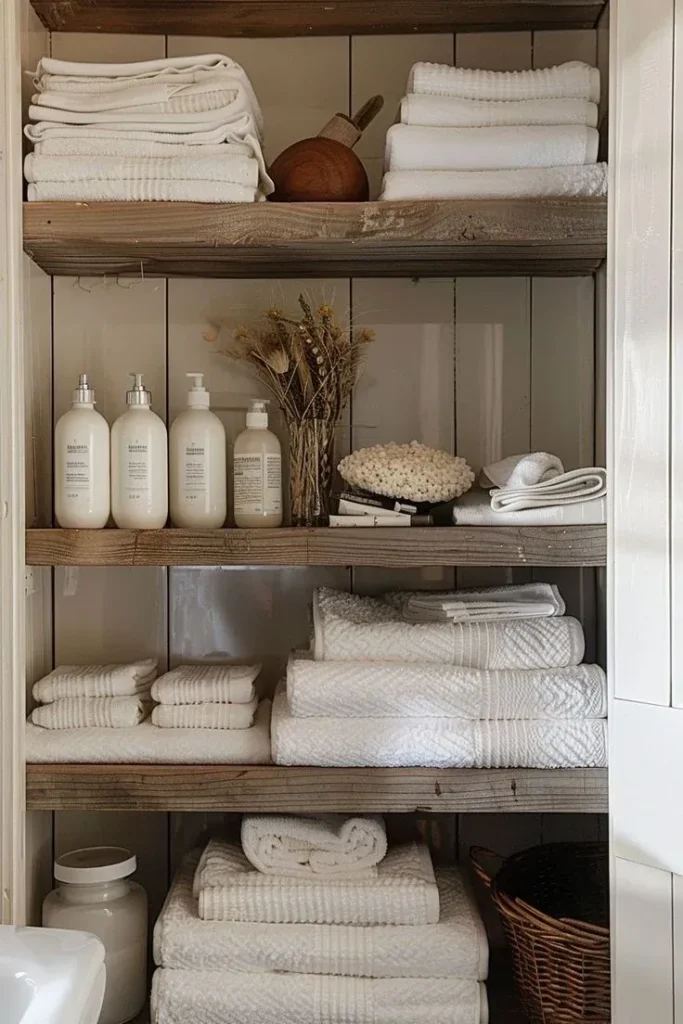
Folded towels make a useful starting point because their outline is easy to repeat; in this wood-toned shelving arrangement, pale towels sit in distinct stacks, while the pump bottles share a separate section. The shelves contain plenty of objects, but the towels aren’t mixed through the bottles and smaller accessories.
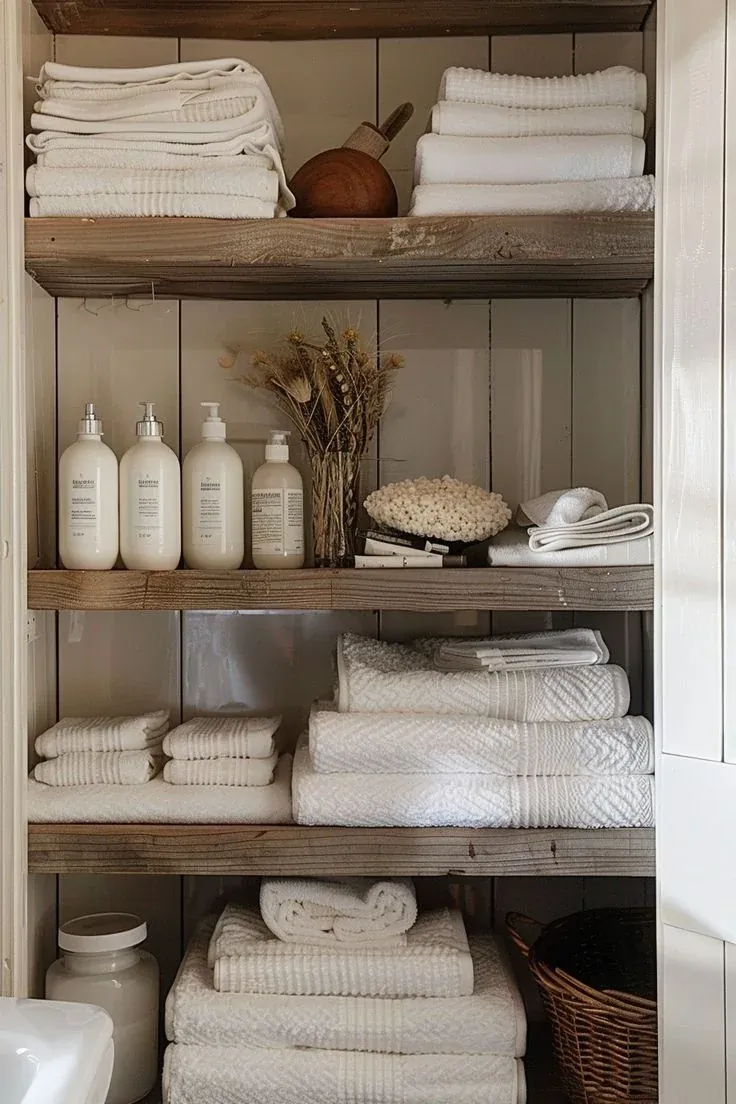
Borrow the grouping rather than the quantity. A narrow shelf might need only the hand towels you use nearby, with larger bath towels staying elsewhere. Face the folded edges outward. Keep the stack within the shelf’s outline, and stop before taking a towel means rearranging the whole display.
The towel color can connect this practical section with the rest of the room. Our bathroom decor ideas show how towels pick up colors from curtains and vanity accessories. Choose that relationship before adding extra shelf ornaments in another color.
2. Group bathroom bottles by the job they do
Once towels have a place, put bottles used together into a group of their own. The first arrangement keeps its pale pump bottles together, giving a busy shelf a clear boundary without adding a tray. You can borrow that placement even when your bottles have different labels, colors, and shapes.
Keep the original bottles. A shelf used for spare toiletries can hold those backups together; a shelf near your grooming area might hold the products used in that routine. Mixing both groups makes it harder to see which bottles are already open.
Try picking up a bottle from its normal position. If another object has to move first, spread the group out or remove the decoration beside it. That small check tells you more about the arrangement than whether all the labels line up perfectly. A clear place to return the bottle matters, too.
3. Keep an over-the-toilet shelf display compact
Short shelves need a firmer edit. Here, dark shelves above the toilet carry folded and rolled towels, a small mirror, a blue bottle, and decorative accents. The lower shelf combines rolled towels with a sign and a bright flower.
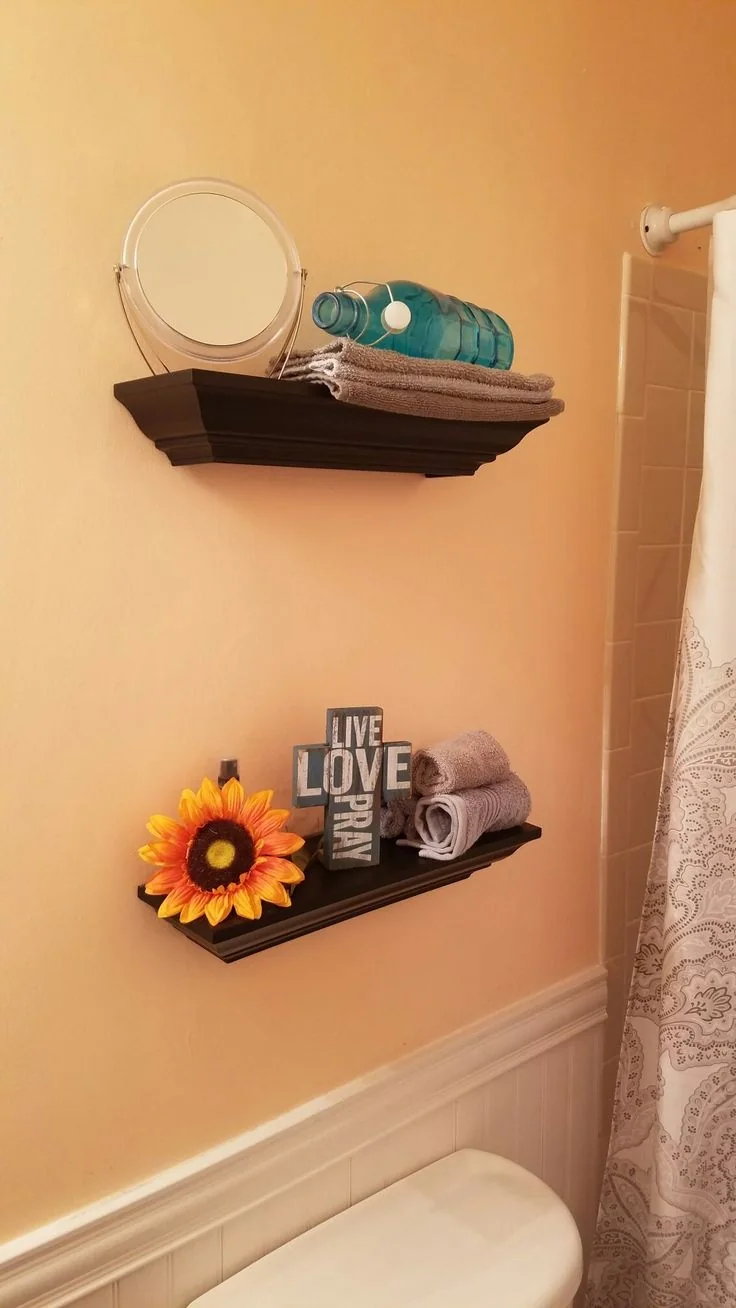
For an existing shelf in this position, decide whether its main job is spare towels or decoration. We’d keep the towels and choose a smaller accent if the sign took up space needed for supplies. You can borrow the dark shelf and pale towel contrast without copying every object in the photograph.
Position also changes what belongs there. Keep the things you use at the sink beside that activity, rather than moving them to a shelf simply because it has room. Comfortable reach matters here.
4. Use small jars to define loose bathroom supplies
Where towels form their own stack, tiny supplies need a container to make a group visible. In this black shelving arrangement, clear jars gather cotton swabs and other small items beside a sign and a plant. The contents remain visible, but their edges come from the jars instead of loose pieces scattered along the shelf.
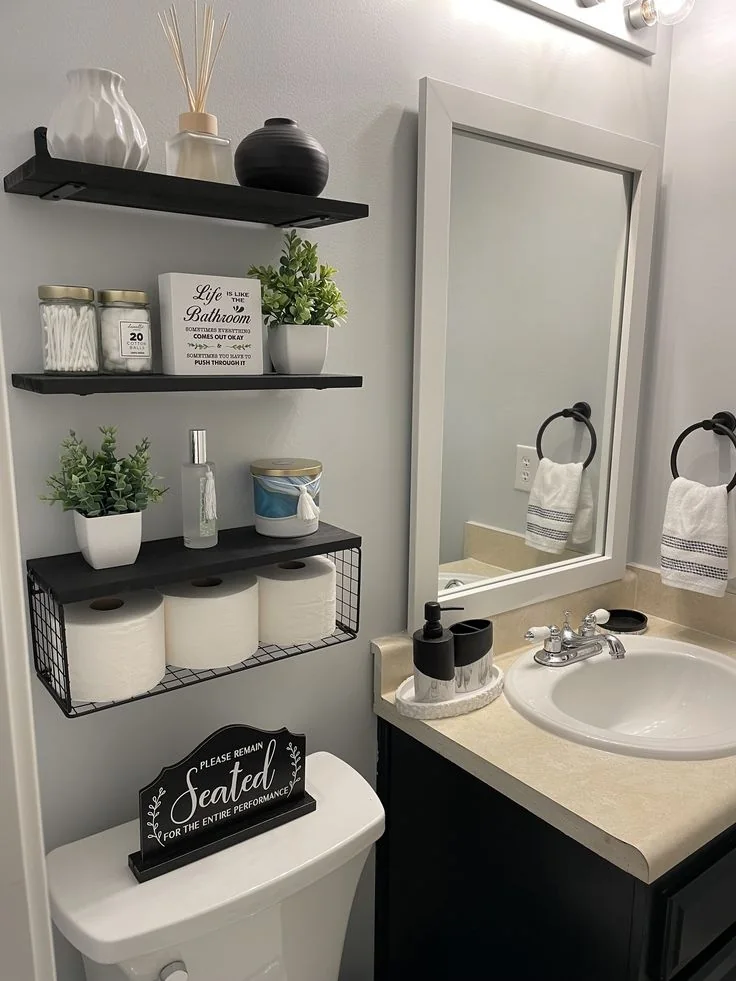
Use a jar only when its opening suits the things you’re putting inside. The daily arrangement should let you lift the lid and take something out without first shifting the object next to it. Keep products that need their original packaging in that packaging; matching containers aren’t a reason to lose useful labels.
The lowest shelf also has a wire compartment holding spare toilet paper, separate from the objects above. That distinction is worth borrowing: supplies can remain visible while still having a clearly defined place. The containers don’t need to match.
5. Give each bathroom basket a specific purpose
Clear jars show their contents; baskets offer a quieter outline when the small items themselves aren’t part of the display. In this existing wall recess, woven baskets sit among wood-toned shelves, folded towels, and small planters. The photograph shows how the baskets fit the arrangement, without revealing everything stored inside them.
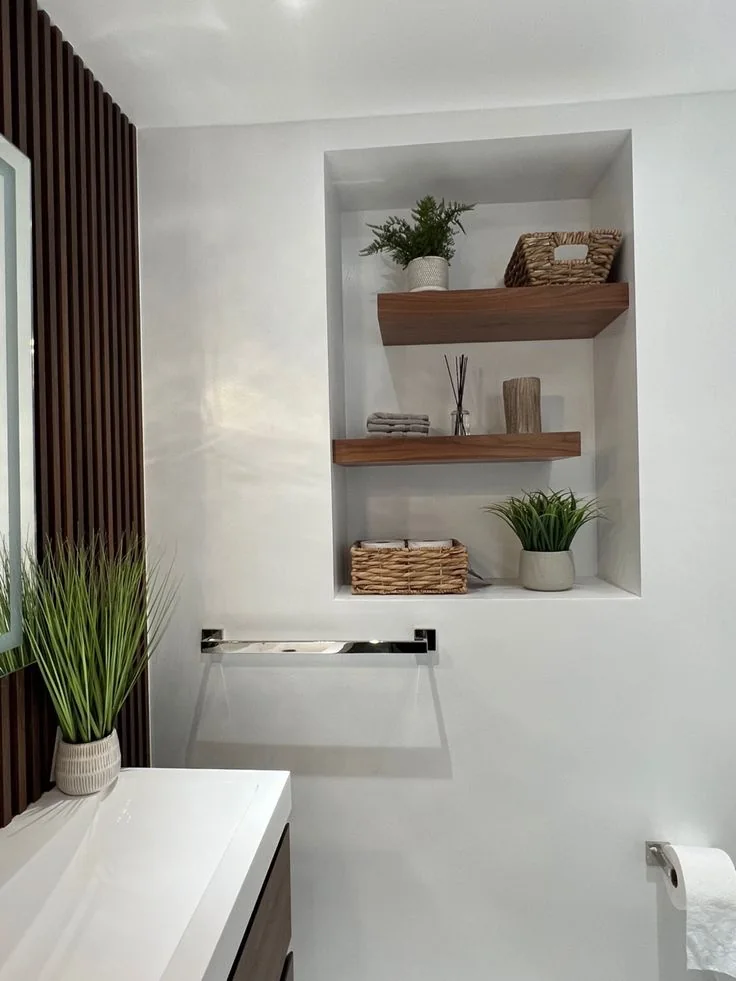
Assign a basket to a group you already need to store, such as spare toiletries or washcloths. Then check whether you can lift it out and see its contents. A basket wedged between decorations may look tidy from the doorway while being awkward to use when you need something from the back.
Leave the visible towel stack separate if those towels are used more often than the basket’s contents. That gives the shelf a practical distinction between things taken individually and things retrieved as a group. Add another basket only when there is another group that needs one.
6. Repeat a shelf color without buying a matching set
After the contents are sorted, repeated colors can connect their different shapes: the black shelving example repeats dark accents beside pale containers and towels, while the recessed arrangement uses warm basket and shelf tones against a light wall. Each gives you a possible direction using objects that don’t all match.
Look for a color already present in the room, then compare the shelf group with the mirror frame, vanity, and towels. You might keep the baskets you own and remove a bright ornament that competes with them. Replacing every container would make a much bigger change than this arrangement needs.
For a view of how useful surfaces fit into a room, the home decor guide connects furniture, fabrics, color, and storage. Settle the shelf’s practical contents first, then use that wider view to judge its color and texture.
7. Leave a place to return each shelf item
The last adjustment is the space around the things you keep. A shelf can look finished with an open patch beside a towel stack or bottle group. Keep that opening where it helps you lift something out, rather than moving every object toward the edges to fill the whole shelf.
Use the bathroom as usual, then notice what gets left on the sink. A bottle that never goes back may need a different shelf position; a basket you avoid opening may contain the wrong group. Change that particular spot before adding another organizer to the room.
Decoration can use the space that remains after those ordinary actions work. A small accent may be enough beside the towels, especially when the shelf already has varied containers. Keep the arrangement you can put back easily, with room for the things that actually belong there.
For ideas that bring the whole room together, explore Home Decor Ideas for Rooms You Use Every Day.