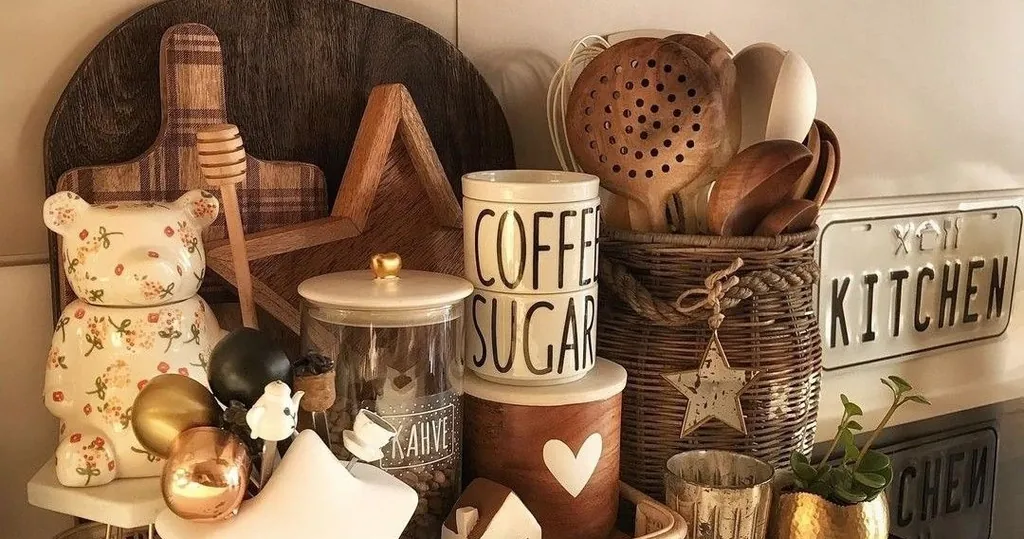
A coffee bar can look inviting while still leaving somewhere to set your cup. Give everyday mugs a reachable home, gather loose supplies on a tray, and keep refills apart from the things you use each morning. Then let cup colors, a small wall accent, or a favorite container provide the decoration. The arrangements below show which details to borrow for your own routine.
Give the Coffee Cup a Landing Place
Before adding a sign or another jar, put your usual mug where you’ll fill it. Consider the space between taking the cup out and carrying the finished drink away. A coffee corner needs that temporary landing place as well as tidy storage when nobody is using it.
Make the same check with the things you reach for during a normal drink. A spoon needs somewhere to rest, and a canister lid needs room to come off. If a decorative tray takes the whole available surface, reduce its contents or give it a different position.
Our kitchen counter decorating ideas cover the wider cooking surface. For this corner, focus on the cup’s short journey: take it out, fill it, add what you like, and pick it up again.
Let Everyday Mugs Supply the Color
Once the cup has somewhere to land, decide where the empty mugs belong. A small selection can become the coffee corner’s main accent, especially when the machine and surrounding cabinets are plain. Different mug shapes can share a color palette while keeping their individual character.
The wall display below pairs a red mug with a yellow mug against a wood-toned panel and brick. The mugs bring the color; the panel gives them a shared background. Borrow that relationship with a display you already have rather than treating the photograph as an installation plan.
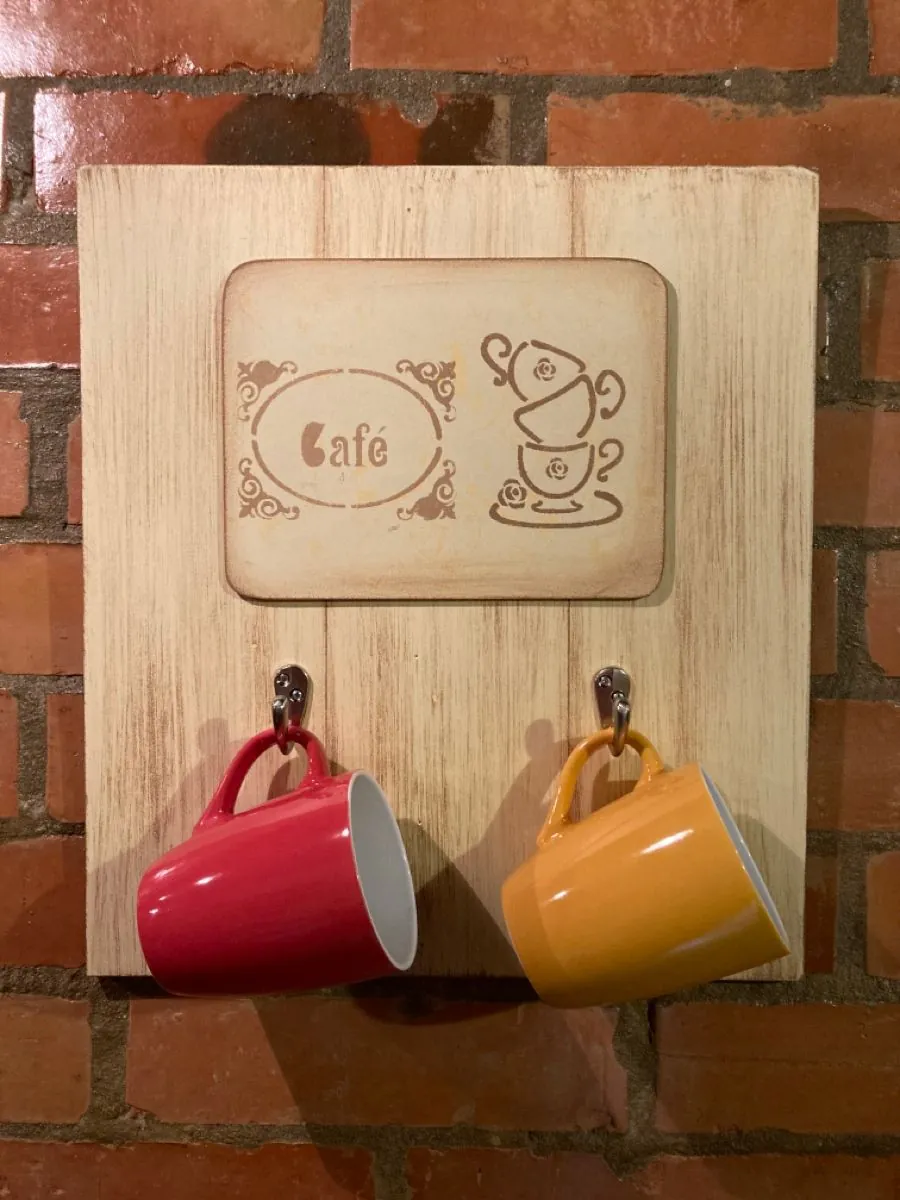
Choose the mugs by use as well as appearance. A favorite oversized cup deserves a place even if it breaks the color scheme. Keep occasional cups in a cupboard if displaying them would crowd the ones you reach for every day.
If you already have a mug rail, check how taking a cup down feels with the counter arranged below it. A vase shouldn’t have to move whenever you want the mug behind it. With shelf storage, leave handles easy to grasp instead of turning every cup to the same display angle.
Use a Tray for Supplies You Reach for Together
Mugs establish the palette; a tray can gather the smaller pieces that would otherwise spread around them. Choose its job before choosing its shape. A tray for sugar and spoons needs a different amount of space from a tray carrying a finished drink.
In this pale coffee corner, a rectangular tray holds a cup and saucer, a glass, and smaller accents. Hanging white mugs and lidded containers continue the light colors behind it. The tray’s border is the useful detail to borrow, even if your version contains different things.
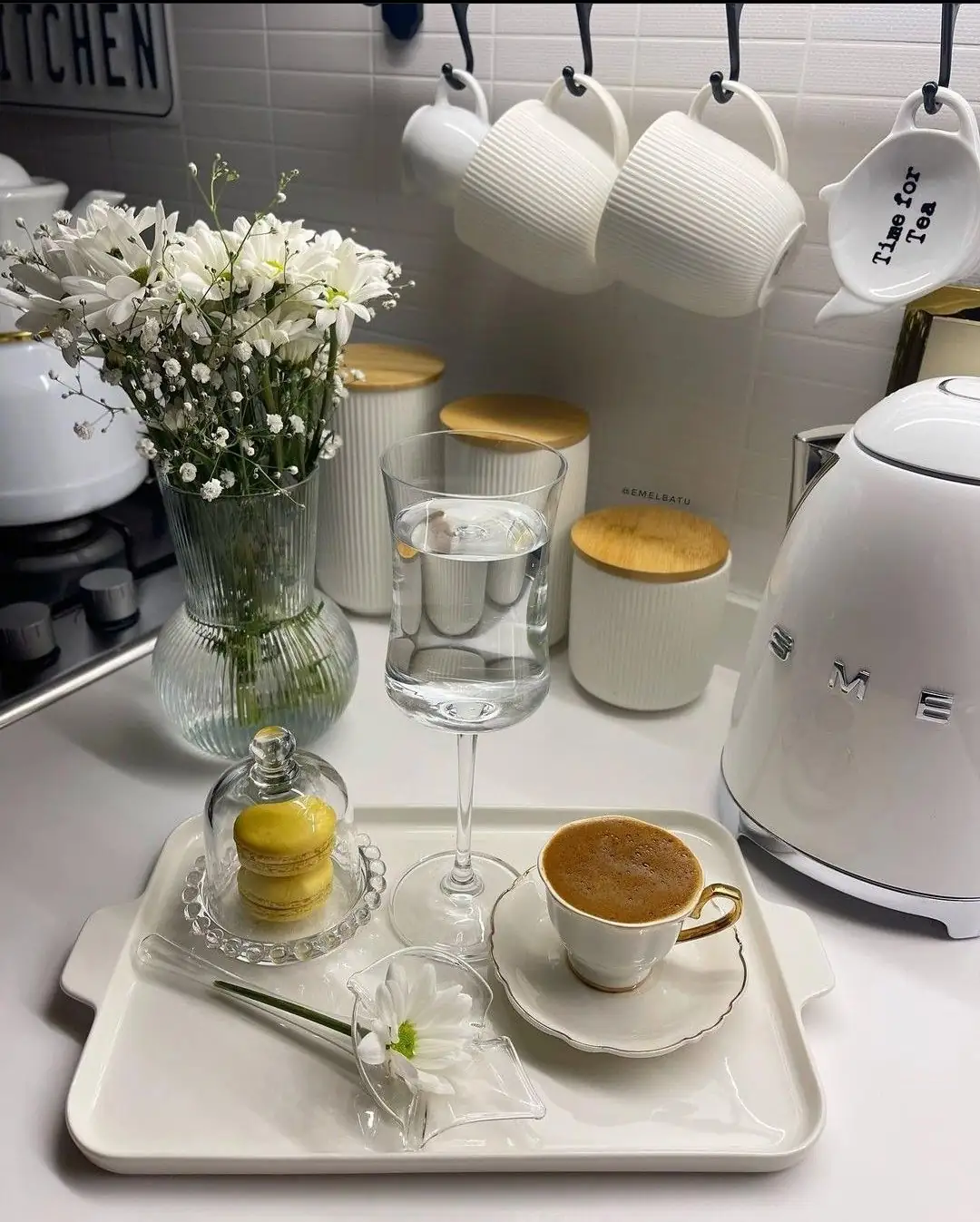
For a daily supply tray, we’d give the spoon container and the sweetener you use their places first. Add an accent only if you can still lift a lid and return a spoon without rearranging the group. A full tray isn’t the goal.
Keep the machine’s position a separate decision. Follow its own instructions for placement and access; a styled photograph doesn’t establish those requirements. The tray can organize the loose pieces beside it without becoming a platform for every item in the corner.
Separate Coffee Refills from the Daily Display
After settling the tray, give backup supplies another home. The open coffee bag, spare filters, unopened packages, and extra mugs don’t all need to become part of the display. A nearby drawer, basket, or cupboard can hold the supplies waiting for their turn.
Divide that storage by what you need to find. Keep the current drink-making supplies together and reserve another area for refills. If different people use different pods or filters, keep the identifying packaging visible so a prettier container doesn’t make the choice harder.
You can carry the coffee corner’s colors into a basket or drawer divider without buying matching canisters. Use containers suited to what they hold, and keep any information you’ll need when replenishing the supply. Decorative labels should help you identify the contents.
The home decorating guide considers display and everyday storage together. Here, the distinction is simple: the daily tray holds what you’re using, while the refill spot holds what comes next.
Decide Whether Coffee Trays Stay Put or Travel
A supply tray stays near the coffee corner, but a serving tray has somewhere else to go. If you often take coffee to a chair or breakfast table, give the finished drink its own tray rather than carrying the whole countertop arrangement with it.
Below, separate wood-toned trays pair patterned cups with small pastries. Each setting reads as its own group. The idea suits a coffee corner that serves another room: prepare the drink there, then carry the small setting to where you’ll sit.
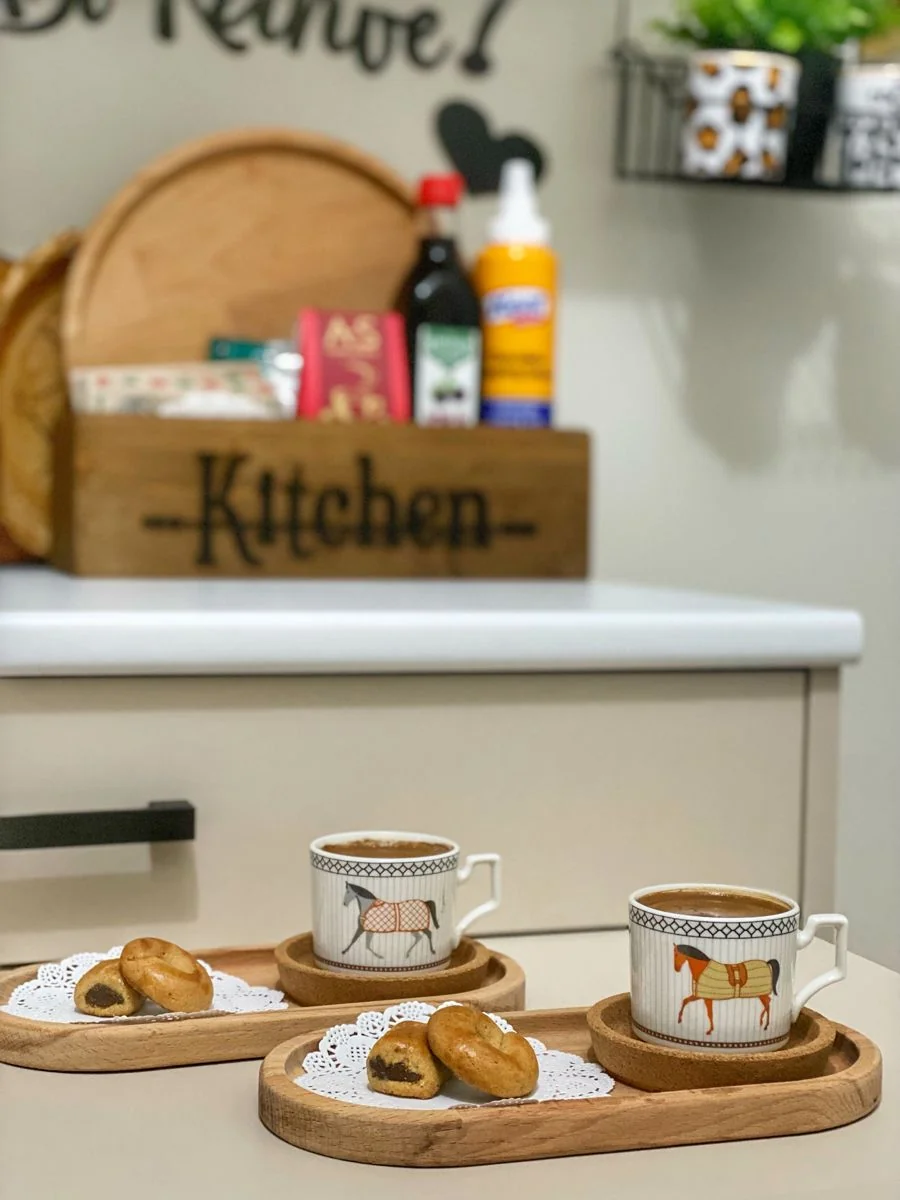
Check the tray with your own cup and anything you normally carry beside it. You don’t need to fill the remaining space with a napkin, flowers, or another dish just because a photograph includes them. Leave those choices to the drink you’re serving.
For coffee at the dining table, our dining table centerpiece ideas consider the space needed by cups, plates, and shared dishes. Keep the coffee setting useful when it arrives there, too.
Put Coffee Wall Decor Above the Supplies
With mugs, daily pieces, and refills assigned their places, the wall can take the remaining decorative detail. A small picture or café sign can mark the corner while the surface below stays available. Choose the wall accent in relation to the mug display rather than filling every gap around it.
If your mugs already hang against a decorative panel, that may be enough. An existing shelf can hold a small accent where it doesn’t interfere with reaching the cups. Keep the useful objects easy to see instead of surrounding them with overlapping signs.
Finish by making a drink with the arrangement in place. Notice what you move, where the spoon ends up, and whether returning a mug is awkward. Give the troublesome item another position, then stop at the coffee corner you’d be happy to use tomorrow morning.
For ideas that bring the whole room together, explore Home Decor Ideas for Rooms You Use Every Day.