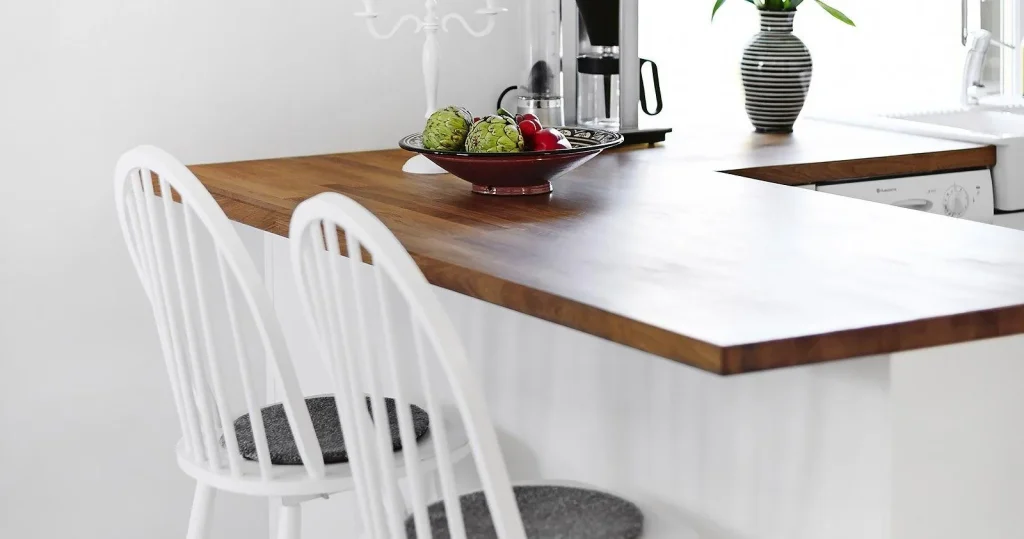
Kitchen island decor has to share a surface with chopping, serving, and the occasional breakfast plate. We’d start with a vase near an unused end, a movable tray, or a low bowl that can leave when work begins. Choose the position before the accessories, allowing room to walk around the island and sit beside the display.
Give an Island End the Display, Then Keep the Middle Available
The short end of an island can offer a place for decoration away from the stools along its side. In this kitchen, a clear vase of white flowering branches stands toward the left end of the pale counter. The black stools occupy the longer edge, with a broad stretch of counter visible in front of them.
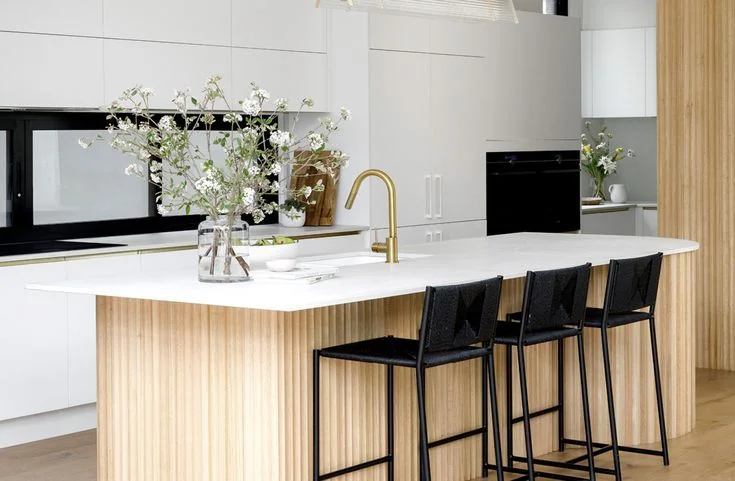
Borrow the position before the size of the branches. An island end may also be where you unload groceries, roll dough, or set out food for guests. Keep that end usable. Give the task its usual space first, then see whether a vase still has a place farther back from the approach.
Unlike a counter against a wall, an island has no automatic back edge for ornaments. Walk around the display and look from the adjacent room as well as from the kitchen. A vase can look well placed from the stove while standing directly in the spot someone uses to pull up a stool.
The kitchen counter decorating ideas cover utensil crocks, coffee groups, and sink-side supplies. Keep those working collections near their own tasks rather than repeating them on the island just to fill its empty surface.
Let an Island Vase Carry the Color by Itself
Once an end position works, a vase can supply enough decoration without a tray or a ring of smaller objects. Here, yellow flowers rise from a tall clear vase at the left edge of an island. The gray cabinets and broad gray countertop leave the flowers as a concentrated patch of color.
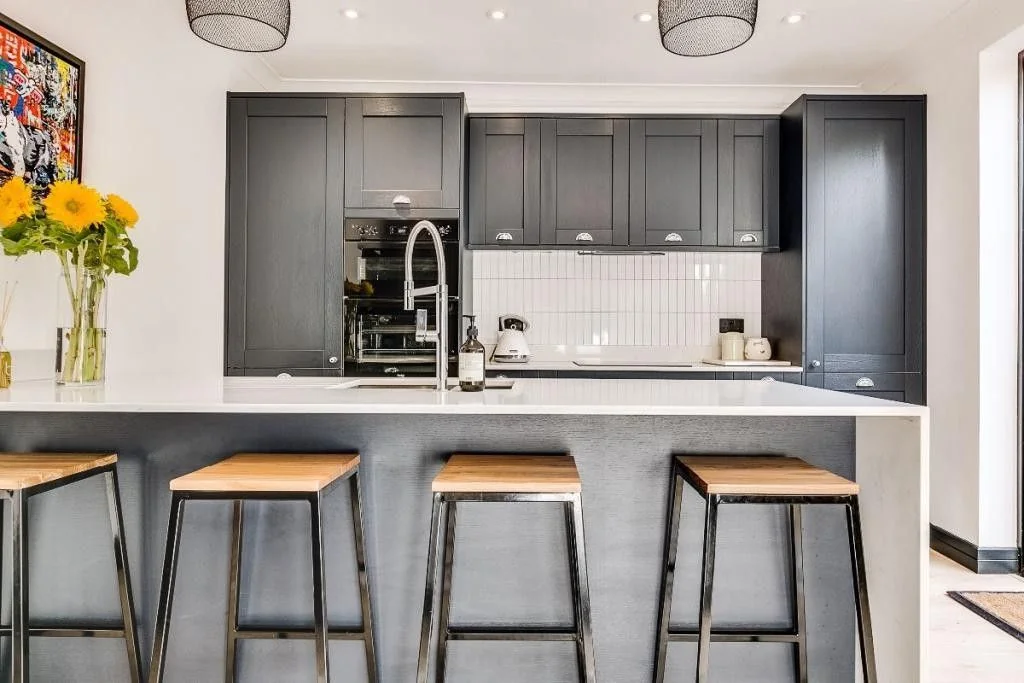
The yellow flowers don’t need much company. Adding a decorative book, candle, and spare bowl would enlarge the arrangement’s footprint without making the flower color clearer. The open gray surface is part of what makes the yellow noticeable.
Check the flowers from a stool before settling on their height. Look at the person or doorway beyond the island, then notice whether the stems interrupt that view. The base isn’t the whole display. Count the spread of the flowers when judging what fits.
The vase also needs a destination when it comes off the island. Choose an existing spot where it can sit without displacing the kettle, dinner plates, or another arrangement. If moving it creates a second clearing job, use a smaller display or keep the flowers elsewhere.
Put Small Island Accessories on a Tray You Can Actually Move
A vase alone is easy to identify as a single display; a tray gives several smaller pieces the same boundary. This close-up groups a gray vase of white flowers and a lidded glass jar inside a rectangular woven tray with handles.
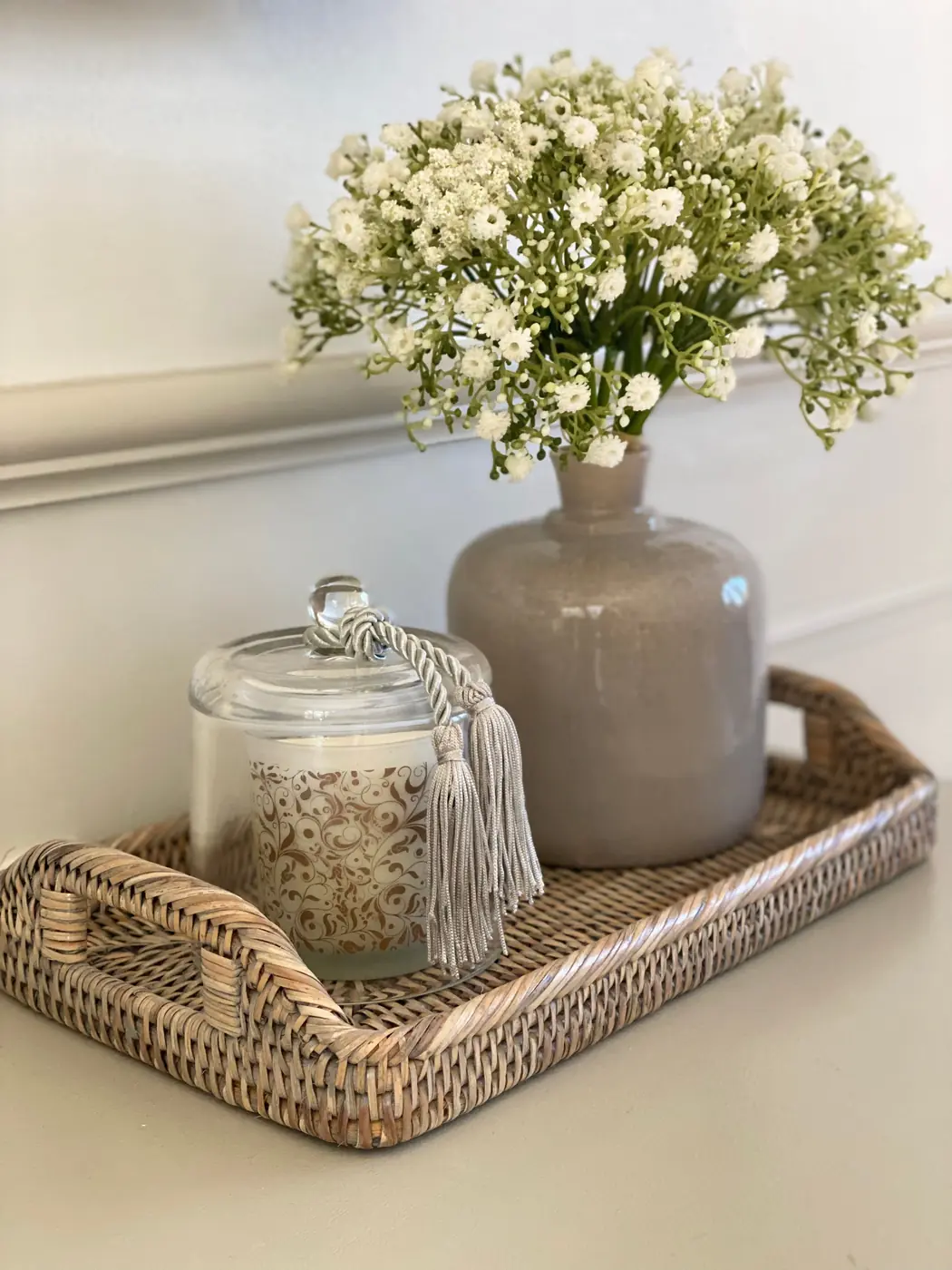
The photograph shows the accessory group rather than an island layout. For an island, borrow the contained footprint and compare it with the space you have already reserved for work. The flowers might be enough. There’s no need to add the jar unless you want its smaller shape beside the vase.
Before leaving a loaded tray out, try carrying the intended contents to their resting place. Leave the handles exposed. If you can’t grasp them around the objects, or the tall vase feels awkward to carry with everything else, move the vase separately and reconsider what belongs on the tray.
Avoid adding loose ornaments around the tray’s perimeter. Those extras still need to be collected when you clear the island, which takes away the reason for gathering the display in the first place. Let the tray’s outer edge mark where the group ends.
Choose a Low Bowl Beside Island Seating
If a tall vase or loaded tray feels cumbersome, a low bowl offers a simpler shape beside a seat. In this kitchen, a shallow bowl of yellow and green produce rests on a pale island, with a faucet to the left and stools along the right side. Much of the surface remains exposed.
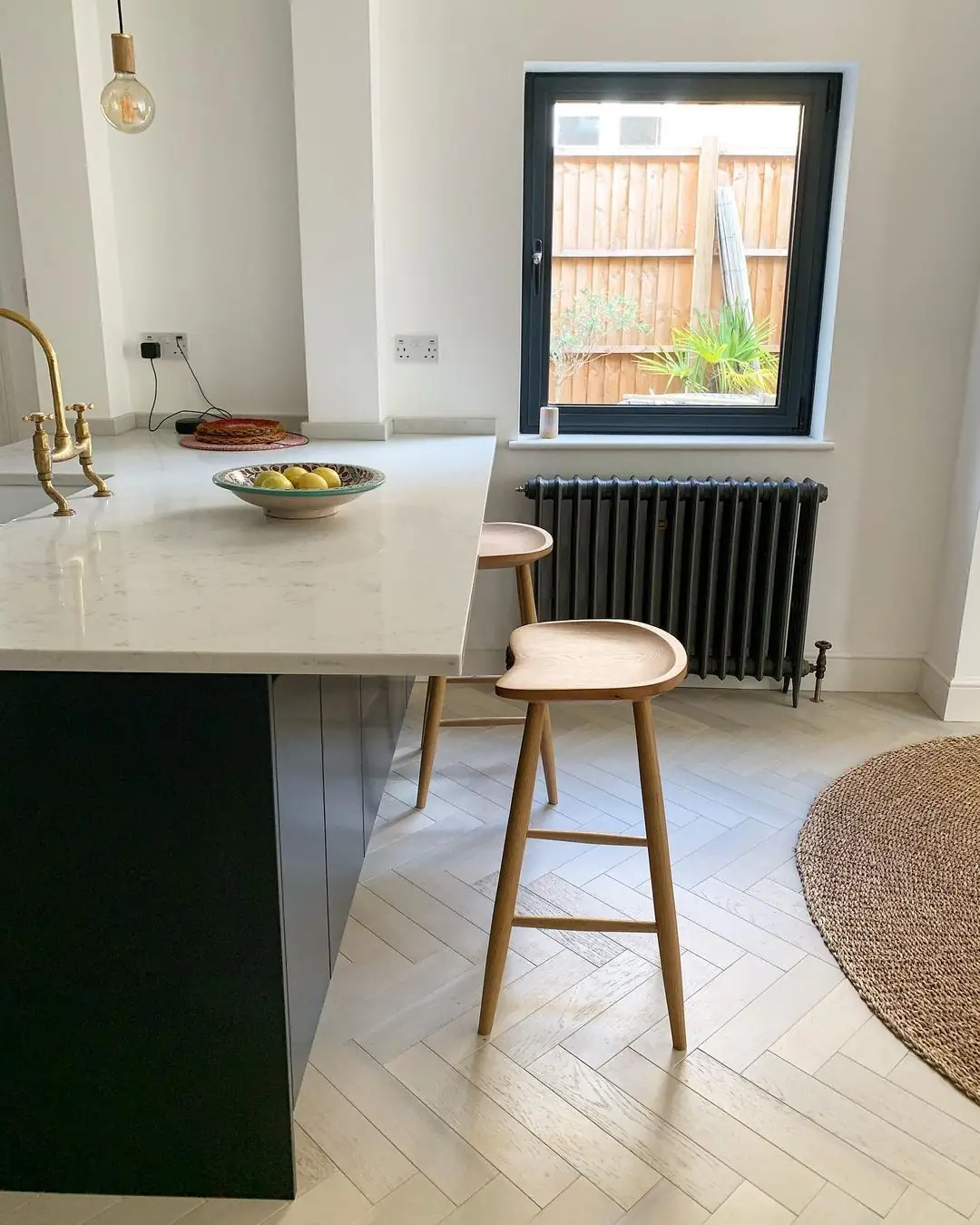
Choose the bowl for what you already keep in the kitchen. A favorite serving bowl can look complete without decorative filler, and its usefulness may make it a better fit than a separate ornament. Let it stand alone. Leave enough room to reach its contents without leaning across someone’s plate.
Put a breakfast plate and glass in the seat you use before deciding where the bowl belongs. Include the place where your arm rests and the route for setting down a dish. If the bowl keeps shifting out of the way, give it a different everyday position rather than making the meal fit around it.
For a separate eating table, the dining table centerpiece ideas compare flower shapes with place settings and seated views. On the island, the extra question is whether that same surface must be available for food preparation before the meal.
Check the Island Arrangement During a Change of Tasks
The bowl, vase, or tray still has to work when the island changes jobs. Picture arriving with grocery bags, preparing dinner, and pulling up a stool afterward. The point where you repeatedly move an object tells you more about its position than the view of a freshly styled kitchen.
Let the work surface become fully available when it needs to. An island doesn’t have to keep its centerpiece on display during baking or a crowded meal. Put the arrangement in its chosen resting place, then return it after the dishes and supplies are put away.
If returning the display feels like rebuilding it, simplify the group. Keep the vase on its own, or use the bowl without the tray underneath it. The home decorating guide connects these small surface choices with the furniture and storage around them.
Leave the finished arrangement in ordinary use before adding anything else. A clear view from the stool, a comfortable place to set down a plate, and an easy move off the counter are good reasons to stop. The empty space can stay. You can explore another room at ZM Home while this island keeps the space it needs.
For ideas that bring the whole room together, explore Home Decor Ideas for Rooms You Use Every Day.