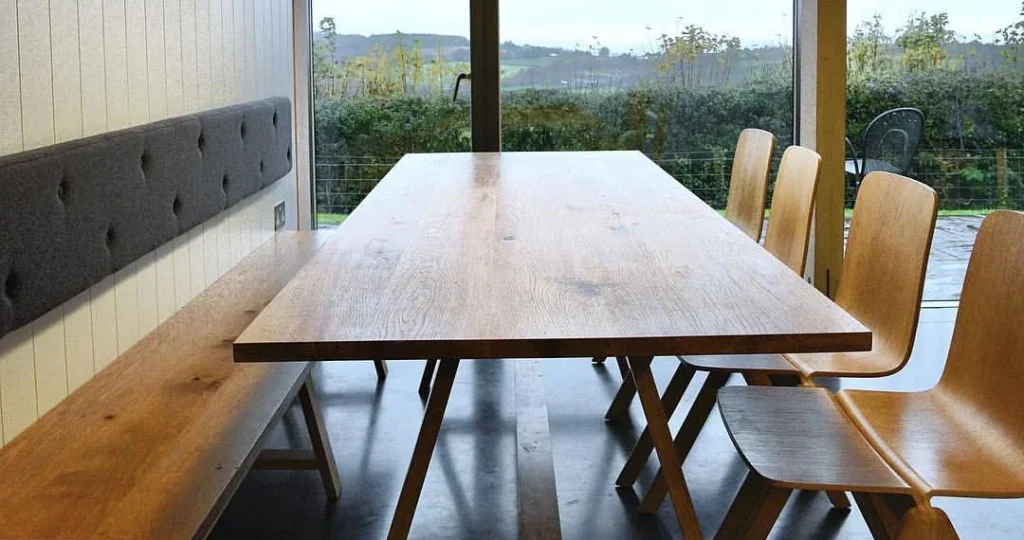
A breakfast nook can begin with a bench along the wall and a table that serves the seats beside it. Separate chairs on the open side give the arrangement another way in, while cushions, baskets, and the bench front supply its color and texture. Start with the seating you have: the useful decorating choice may be a quieter cushion or a place for table linens beneath an existing bench.
The ideas below move from the seating edges to the smaller details. They’re references for arranging and decorating a dining corner, with no need to copy a built-in installation to borrow its appearance.
1. Give the Wall Bench a Clear Place Beside the Table
A wall bench makes the back of a breakfast nook easy to read. In the room shown above, a long bench follows the paneled wall, while a rectangular table and separate chairs extend alongside it. The continuous bench gives the table a background, even though the opposite edge has individual chair backs.
We’d borrow that relationship before adding pillows or a table runner. A freestanding bench you already own can offer a similar long outline against a wall. The furniture doesn’t need to match perfectly; a repeated wood tone or a plain seat cushion can connect pieces with different shapes.
The table still has to serve the bench. Compare the position with someone seated there, including where their knees, feet, and plate will go. A bench that looks neatly tucked away may be awkward when the table legs occupy the place a diner needs. Check the seat itself. A photograph can’t tell you whether your own furniture fits together.
Our home decorating guide starts with a room’s everyday task and existing pieces. For this corner, that task is sitting down to eat, so the bench and table relationship comes before the decorative layers.
2. Keep Separate Chairs on the Nook’s Open Side
The wall bench defines the back; individual chairs can give the open side a different character. In the windowed arrangement, the chair backs repeat a curved shape opposite the straight bench. Their wood tones connect with the tabletop without copying the bench’s long form.
We like that mix when a nook needs to belong to the adjoining kitchen. The chairs face into the room, so their backs become part of the view from outside the eating area. A familiar chair shape can make the nook feel connected to furniture nearby, even if its bench is quite different.
Try a normal breakfast with the chairs in place before deciding the corner is finished. Notice where a chair goes when someone stands up and whether another person can reach the bench. Don’t judge the space only with every chair pushed in. The arrangement needs to work while people are there.
If drinks come from a nearby counter, keep their preparation there rather than crowding the eating corner with supplies. These coffee bar ideas distinguish the daily supply tray from a serving tray that travels to the table.
3. Let a Long Bench Cushion Carry the Main Color
Once the seating positions work, a long cushion can give the wall side a consistent color. The bench below pairs a gray seat with a narrow gray backrest. Pale wall space remains visible between them, so the upholstery reads as separate horizontal bands.
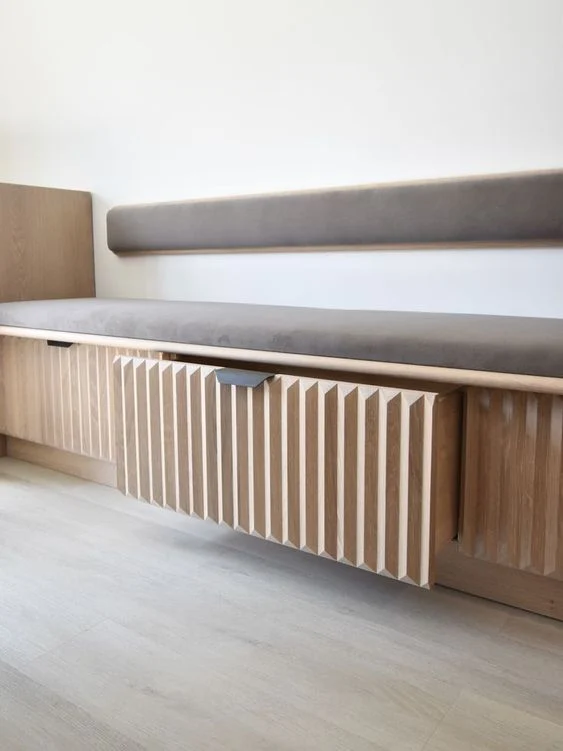
We’d start with the long seat cushion and judge the nook from across the room. A continuous color can be enough beside a table and several chair backs. Small pillows are optional. If a pillow occupies the place someone normally sits, the empty seat may be the better choice.
A bench can also stay unupholstered, as in the windowed room above. The contrast comes from its dark wall backrest and pale tabletop instead. Choose the version you prefer sitting on, then compare the visible colors; neither reference requires covering every hard surface with fabric.
For existing cushions, check their care information before adding more textiles to a meal area. We prefer a simple combination you can maintain over a layered arrangement that needs rebuilding after breakfast. Keep the daily reset easy.
4. Use Existing Bench Cubbies for a Defined Storage Group
Cushions give the bench a broad upper surface; open cubbies can introduce another pattern below it. This corner bench has woven baskets beneath pale framing. Their broad fronts repeat around the turn, while the neutral cushions keep the upper part comparatively quiet.
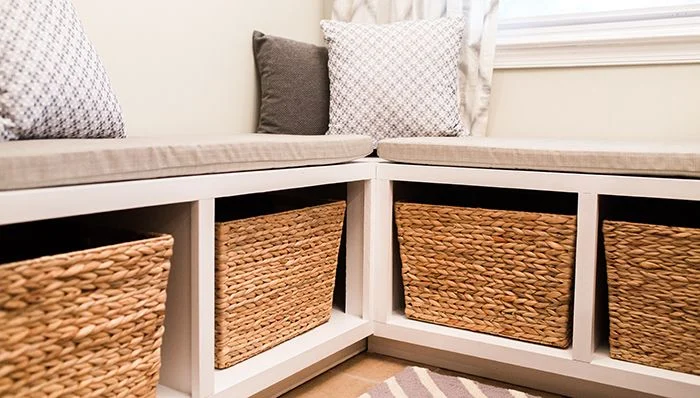
The contents aren’t visible, so we’d choose the storage job ourselves. Table linens might belong near meals, while an unrelated collection may be more useful elsewhere. A basket earns this position when the things inside it belong to the nook and can be retrieved without moving the whole breakfast setup.
Check access with the table in place. A basket that pulls out neatly in an empty corner may meet a table leg once the dining furniture returns. If reaching it is awkward, use that existing cubby for occasional items and keep daily pieces somewhere easier to reach.
Bench storage isn’t essential. A plain bench with visible floor beneath can provide the seating without adding another collection of containers. There’s no need to replace it simply because a storage bench looks appealing in a photograph.
5. Let the Bench Front Finish the Nook’s Texture
The basket example gives the bench base a woven surface; the gray cushioned bench uses repeated vertical slats instead. Its plain upholstery leaves those narrow wood-toned edges visible. We’d keep extra pillow patterns restrained when the furniture already supplies that much detail.
Borrow the balance with the bench you have. A strong front pattern can sit beside a simple cushion, while a plain bench may welcome a patterned seat or a favorite pillow. Look below the tabletop as well as above it; the base is part of the nook even when the table is ready for a meal.
The final tabletop layer can stay small. Our dining table centerpiece ideas compare vase shapes with the space used by plates and shared dishes. Settle those choices after the seating feels right, rather than using a centerpiece to distract from a difficult place to sit.
Leave the nook set for an ordinary morning: the chairs where they’ll be used, the bench ready to sit on, and the pieces you normally bring to breakfast. If a pillow must move every time, leave it off. Let the next meal show which details deserve to stay.
For ideas that bring the whole room together, explore Home Decor Ideas for Rooms You Use Every Day.